
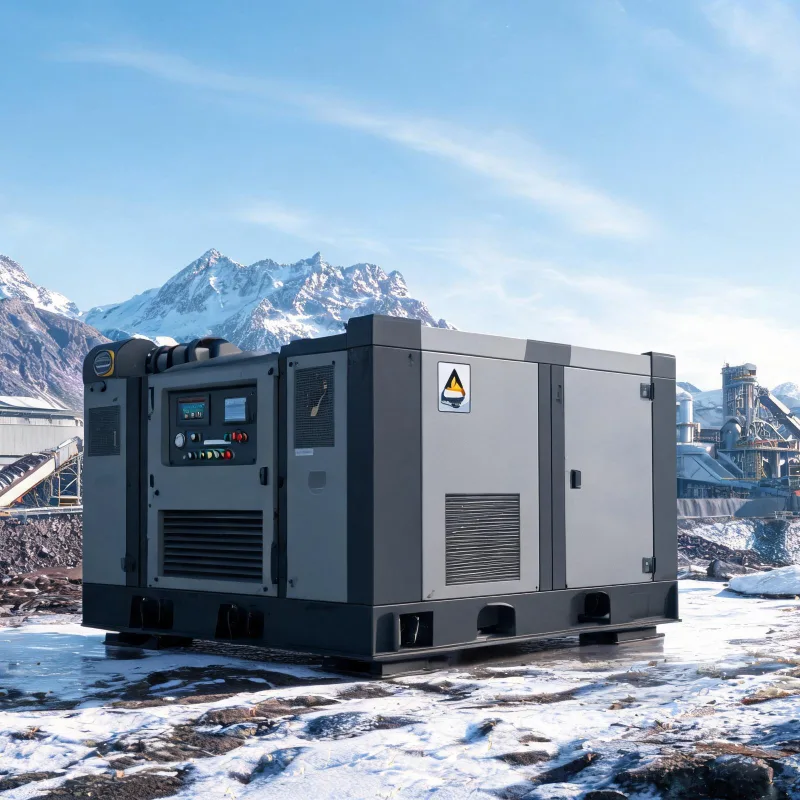
On-Site Engineer Notes: Compressor Solutions for 4500m Andes Copper Processing
Most standard mining air compressors fail within 18 months at 4500m, even when marketed as high-altitude capable.
First On-Site Impression
The operation had installed two new off-the-shelf industrial compressors six months prior, and the units were already tripping on overheat alerts 2-3 times per shift.
Most new projects source compressors without altitude-specific design adjustments to cut upfront costs.
That’s a costly mistake.
This 12-month stay changed that assumption completely.
That changes everything for positive displacement compressors.
First Round of Commissioning
We measured outlet oil temperature at 112C, 18 degrees higher than the same unit running at sea level under the same load.
No standard heat exchanger can handle that strain long-term.
Unforeseen Altitude-Related Constraints
Beyond low air density, we ran into two issues most planning checklists miss. The first is extreme daily temperature swings: nights drop to -5C, while afternoons hit 28C. This repeated expansion and contraction loosened inlet filter gaskets within three months, letting unfiltered silicate dust into the compression chamber.
The second issue is accelerated lubricant evaporation. Even full-synthetic compressor oil has a 2.7x higher evaporation rate at 4500m than at sea level, due to lower boiling point at low atmospheric pressure.
This issue only becomes critical above 4000m; it’s negligible for operations below 3000m, so most lower-altitude mine teams never encounter it.
That’s why off-the-shelf solutions consistently fail here.
Targeted Adjustments We Implemented
We made three low-cost changes to the existing units instead of replacing them entirely, to test what works without blowing the operations budget.
The larger surface area compensates for lower air flow across cooling fins, bringing steady-state oil temperature down to 89C, well within the safe operating range.
Third, we replaced the original nitrile gaskets with low-high temperature silicone gaskets, and added a small pressure equalization vent to the inlet filter housing. This reduces the stress from daily temperature swings, stopping unfiltered air from leaking into the system.
Reusable Lessons for Future Projects
You don’t need a custom-built compressor to run reliably at 4500m in the Andes. Small, targeted adjustments to off-the-shelf units deliver most of the reliability gain at a fraction of the cost.
For existing plants struggling with persistent compressor outages, start with a 24-hour full-load temperature and FAD test before you invest in new equipment. Nine times out of ten, the problem is bad adjustment, not bad equipment.
Pitfalls to Avoid
- Don’t ignore daily temperature swing effects on filter gaskets
- Don’t follow the manufacturer’s standard lubricant change interval
Implementation Timeline
1. Pre-purchase: Verify derating factor matches 4500m air density 2. Pre-commissioning: Upgrade heat exchanger and gasket materials 3. Commissioning: Test FAD and temperature under full load for 24 hours 4. Operational: Adjust maintenance intervals for altitude conditions 5. Quarterly: Inspect gaskets and lubricant viscosity for wear
Maintenance Tips
- Inspect inlet filter gaskets every 30 days for cracking from temperature swings
- Check lubricant viscosity monthly to account for higher evaporation rates
- Clean heat exchanger fins every 90 days to maintain cooling efficiency at low air density




