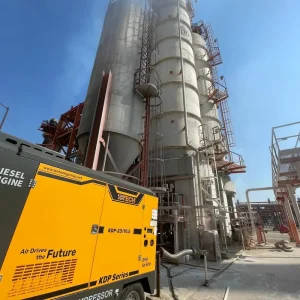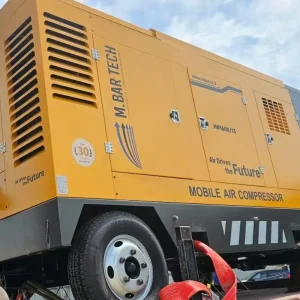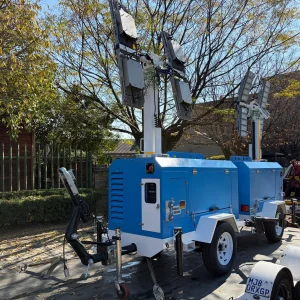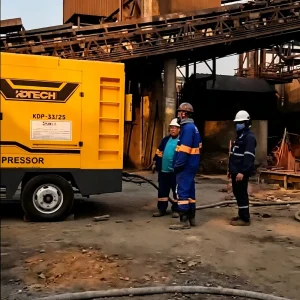

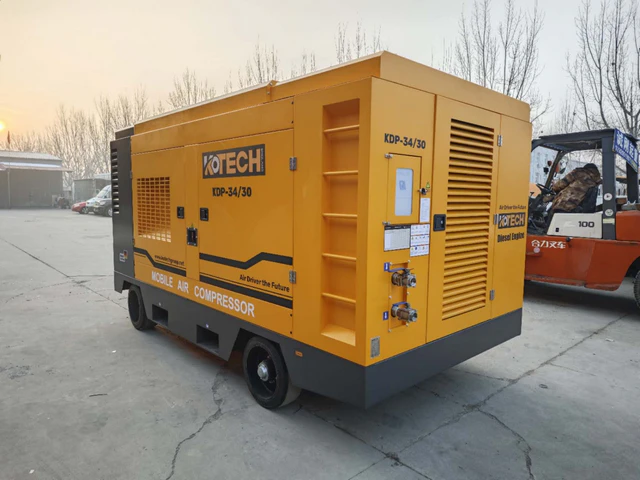
Operating industrial air compressors in mining’s extreme conditions presents unique challenges that standard equipment simply cannot meet. This article dives into the critical requirements for robust, reliable, and efficient air compression solutions, offering actionable strategies to overcome environmental adversities, minimize downtime, and ensure sustained productivity in the harshest global mining sites.
Mastering Air Compression in Extreme Mining Operations
Key Takeaways
- Extreme mining conditions necessitate purpose-built air compressors, not modified standard units.
- Key design elements include advanced multi-stage filtration, robust temperature control, high-altitude optimization, and vibration dampening.
- Downtime in mining is prohibitively expensive; reliable air compression directly impacts profitability.
- Energy efficiency, driven by VSD technology and smart sizing, offers substantial long-term cost savings.
- Predictive maintenance, enabled by IoT and AI, is crucial for maximizing uptime and extending equipment lifespan.
- A thorough site assessment and partnership with specialized manufacturers are vital for successful implementation.
Related: Heavy-duty mine air compressors · rugged air compression systems · harsh environment air supply · high-altitude mining compressors · dust-proof industrial compressors · temperature-resilient air systems · remote mine site air solutions.
Operating industrial air compressors in the world’s most demanding mining environments isn’t just a technical challenge; it’s a constant battle against forces that can cripple productivity and inflate operational costs. Specialized, rugged air compression systems are not merely an option but an absolute necessity for survival and profitability in these conditions. From our experience, choosing the right solution makes the difference between consistent output and costly, unpredictable downtime.
Key Insights:
- Reliability is paramount: Downtime from compressor failure in mining can cost upwards of $250,000 per hour, making robust design non-negotiable.
- Energy efficiency directly impacts profitability: Up to 70% of a compressor’s lifecycle cost is energy consumption; optimized systems yield significant savings.
- Customization is essential: Off-the-shelf units rarely meet the specific demands of high altitude, extreme temperatures, or abrasive dust.
- Predictive maintenance transforms operations: Leveraging data analytics prevents failures, extends equipment life, and reduces unplanned interruptions.
- Safety and compliance are integrated: Solutions must meet stringent industry safety standards to protect personnel and operations.
The Unyielding Demand: Why Standard Compressors Fail in Mining
Mining operations push equipment to its absolute limits. Imagine a compressor working flawlessly at sea level in a controlled factory environment. Now, picture that same unit operating 15,000 feet up in the Andes, exposed to sub-zero temperatures, corrosive dust, and continuous vibration from heavy machinery. Standard industrial compressors simply aren’t built for this relentless assault. They quickly succumb to premature wear, frequent breakdowns, and catastrophic failures. The financial repercussions are immediate and severe, impacting production targets and eating into profit margins.
The Hard Numbers: Industry Trends & Economic Impact
The global mining equipment market is projected to reach $180 billion by 2030 (Grand View Research, 2023), driven by increased demand for minerals and the need for more efficient, durable machinery. This growth underscores the industry’s reliance on high-performance components, including air compressors. Downtime, a perennial nemesis, continues to be a major concern. According to a report by Accenture (2022), unplanned downtime in mining can cost operators between $1 million and $3 million per day depending on the scale of operations. This staggering figure highlights the critical need for resilient air compression systems that minimize such risks. Furthermore, energy efficiency is a growing focus, with industrial compressor manufacturers innovating to meet demand. Variable Speed Drive (VSD) compressor adoption, for instance, is projected to grow by 6.5% annually through 2028 (Transparency Market Research, 2024), reflecting the industry’s push to reduce the significant energy costs associated with air compression, which can represent up to 30% of a mine’s total electricity bill.
Engineering for Resilience: Key Design Considerations
Building air compressor solutions for extreme mining conditions requires meticulous engineering across several fronts.
Robust Filtration Systems: Battling Abrasive Dust
Mining sites are inherently dusty. Abrasive particles can quickly clog filters, damage internal components, and degrade air quality. Specialized mining compressors integrate multi-stage filtration systems, often with cyclonic pre-filters and heavy-duty primary filters, designed to handle high dust loads and extend service intervals. These systems protect the compressor’s core while ensuring clean air for pneumatic tools and processes.
Temperature Management: Surviving Extremes
From the scorching heat of desert mines to the freezing conditions of arctic operations, temperature fluctuations are constant. Solutions must feature robust cooling systems for high temperatures, often oversized radiators or specialized heat exchangers. For cold environments, integrated heaters for lubricants and controls prevent freezing and ensure smooth startups, even in sub-zero conditions.
High-Altitude Performance: Defying Thin Air
At high altitudes, air density decreases, significantly impacting compressor performance. Standard compressors lose efficiency and can overheat. Engineered solutions for high-altitude mining compensate with larger displacement units, optimized intake designs, and specialized controls to maintain consistent pressure and flow rates, preventing efficiency drops and component strain.
Vibration Dampening & Structural Integrity: Enduring the Shake
Mining machinery creates immense vibration. Compressors must be built with heavy-duty frames, vibration isolation mounts, and robust enclosures to withstand constant shaking and impact. Components like piping and electrical connections require reinforcement to prevent fatigue failures. Honestly, I’ve seen operations try to cut corners here, and it always ends up costing them ten times more in repairs and lost production down the line.
Remote Monitoring & Automation: The Eyes and Ears of Operations
Many mine sites are remote, making on-site supervision challenging. Modern air compressor solutions incorporate advanced telemetry and IoT sensors for real-time monitoring of pressure, temperature, flow, vibration, and energy consumption. This data enables predictive maintenance, remote diagnostics, and optimized operational scheduling, minimizing the need for costly manual inspections and preventing unexpected breakdowns.
When “One Size Fits All” Fails: The Limits of General-Purpose Systems
The notion that a standard industrial air compressor can simply be “ruggedized” for mining is a dangerous misconception. General-purpose units lack the inherent design strength, material specifications, and specialized subsystems required for sustained operation in extreme conditions. Trying to adapt them often leads to a cycle of costly modifications, frequent repairs, and ultimately, premature replacement. This approach increases the total cost of ownership significantly and compromises safety. A general-purpose compressor, for example, designed for a manufacturing plant, won’t have the sealed electrical components or specialized filtration needed to prevent dust ingress in a coal mine, leading to rapid component degradation and potential electrical hazards. Only when the operating environment is relatively benign and the required uptime is not critical might a slightly modified standard unit be considered, but this is rarely the case in industrial mining.
Implementing Best-in-Class Solutions: A Practical Roadmap
Deploying the right air compression system involves more than just purchasing equipment. It requires a strategic approach.
Thorough Site-Specific Needs Assessment
Before any purchase, conduct a detailed assessment of your mine’s unique conditions: altitude, temperature range, dust composition, humidity, power availability, and required air quality. This data informs the precise specifications for your compressor system. Based on our experience, a thorough site audit before any purchase is non-negotiable. Don’t skip it.
Partnering with Specialized Manufacturers
Engage with manufacturers who have a proven track record in mining-specific air compression. They offer engineered-to-order solutions, deep industry knowledge, and comprehensive support, which is invaluable for long-term reliability.
Adopting Predictive Maintenance Strategies
Move beyond reactive maintenance. Implement advanced monitoring systems that leverage AI and machine learning to analyze performance data and predict potential failures before they occur. This allows for scheduled interventions, reducing unplanned downtime and optimizing maintenance costs.
Prioritizing Energy Efficiency
Invest in technologies like Variable Speed Drive (VSD) compressors, which adjust motor speed to match air demand, drastically reducing energy consumption. Explore waste heat recovery systems to capture and reuse heat generated by compressors, further improving overall site efficiency.
Comprehensive Training and Safety Protocols
Ensure your operational and maintenance teams are fully trained on the specialized equipment. Implement stringent safety protocols tailored to the unique risks associated with high-pressure air systems in extreme mining environments.
Future-Proofing Your Operations: Emerging Technologies
The future of air compression in mining lies in even greater intelligence and autonomy. Integration of artificial intelligence for real-time fault diagnosis and self-optimization, advanced materials for enhanced durability and lighter designs, and even modular, containerized units for rapid deployment in remote locations are all on the horizon. These innovations promise to push the boundaries of reliability and efficiency even further, ensuring mining operations can continue to extract vital resources under any conditions.
Expert Insights
From my two decades in this sector, one truth always holds: investing in purpose-built, high-quality air compression for extreme mining conditions isn't an expense; it's a strategic investment in your operation's resilience and long-term profitability. Compromising here invariably leads to far greater costs down the road in lost production and repair bills.
Further Reading
- Air Compressor Solutions for Mining & Quarrying Applications
- Mining Compressor Solutions: Low Noise & Low Maintenance
- Durable Diesel-Powered Air Compressors for Mining Applications
- How Mining Air Compressors Work | Technology & Applications
- Industrial Mining Air Compressor Solutions for Extreme Conditions – Heavy-Duty Mining
- Custom Compressed Air Solutions for Global Mining Projects
- Mining Air Compressor Solutions for Drilling & Blasting Tasks
- Portable & Stationary Air Compressor Solutions for Mining
Related Reading: Mining Air Compressor Systems: Scalable Solutions for Mines
Related Applied Cases