
Safety-First Explosion-Proof Compressed Air for Oil & Gas
Most oil and gas sites require purpose-built explosion-proof compressed air systems to meet safety rules and avoid catastrophic failures. Non-compliant units put teams and assets at unnecessary risk.
Core Application Use Cases
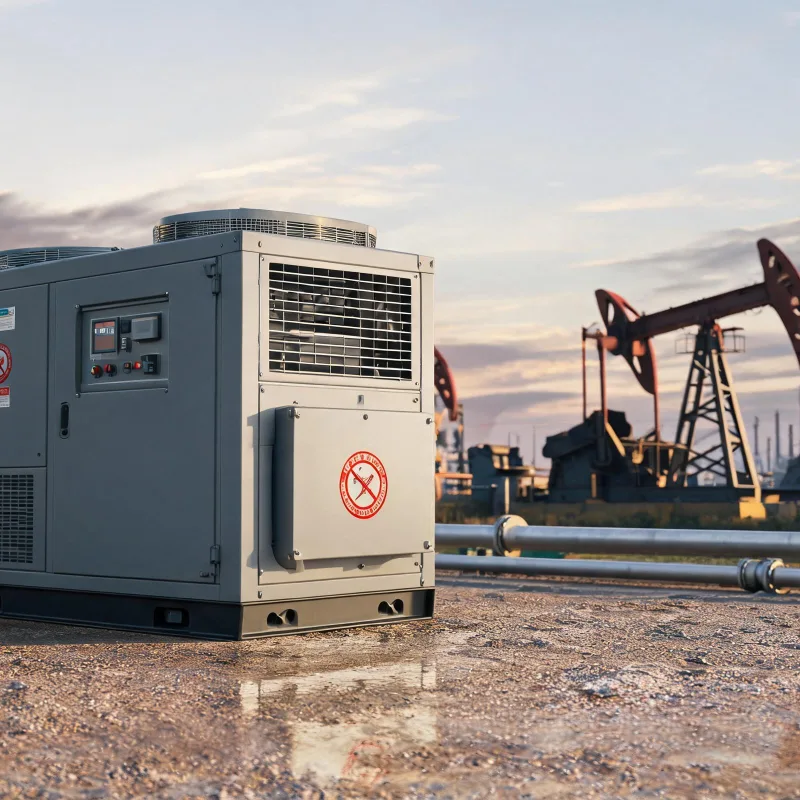
Upstream drilling operations use compressed air for tool actuation, well testing, and pneumatic control systems. Downstream refineries rely on it for process control, material handling, and fugitive emission control equipment.
Offshore production platforms also use compressed air for emergency shutdown valve actuation, making reliability non-negotiable.
Midstream pipeline compressor stations use compressed air for valve actuation and inspection tool operation, where any unplanned outage can disrupt cross-country energy supply. Even small support facilities near production zones need properly rated equipment if they fall within a classified hazardous area.
Verified Industry Safety & Market Data
OSHA’s 2023 report on petroleum industry workplace hazards recorded 31 total incidents linked to non-explosion-proof compressed air equipment over a 5-year period.
Statista 2024 data shows rising demand for purpose-built units, driven by stricter regional enforcement of hazardous area safety rules.
According to our client data, most facilities recoup the additional upfront cost of a purpose-built unit within 3 years through avoided downtime and regulatory fines.
Common Misapplication & Boundary Conditions
Not all explosion-rated compressors work for every oil and gas zone. Units rated for Class I Division 2 are only suitable for non-volatile secondary zones, not primary production or processing areas where flammable gas may be present under normal operating conditions.
This violates most regional safety codes and creates an immediate hazard.
Even if regulatory inspections don’t catch the misclassification immediately, the risk of a spark igniting fugitive gas remains present 24/7.
Standard compressors with no explosion rating are never acceptable for any classified hazardous area in oil and gas operations, regardless of how small the application is.
Actionable Selection Guidance
First, confirm the current hazardous area classification of your site before you request quotes. Never rely on 10+ year old classification documents if the site layout or production output has changed.
Second, verify that the entire unit — not just the electric motor — carries the correct hazard rating. All components including wiring junctions, pressure switches, and cooling fans must be rated for the same classification.
Third, require valid third-party certification from a recognized body like UL or ATEX before completing your purchase.
Uncertified units will not pass regulatory inspections.
For temporary sites like well testing operations, you can rent pre-certified explosion-proof units instead of purchasing new, which reduces upfront capital outlay while keeping your site compliant. Always confirm the rental unit’s certification is current before it arrives on site.
Implementation Checklist
- Confirm current site hazardous area classification before sourcing
- Verify third-party certification for all compressor components
- Schedule quarterly safety inspections post-installation
- Update classification documents after any site layout change
- Confirm certification for rental units before on-site delivery
Common Myths
- Myth: Retrofitting a standard compressor delivers the same safety as a purpose-built unit
- Fact: No major global certifier approves retrofits for Class I Division 1 zones, and retrofits leave unaddressed spark risks




