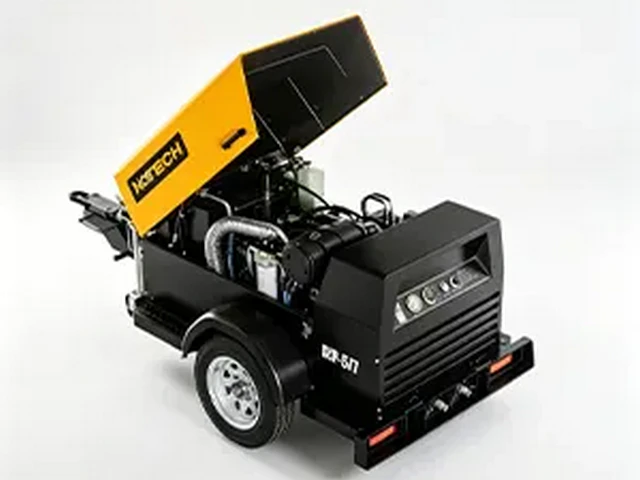
Achieving Quiet Operations: Low Noise Transformation for Mining Air Compressors
Why Low Noise is Non-Negotiable for Mining Air Compressors
The roar of a mining air compressor isn’t just background noise; it’s a persistent, often debilitating, threat to worker safety and operational efficiency. Low noise transformation technology for mining air compressors is no longer a luxury; it’s a fundamental requirement for any serious operation. We’re talking about mitigating significant risks: permanent hearing damage, communication breakdowns that lead to accidents, and the sheer mental fatigue that degrades performance over a shift. Addressing compressor acoustics is about protecting your people and your bottom line.
The Cost of Silence: Industry Data & Trends
The data unequivocally supports the need for aggressive noise control. According to the Centers for Disease Control and Prevention (CDC) in 2023, approximately 22 million U.S. workers are exposed to hazardous noise levels at work annually, with mining being a particularly high-risk sector. These aren’t abstract figures; they represent real human suffering and substantial financial drains on businesses.
Beyond health, regulatory pressures are tightening. The European Union’s Noise Directive 2002/49/EC, for instance, sets benchmarks for industrial noise, pushing manufacturers and operators toward quieter solutions. In North America, OSHA’s occupational noise exposure standards (29 CFR 1910.95) mandate specific limits, and non-compliance can result in substantial penalties. Frankly, some companies only react when a fine hits, but proactive investment always pays off more in the long run.
Engineering the Quiet Revolution: Technologies & Approaches
Achieving significant noise reduction in mining air compressors involves a multi-faceted approach, targeting noise at its source, path, and receiver.
Source Control: Quieter Compressor Designs
Modern compressor manufacturers are integrating low-noise features directly into their designs. This includes advanced screw profiles in rotary screw compressors, optimized fan designs for cooling, and internal acoustic lining. Variable speed drive (VSD) compressors, for example, inherently reduce noise by operating only at the required speed, avoiding constant full-load operation. This doesn’t just cut noise; it also significantly reduces energy consumption, a major operational cost.
Path Control: Acoustic Enclosures and Barriers
This is where much of the “transformation” happens. Robust acoustic enclosures are paramount. These aren’t just metal boxes; they are engineered systems utilizing multi-layered materials. High-density mass-loaded vinyl, specialized acoustic foams, and sound-absorbing panels are strategically placed to trap and dissipate sound waves. The design must also account for ventilation requirements to prevent overheating while maintaining sound integrity. Sometimes, a full enclosure isn’t feasible, and acoustic barriers or partial wraps can provide localized noise reduction.
Vibration Isolation: The Unsung Hero
Noise often travels through structural vibration. Isolating the compressor unit from its mounting surface is critical. This typically involves heavy-duty anti-vibration mounts, spring isolators, or rubber pads that absorb mechanical vibrations before they can transmit into the surrounding structure or ground. Neglecting vibration isolation is like trying to plug a leaky dam with a single finger; the problem will just find another way out.
Advanced Exhaust and Intake Silencers
The intake and exhaust systems of air compressors are significant noise generators. Specialized silencers, often designed with reactive and absorptive chambers, can dramatically reduce aerodynamic noise without impeding airflow. These are not simple mufflers; they are acoustically tuned components.
When Silence Isn’t Golden: Limitations and Trade-offs
While the benefits of low noise transformation are substantial, it’s crucial to acknowledge its limitations and potential trade-offs. Ultra-low noise levels might not always be cost-effective for every single application. For instance, a small, intermittently used portable compressor in a very remote, rarely accessed section of a mine might not justify the same level of investment as a large, continuously operating stationary unit in a high-traffic area. The return on investment for extreme sound attenuation in such niche scenarios could be minimal, especially if the compressor’s operational lifespan is short.
Furthermore, some advanced acoustic materials can be sensitive to extreme environmental conditions prevalent in mining, such as high dust, moisture, or corrosive chemicals. While robust solutions exist, they often come with higher material and maintenance costs. A thorough site assessment is always necessary to ensure the chosen noise reduction strategy is both effective and durable under specific operational stresses.
Implementing Low-Noise Solutions: A Practical Roadmap
Effective low noise transformation requires a structured approach.
- Technology Selection & Engineering: Based on the audit, select appropriate technologies. This might involve upgrading existing enclosures, installing new vibration mounts, or even replacing older, inherently noisy compressors with newer, quieter models. Work closely with acoustic engineers and compressor manufacturers.
- Installation & Integration: Proper installation is paramount. A poorly sealed acoustic enclosure is almost useless. Ensure all penetrations (pipes, cables) are sealed with acoustic grommets or caulking. Vibration isolators must be correctly specified and installed to bear the compressor’s weight and dynamic forces.
- Regular Maintenance & Monitoring: Acoustic materials can degrade over time due to wear, dust, or chemical exposure. Gaps can form, seals can fail. Regular inspections and maintenance are crucial to sustain the noise reduction performance. Periodic noise monitoring ensures compliance and identifies any performance degradation early.
It’s a tangible improvement that workers genuinely appreciate.
Future-Proofing Your Operations
The trajectory for industrial noise control is clear: regulations will get stricter, and worker expectations for safer environments will only increase. Investing in low noise transformation technology for mining air compressors isn’t just about meeting today’s standards; it’s about future-proofing your operations, enhancing your reputation as a responsible employer, and creating a more productive, safer workplace for everyone involved.