
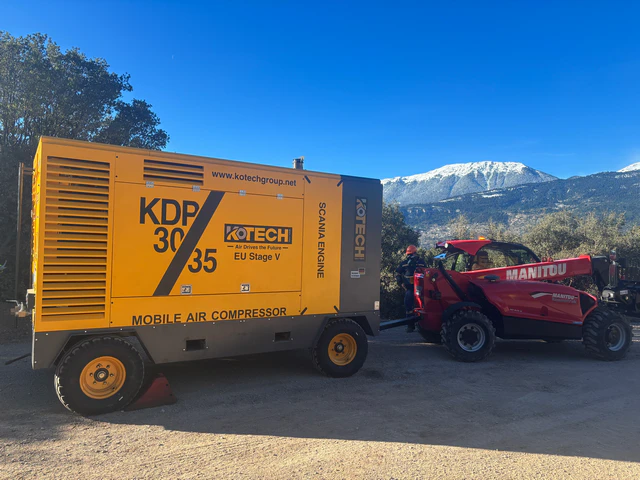
In remote mining, reliable compressed air is not a luxury; it's the backbone of operations. Portable diesel air compressors are the workhorses, providing essential power for everything from drilling and blasting to ventilation and tool operation in the most challenging, isolated environments. This guide dives deep into their critical applications, the operational pain points they address, and how to maximize their efficiency and uptime.
Unlocking Mine Productivity: The Indispensable Role of Portable Diesel Air Compressors
Key Takeaways
- Portable diesel air compressors are foundational for remote mining operations due to their self-sufficiency and robustness.
- They power essential tasks including drilling, blasting, pneumatic tool operation, and ventilation in challenging environments.
- Unplanned downtime from compressor failure is extremely costly, emphasizing the need for reliability and proactive maintenance.
- Fuel efficiency is a critical operational expense, addressed by advanced engine technology and remote monitoring.
- Environmental regulations push for cleaner emissions, leading to Tier 4 Final engines and hybrid compressor solutions.
- Strategic equipment selection, operator training, and strong supplier support are crucial for maximizing uptime and productivity.
Related: Mobile air power for mining · extreme environment compressed air · diesel compressor reliability · remote site operational efficiency · mining equipment maintenance · on-site blasting air · drilling air supply · dust suppression solutions.
In my twelve years navigating the complexities of industrial equipment in extreme environments, I’ve seen firsthand that few pieces of machinery are as fundamental to a remote mine’s success as the portable diesel air compressor. It’s not just a tool; it’s the lifeblood enabling core mining processes in places where infrastructure is nonexistent and reliability is paramount.
Key Insights:
- Unwavering Reliability: Portable diesel compressors provide critical, on-demand compressed air for drilling, blasting, and tools, regardless of grid access.
- Operational Backbone: They are indispensable for site preparation, resource extraction, and safety protocols in isolated mining locations.
- High Costs of Downtime: Unplanned outages can cost mines hundreds of thousands per hour, making robust, field-serviceable units essential.
- Efficiency Drives Profit: Optimizing fuel consumption and implementing predictive maintenance are key to managing high operating expenses.
- Evolving Technology: Newer models integrate telematics and hybrid options, addressing sustainability goals and improving remote management.
Why Portable Diesel Compressors are Non-Negotiable in Remote Mining
Remote mine areas, by their very nature, present a unique set of challenges: extreme temperatures, abrasive dust, high altitudes, and often, zero access to reliable electrical grids. This is precisely where portable diesel air compressors shine. They are self-contained powerhouses, designed to deliver consistent, high-pressure air wherever it’s needed most.
Their primary applications are diverse and critical. We’re talking about powering rock drills for exploration and overburden removal, supplying air for pneumatic tools used in maintenance and construction, facilitating shotcrete application in underground operations, and even supporting specialized ventilation systems. Without these rugged compressed air units, fundamental mining activities would simply grind to a halt.
The Unseen Costs of Downtime: Industry Data Speaks
Let’s be blunt: downtime in mining is astronomically expensive. It’s not just the lost production; it’s the ripple effect across the entire supply chain, potential safety risks, and damage to project timelines. According to a report by PwC 2022 on operational efficiency in mining, a single hour of unplanned downtime can cost anywhere from $10,000 to $250,000, depending on the scale and type of operation. That figure alone underscores why investing in reliable, high-quality diesel-powered compressors and meticulous maintenance is not an option, but a financial imperative.
The global mining equipment market, valued at USD 149.2 billion in 2023 and projected to grow at a CAGR of 6.2% from 2024 to 2030 (Grand View Research 2024), clearly shows continued investment in robust solutions. This growth isn’t just about expansion; it’s about upgrading to more reliable, efficient machinery to mitigate these very risks.
Optimizing Performance: Fuel Efficiency and Maintenance Strategies
Fuel costs often represent 20-30% of a mine’s operating expenses, a figure consistent across various regions according to the International Energy Agency (IEA) 2023 reports on industrial energy consumption. This makes fuel efficiency a top-tier concern for any mine manager running diesel equipment. Modern portable diesel compressors incorporate advanced engine management systems, variable speed drives, and improved air ends to significantly reduce fuel consumption under varying load conditions.
However, efficiency isn’t just about the machine itself; it’s about the maintenance strategy. In my experience, a proactive, predictive maintenance approach using telematics and remote monitoring is a game-changer. Sensors can track engine parameters, air end temperatures, fuel levels, and filter life, allowing operators to schedule maintenance before a minor issue becomes a costly breakdown. This moves beyond traditional preventative maintenance, offering real-time insights that save money and maximize uptime.
Navigating Environmental and Regulatory Hurdles
Mining operations, particularly in remote and often pristine environments, face increasing scrutiny regarding their environmental footprint. Diesel emissions are a key concern. Many major mining companies have committed to reducing Scope 1 and 2 emissions by 30% to 50% by 2030, a trend noted by Deloitte’s 2023 mining outlook. This puts pressure on equipment suppliers and operators to adopt cleaner technologies.
Newer portable diesel compressors often feature Tier 4 Final engines, which utilize sophisticated exhaust after-treatment systems like diesel particulate filters (DPF) and selective catalytic reduction (SCR) to drastically reduce nitrogen oxides and particulate matter. While these technologies add complexity and require specific DEF (Diesel Exhaust Fluid) logistics, they are essential for compliance and meeting corporate sustainability goals. Hybrid diesel-electric models are also gaining traction, offering the flexibility of diesel power with the option to run on electric power when available, further reducing emissions and noise.
When Portability Isn’t Enough: Boundary Conditions and Alternatives
While portable diesel air compressors are incredibly versatile, there are scenarios where they might not be the optimal solution. For very long-term, static compressed air demands at a permanent processing plant, a fixed electric compressor setup, assuming grid power is reliable and affordable, would likely offer lower operating costs and emissions. Similarly, for extremely small-scale, intermittent tasks, battery-electric tools might be more practical than firing up a large diesel unit. These boundary conditions highlight the importance of a thorough needs assessment before procurement.
Furthermore, in ultra-deep underground mines, the ventilation requirements and heat generated by diesel engines can become problematic, pushing towards electric or hybrid solutions where feasible. It’s not a one-size-fits-all world, and understanding the specific operational context is always key to making the right equipment choice.
Practical Implementation: Best Practices for Procurement and Operation
Procuring and operating portable diesel air compressors in remote mine areas requires a strategic approach. Here are some best practices based on years of field observation:
- Robustness and Durability: Prioritize units built for heavy-duty mining conditions. Look for features like heavy-gauge steel enclosures, robust undercarriages, and superior dust filtration systems.
- Serviceability: Easy access to service points, readily available spare parts, and straightforward diagnostic systems are crucial. Remote locations mean technicians often have to fly in, so minimizing repair time is critical.
- Fuel Management: Implement a robust fuel storage and delivery system. Consider larger fuel tanks on compressors or auxiliary fuel cells to extend operational periods between refueling.
- Operator Training: Ensure all operators and maintenance staff are thoroughly trained on the specific models used. Proper operation and basic troubleshooting can prevent many common issues.
- Telematics Integration: Leverage remote monitoring solutions. These systems provide invaluable data for predictive maintenance, fuel consumption tracking, and operational analytics, allowing for proactive management from a central hub.
- Supplier Support: Partner with suppliers who have a proven track record of supporting remote operations, offering strong technical support, and maintaining adequate spare parts inventory. This is, frankly, non-negotiable for long-term success.
Ultimately, the success of portable diesel air compressor applications in remote mine areas hinges on a combination of selecting the right equipment, implementing smart operational strategies, and committing to proactive maintenance. It’s about ensuring that the air keeps flowing, the drills keep turning, and the mine stays productive, no matter how isolated the location.
Expert Insights
"Having spent over a decade in this field, I can tell you that a mine's productivity often boils down to the reliability of its air supply. You can have the best drills, but if your compressor goes down in the middle of nowhere, you're losing money hand over fist. Investing in robust, telematics-enabled portable diesel compressors isn't just about buying equipment; it's about buying operational insurance and leveraging data to stay ahead of costly failures. The shift towards cleaner engines and hybrid models isn't just regulatory compliance; it's smart business for long
— term sustainability and attracting investment."
Further Reading
- All-Weather Applications of Diesel Portable Mining Compressors
- Skid-Mounted Air Compressor Applications for Oilfield Temporary Works
- All-Weather Air Compressor Solutions for Mining in Any Climate
- Mobile Air Compressor Solutions for Mining Exploration Camps
- Portable Diesel Air Compressor, Remote Mine Applications, Mining Equipment, Compressed Air Systems, Mine Site Productivity – Portable Diesel Ai
- Portable Diesel Air Compressor Applications in Mining Exploration
- Heavy-Duty Portable Diesel Compressor Mining Field Applications
- The Role of Compressed Air in Sustainable Mining Practices
About the Author

Related Reading: Towable Diesel Air Compressor Applications for Mining Operations
Related Applied Cases