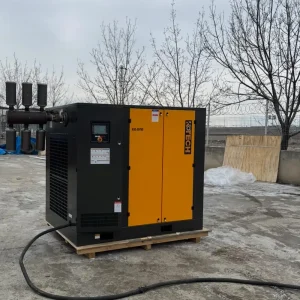
Designing the Next Generation of Mining Air Compression
The Imperative for Full Automation in Mining Air Systems
The mining industry operates under immense pressure: fluctuating commodity prices, stringent environmental regulations, and an unyielding demand for higher productivity. In this landscape, the full-automatic mining air compressor system design solution emerges as a non-negotiable asset. It moves beyond simple remote control, offering intelligent, self-optimizing operations that dramatically impact bottom-line profitability and worker safety. We’re talking about systems that anticipate demand, self-diagnose issues, and communicate seamlessly with other mine infrastructure. This level of autonomy is no longer a luxury; it’s a competitive necessity for any serious player in the global mining sector looking to future-proof their operations.
Addressing Core Pain Points with Automation
Traditional air compression setups in mining are notorious for their energy inefficiency, high maintenance requirements, and the inherent risks associated with manual intervention in often dangerous conditions. Downtime from unexpected compressor failures can halt an entire production line, costing millions daily. Moreover, the constant human oversight needed for pressure adjustments, filter changes, and routine checks diverts valuable labor resources and exposes personnel to noise, dust, and heavy machinery. An automated system directly tackles these pain points, transforming a reactive, labor-intensive process into a proactive, lean operation.
Quantifiable Gains: Data Driving Automation Adoption
The shift towards fully automated air compressor systems isn’t driven by hype; it’s backed by hard numbers and compelling industry trends. These systems deliver tangible improvements that resonate deeply with mining executives.
Frankly, seeing the energy bills drop on sites after implementing VSD-driven automated systems is always a highlight for me. The old fixed-speed machines just can’t compete.
This directly impacts production targets and ensures consistent material flow. Less downtime means more ore moved, plain and simple.
Engineering the Future: Core Principles of Design
A robust full-automatic mining air compressor system design solution hinges on several interconnected principles. These aren’t just features; they are foundational elements that ensure longevity, efficiency, and safety.
Modular Design for Scalability and Maintainability
The design must be inherently modular. This allows for easy scalability as mine operations expand or contract, and simplifies maintenance and component replacement. Instead of custom-building every part, standardized, interchangeable modules — compressor blocks, motor units, control panels, filtration systems — can be quickly swapped out, minimizing downtime. This approach also reduces the need for highly specialized on-site fabrication. We often advise clients to think about future expansion from day one, even if they’re starting small.
Intelligent Control and Monitoring Systems
At the heart of any automated system is its intelligent control unit. This isn’t just a PLC; it’s a sophisticated network of sensors, actuators, and software algorithms that continuously monitor system performance, air demand, pressure levels, temperature, and power consumption. These systems employ advanced analytics to predict potential failures before they occur (predictive maintenance), automatically adjust output to match real-time demand, and integrate seamlessly with the mine’s overall SCADA (Supervisory Control and Data Acquisition) or MES (Manufacturing Execution System). Remote monitoring capabilities are crucial, allowing operators to oversee and manage the entire air supply from a safe, centralized control room, even hundreds of miles away.
Energy Efficiency and Heat Recovery
Energy is a massive operating cost in mining. An automated design prioritizes energy efficiency through technologies like VSD compressors, optimized piping networks to minimize pressure drops, and intelligent sequencing of multiple compressor units. Beyond efficiency, heat recovery systems capture the waste heat generated by compressors and repurpose it for other mine applications, such as heating water for wash plants, warming ventilation air in cold climates, or even power generation through Organic Rankine Cycle (ORC) systems. This dual approach not only reduces energy consumption but also creates an additional revenue stream or reduces other energy expenditures.
When Full Automation Might Not Be the Silver Bullet
While the benefits are substantial, it’s important to acknowledge that a full-automatic mining air compressor system design solution isn’t a one-size-fits-all answer. For very small, short-term exploration projects with limited capital expenditure budgets, the initial investment in a fully automated system might be disproportionately high compared to its operational lifespan. Similarly, in extremely volatile or unpredictable geological conditions that require frequent, on-the-fly reconfigurations of equipment and processes, a system that relies heavily on predefined automation logic might struggle without significant human oversight and reprogramming. In these niche scenarios, a semi-automated or hybrid approach, where critical functions are automated but human intervention remains readily accessible for adaptability, could be a more pragmatic and cost-effective solution. The key is understanding your specific operational context and future growth trajectory.
Implementing Your Automated Air Compressor Solution
Deploying a full-automatic mining air compressor system requires meticulous planning and execution. It begins with a thorough site assessment to understand existing infrastructure, power availability, air demand profiles, and environmental conditions.
Phased Implementation and Integration
We typically recommend a phased implementation approach. Start with a pilot project or integrate automated units into an existing setup before a full-scale rollout. This allows for fine-tuning, operator training, and validating performance metrics without disrupting the entire operation. Crucially, the new system must integrate seamlessly with existing mine management platforms. This means ensuring compatibility with current SCADA, ERP, and safety systems. Data exchange protocols and cybersecurity measures are paramount here; you don’t want your compressor data siloed or, worse, vulnerable.
Training and Support
Even with full automation, human expertise remains vital. Comprehensive training for operators, maintenance technicians, and IT personnel is essential. They need to understand how to monitor the system, interpret data, perform preventive maintenance on automated components, and troubleshoot any anomalies. A robust support agreement with the system provider, including remote diagnostics and rapid response teams, ensures sustained performance and minimal downtime. Based on our experience, proper training often makes the difference between a successful deployment and one that struggles to meet its potential.