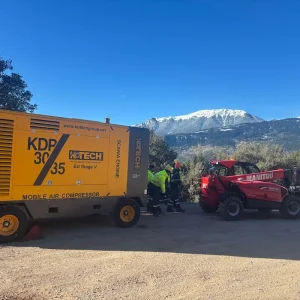

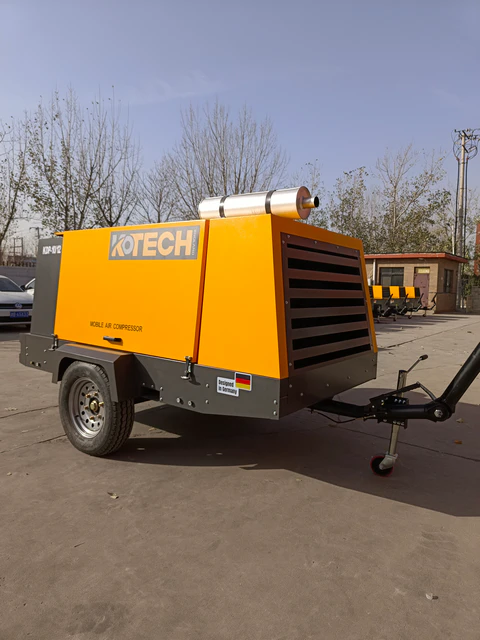
CNC machines demand a constant, high-quality air supply for precision, tool changes, and cooling. Two-stage compressors are the undisputed champions here, delivering superior efficiency, lower operating temperatures, and better air quality compared to their single-stage counterparts. This translates directly into reduced energy bills, less downtime, and ultimately, higher output for any manufacturing operation relying on sophisticated CNC equipment.
Optimizing CNC Operations with Two-Stage Compressed Air
Key Takeaways
- Two-stage compressors offer significant energy savings for CNC operations.
- They provide cooler, denser air, improving air quality and component longevity.
- Accurate sizing and robust air treatment are essential for CNC performance.
- VSD technology further enhances efficiency in fluctuating demand scenarios.
- Regular maintenance is critical for uptime and protecting precision CNC equipment.
Related: Industrial air supply · precision machining · rotary screw compressors · air quality for CNC · total cost of ownership · VSD compressors · chip removal systems · spindle cooling · pneumatic tools
When you’re running CNC machines, your compressed air system isn’t just an afterthought; it’s the lifeblood of your operation. We’re talking about precision, speed, and the kind of consistent performance that directly impacts your bottom line. And frankly, if you’re not running a two-stage compressor for your CNC setup, you’re leaving money on the table and risking critical downtime. The core truth is, two-stage compression offers a level of efficiency and reliability that single-stage units simply can’t match for demanding industrial applications like CNC machining.
<strong>The Unseen Powerhouse: Why Two-Stage Matters for CNC</strong>
CNC machines, from milling centers to lathes and grinders, rely heavily on compressed air for a multitude of functions: activating tool changers, clamping workpieces, purging chips, cooling spindles, and powering various pneumatic components. Inconsistent or poor-quality air isn’t just an annoyance; it can lead to scrapped parts, premature tool wear, and significant production delays.
A two-stage compressor tackles these challenges head-on. Unlike single-stage units that compress air in one go, a two-stage system compresses air twice. Air is first compressed to an intermediate pressure, then cooled, and finally compressed again to the desired higher pressure. This process is inherently more efficient. It generates less heat per stage, which means the compressor works less strenuously, consumes less energy, and delivers cooler, denser air.
This isn’t just theoretical. The U.S. Department of Energy (2022) consistently highlights that compressed air systems can account for 10-30% of a manufacturing plant’s total electricity consumption. Opting for a more efficient two-stage system can significantly reduce that burden. We’ve seen clients cut their compressed air energy costs by 15-20% just by switching from an undersized or single-stage system to a properly spec’d two-stage unit.
<strong>Beyond the Basics: Quantifying the Two-Stage Advantage</strong>
The benefits of two-stage compression for CNC aren’t just qualitative; they’re measurable and impactful.
- Superior Energy Efficiency: Because the air is cooled between stages, the compression process is closer to isothermal, requiring less energy input to achieve the same output pressure. This translates to lower amperage draw and reduced electricity bills. For a typical 100 HP industrial compressor running 6,000 hours a year, even a 15% efficiency gain can save tens of thousands of dollars annually. Honestly, overlooking this aspect is a common pitfall I’ve seen many businesses fall into, only to regret it when the utility bills roll in.
- Lower Operating Temperatures: Reduced heat generation means less thermal stress on internal components. This extends the lifespan of critical parts like bearings and rotors, leading to lower maintenance costs and less unexpected downtime. Cooler operation also means less moisture content in the air *before* it even hits your dryers, improving overall air quality.
- Increased Air Delivery (CFM): For a given horsepower, two-stage compressors typically deliver more cubic feet per minute (CFM) of air. This is crucial for CNC machines that often have fluctuating air demands for rapid tool changes or continuous chip evacuation. More CFM per HP means you might be able to achieve your required air flow with a smaller, more cost-effective compressor package.
- Enhanced Air Quality: While separate air treatment (dryers, filters) is always necessary for CNC applications, the cooler air produced by two-stage systems makes the job of downstream equipment easier. Less heat means less oil carryover and moisture vapor to begin with, contributing to a cleaner, drier air supply essential for protecting sensitive CNC electronics and precision tools.
The global CNC machine market is projected to grow significantly, reaching over $150 billion by 2030 (Statista, 2023), underscoring the increasing demand for reliable and efficient power sources, including compressed air. As manufacturing becomes more automated and precise, the role of optimized air systems becomes even more critical.
<strong>How Two-Stage Systems Deliver Precision and Power</strong>
Let’s get into the mechanics a bit. In a rotary screw two-stage compressor, air enters the first stage, where it’s partially compressed. It then passes through an intercooler, which dramatically reduces the air temperature. This cooler, denser air then enters the second compression stage, where it’s brought up to the final discharge pressure. This stepped approach minimizes the work required for each stage, resulting in less heat and better overall efficiency.
For CNC operations, this translates to:
- Consistent Pressure: Maintaining a stable PSI is vital for pneumatic clamps, tool changers, and actuators. Fluctuations can lead to clamping failures or incorrect tool seating, causing costly errors.
- Dry Air: Moisture in compressed air is a CNC killer. It corrodes pneumatic components, washes away lubrication, and can even interfere with delicate sensors. Two-stage systems, by running cooler, inherently produce less moisture at the compressor outlet, complementing the work of refrigerated or desiccant dryers to achieve the required pressure dew point (PDP).
- Clean Air: Beyond moisture, oil and particulate matter can damage CNC components. The efficiency of a two-stage system, combined with proper filtration, helps ensure the air powering your precision tools is as clean as possible.
<strong>When Single-Stage Still Makes Sense (And When It Doesn't)</strong>
While I’m a strong advocate for two-stage units in CNC environments, it’s fair to acknowledge their place. Single-stage compressors are generally simpler, have a lower upfront cost, and can be perfectly adequate for intermittent, lower-demand applications. Think small workshops with a few hand tools, or non-critical processes that don’t require high pressure or continuous flow.
However, for any dedicated CNC machining operation – especially those running multiple shifts, demanding high precision, or dealing with expensive materials – a single-stage compressor is almost always a false economy. The higher energy consumption, increased heat, greater wear and tear, and potential for inconsistent air quality will quickly erode any initial cost savings. The long-term total cost of ownership (TCO) almost invariably favors the two-stage system for these demanding applications.
<strong>Implementing Your High-Performance Compressed Air System</strong>
Choosing the right two-stage compressor for your CNC setup requires careful consideration beyond just horsepower.
1. Accurate Sizing: You need to precisely calculate your total CFM requirements, including all CNC machines, auxiliary equipment, and future expansion plans. Oversizing wastes energy, undersizing leads to pressure drops and premature wear. 2. Air Treatment: Never skimp here. Invest in a high-quality refrigerated or desiccant dryer to achieve a pressure dew point of at least +3°C (or lower for critical applications), along with coalescing and particulate filters. An oil-water separator is also crucial for responsible condensate disposal. 3. Variable Speed Drive (VSD) Integration: Many modern two-stage rotary screw compressors come with VSD technology. This allows the compressor to match its motor speed and air output precisely to demand, leading to significant energy savings, especially in applications with fluctuating air requirements – which is common in many CNC shops. Studies by the Compressed Air and Gas Institute (CAGI, 2021) consistently show VSD compressors can reduce energy consumption by 30% or more in fluctuating demand scenarios. 4. Proper Installation: Ensure adequate ventilation, proper piping (avoiding elbows and undersized lines), and a solid foundation. These factors might seem minor, but they profoundly impact system efficiency and longevity.
<strong>Maintenance & Optimization: Keeping Your CNC Running Smoothly</strong>
Even the best two-stage compressor needs consistent care. Preventive maintenance is non-negotiable.
- Regular Filter Changes: Air intake filters, oil filters, and separators need to be changed on schedule. Clogged filters restrict airflow, reduce efficiency, and can lead to compressor overheating.
- Oil Analysis: Periodic oil analysis can detect wear metals and contaminants, signaling potential issues before they become catastrophic failures.
- Leak Detection: Compressed air leaks are silent energy thieves. A single small leak can cost hundreds or even thousands of dollars a year in wasted electricity. Regular leak surveys using ultrasonic detectors are a must.
- Monitor Pressure Dew Point: Regularly check the performance of your air dryer. A rising dew point indicates a problem that needs immediate attention to protect your CNC machines.
In my experience, skipping maintenance is a direct path to unexpected breakdowns and expensive emergency repairs. A proactive approach not only extends equipment life but also guarantees the consistent, high-quality air supply your CNC machines absolutely depend on.
Expert Insights
"For any serious CNC operation, investing in a two-stage compressor isn't an option, it's a necessity. The efficiency gains and reduced downtime pay for themselves, often within just a few years."
Further Reading
- Industrial Air Compressors Designed for Mining Applications
- How Two-Stage Compressors Power CNC Machines in Manufacturing
- High-Performance Mining Air Compressors for Industrial Use
- Heavy-Duty Mining Air Compressors | Reliable & Durable
- Two-stage compressor, CNC machines, manufacturing, compressed air, energy efficiency – High-Temperature A
- Lightweight Mining Air Compressors for Portable Exploration Teams
- Applications of Two-Stage Air Compressors in Pharmaceutical Production
- Heavy-Duty Air Compressors for Mining Operations Worldwide
About the Author

Related Reading: Heavy-Duty Mining Air Compressors Built for Decades of Service