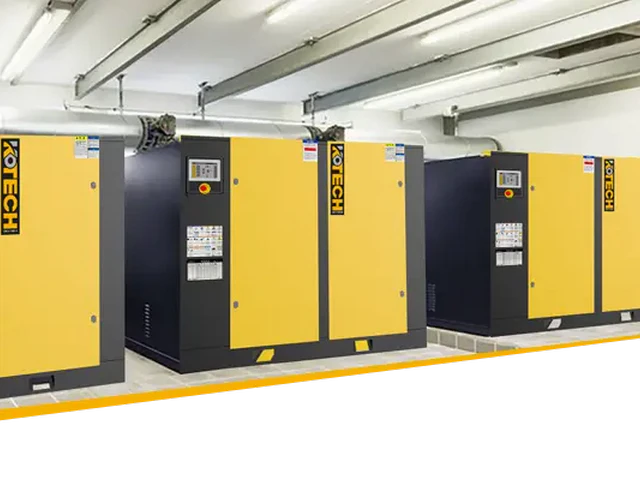
Optimizing Aerospace Maintenance with Two-Stage Air Compressors
When it comes to aerospace maintenance, the integrity of your compressed air supply isn’t just a convenience; it’s a non-negotiable operational imperative. Two-stage air compressors are the backbone of reliable, high-performance air systems in this sector, delivering the consistent pressure, superior air purity, and energy efficiency that single-stage units simply cannot match for critical applications. The stakes are too high for anything less than optimal.
Here are the key insights into why two-stage air compressors are essential for aerospace maintenance:
- Superior Efficiency: Two-stage compressors significantly reduce energy consumption compared to single-stage equivalents for high-pressure demands, leading to substantial operational cost savings.
- Consistent High Pressure: They provide a steady, reliable supply of high-pressure air, crucial for powering specialized pneumatic tools and intricate maintenance operations without performance drops.
- Enhanced Air Purity: The design inherently reduces moisture and contaminants, delivering cleaner, dryer air vital for preventing corrosion on aircraft components and protecting sensitive tooling.
- Extended Equipment Lifespan: By offering optimized performance and reduced stress on components, these systems contribute to longer service intervals and greater reliability for both the compressor and connected tools.
- Compliance and Safety: Meeting stringent aerospace industry standards (like AS9100) often mandates the precision and reliability that only a two-stage system can consistently provide.
Why Two-Stage Compressors Dominate Aerospace MRO
Aerospace Maintenance, Repair, and Overhaul (MRO) demands precision, reliability, and an unwavering commitment to quality. The tools and processes involved—from torque wrenches and paint sprayers to intricate component cleaning and composite repair—all rely heavily on a pristine, powerful compressed air supply. This is where two-stage air compressors shine. They are engineered to compress air twice, cooling it between stages, which dramatically improves efficiency and reduces the air’s temperature and moisture content before it even reaches a dryer. This translates directly into better performance for your critical pneumatic tools and a safer environment for delicate aircraft components.
The intermittent pressure drops or the tell-tale signs of moisture in the air lines are immediate red flags for any experienced technician. Choosing a two-stage system proactively mitigates these common pain points, ensuring your team has the robust air supply needed to execute complex tasks flawlessly, every single time.
The Data Driving Adoption: Efficiency and Reliability
The aerospace industry operates on tight margins and even tighter schedules. Energy efficiency and equipment reliability are not just buzzwords; they are bottom-line drivers. Two-stage air compressors offer a compelling case on both fronts.
Facilities that invest in advanced two-stage compressor technology are better positioned to handle this increasing workload while controlling operational expenses.
Reliability is equally paramount. Unscheduled downtime in an aerospace maintenance facility is incredibly expensive. Investing in robust, dependable two-stage compressors, which are designed for continuous, heavy-duty operation, directly reduces the risk of air supply-related outages, safeguarding precious operational time and revenue.
Precision and Purity: The Operational Imperative
The demands of aerospace maintenance are uniquely stringent. Applications like applying specialized coatings, composite repair, precision cleaning of hydraulic components, and operating sensitive calibration equipment all require an air supply that is not only powerful but also exceptionally clean and dry.
- **Surface Preparation:** For painting and coating applications, even microscopic moisture or oil particles can compromise adhesion, leading to defects that require costly rework. Two-stage compressors, paired with appropriate filtration and drying systems, deliver the ultra-dry, oil-free air essential for a flawless finish.
- **Pneumatic Tool Performance:** High-torque wrenches, rivet guns, and grinding tools used in aircraft assembly and repair demand consistent, high pressure to operate effectively and safely. Fluctuating pressure from an undersized or inefficient compressor can lead to inconsistent results, tool wear, and potential safety hazards.
- **Component Cleaning:** Cleaning delicate avionics, engine parts, or hydraulic systems often involves air-blasting or drying. Contaminated air can introduce new impurities, defeating the purpose of the cleaning process and potentially leading to component failure in flight.
The inherent design of a multi-stage compressor reduces the thermal load and stress on internal components, contributing to a longer service life for the compressor itself. This translates to less maintenance for the compressor and more uptime for the MRO operation.
When Single-Stage Just Won't Cut It: Boundary Conditions
While single-stage compressors might suffice for light-duty, intermittent tasks in a small general aviation workshop, they are fundamentally inadequate for the rigorous and continuous demands of commercial or military aerospace maintenance. A single-stage unit struggles to achieve the higher pressures (typically 100-175 psi) required for many aerospace pneumatic tools without generating excessive heat and moisture, leading to frequent duty cycling and premature wear.
Single-stage compressors are primarily suited for applications requiring lower pressures (under 100 psi) or very infrequent use. Attempting to force a single-stage compressor into a high-demand aerospace role will inevitably result in:
- **Rapid Pressure Drops:** Inconsistent tool performance and slower task completion.
- **Excessive Moisture Carryover:** Increased risk of corrosion in airframes and tools, and compromised paint or coating quality.
- **Higher Energy Consumption:** For the same output, they work harder and consume more power, negating any initial cost savings.
- **Reduced Lifespan:** Continuous high-stress operation drastically shortens the compressor’s operational life.
Therefore, for any serious aerospace MRO facility, the initial investment in a two-stage system is not merely a preference; it’s a strategic necessity to ensure operational integrity and long-term cost-effectiveness.
Implementing Two-Stage Systems for Peak Performance
Successfully integrating a two-stage air compressor system into an aerospace maintenance facility involves more than just buying the right unit. It requires a holistic approach to system design and ongoing maintenance.
1. **Accurate Sizing:** Correctly calculate total airflow (CFM) and pressure (PSI) requirements for all concurrent tools and operations. Always factor in future expansion and a safety margin. Oversizing wastes energy, while undersizing leads to performance issues. 2. **Air Treatment:** A robust air treatment system is paramount. This typically includes: * **Aftercooler:** Essential for removing heat post-compression. * **Refrigerated or Desiccant Dryer:** To achieve the ultra-low dew points (e.g., -40°F for critical applications) required to prevent moisture condensation. * **Particulate and Coalescing Filters:** To remove solid particles and oil aerosols, respectively, protecting both tools and delicate aircraft components. * **Oil-Water Separators:** For proper condensate disposal. 3. **Distribution Network:** Design a leak-free air distribution system with appropriate pipe sizing to minimize pressure drop. Consider stainless steel or aluminum piping for optimal air quality and longevity, especially in humid environments. 4. **Redundancy and Backup:** For critical MRO operations, a redundant compressor or a backup system ensures continuous air supply, preventing costly downtime in case of primary unit failure. 5. **Regular Maintenance:** Implement a stringent preventative maintenance schedule for the compressor, dryers, and filters. This includes regular oil changes, filter element replacement, and condensate drain checks. This proactive approach ensures consistent air quality and extends equipment life. Based on our experience, neglecting routine maintenance is the quickest way to turn a high-performance system into a liability.
By focusing on these practical implementation steps, aerospace facilities can leverage the full benefits of two-stage air compressor technology, ensuring their operations meet the highest standards of safety, quality, and efficiency.