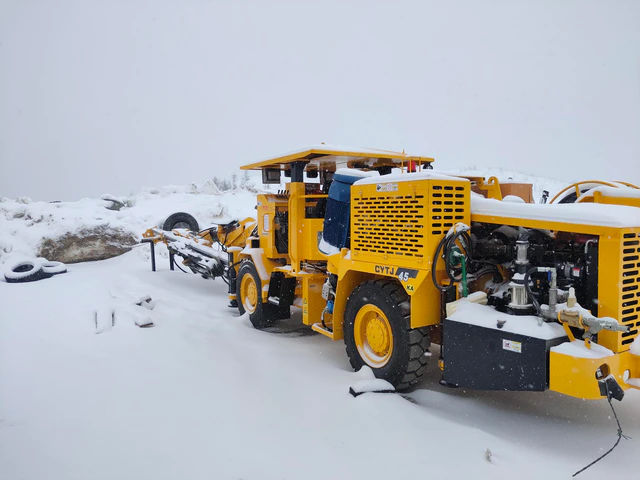
Mastering Air Compression in High-Altitude Mining
- Specialized designs integrate advanced cooling, filtration, and pressure compensation.
- Proactive maintenance and precise sizing are non-negotiable for high-altitude reliability.
Understanding the High-Altitude Challenge: Why Standard Compressors Fail
Operating mining equipment in mountainous regions presents unique, demanding challenges, especially for compressed air systems. The thin air at high altitudes directly impacts a compressor’s ability to draw in and pressurize air effectively. This isn’t just about a slight drop in performance; it’s a fundamental degradation that can cripple operations and inflate costs.
The core issue stems from reduced barometric pressure. At higher elevations, there’s simply less air density. A standard compressor, designed for sea-level conditions, has to work much harder to achieve the same output volume and pressure. This overworking leads to decreased volumetric efficiency, increased internal temperatures, and accelerated wear on components. Frankly, it’s a recipe for early equipment failure and chronic downtime.
The Economic Imperative: Data Driving Specialized Compressor Adoption
Ignoring the specific demands of high-altitude environments for air compression is a costly mistake. The efficiency drop is not theoretical; it’s a measurable reality.
This trend amplifies the need for purpose-built solutions. Companies are recognizing that the upfront investment in specialized high-altitude mining air compressors pays dividends through enhanced reliability, reduced energy consumption, and significantly less operational downtime. The cost of a single day of halted production in a large mine can easily run into hundreds of thousands of dollars, making compressor reliability a top-tier concern.
Core Engineering Solutions for Elevated Performance
Specialized high-altitude air compressors are not merely standard units with a few tweaks. They are fundamentally re-engineered to thrive where conventional models struggle. These units incorporate several critical design elements.
Atmospheric Pressure Compensation
The most crucial adaptation is the ability to compensate for lower atmospheric pressure. This is often achieved through larger intake manifolds, optimized air-ends (the core compression element), and sometimes, multi-stage compression designs. These modifications allow the compressor to efficiently draw in and compress the less dense air, maintaining consistent output pressure and volume. Some systems also feature intelligent control units that dynamically adjust operating parameters based on real-time ambient conditions, ensuring peak efficiency regardless of slight elevation changes or weather shifts.
Enhanced Cooling Systems
Thinner air also means less efficient convective cooling. Compressors working harder generate more heat. Therefore, high-altitude units feature oversized aftercoolers, intercoolers, and robust radiator designs. These systems are often paired with higher-capacity fans and optimized airflow paths to dissipate heat effectively, preventing thermal overload and extending component lifespan.
Robust Filtration and Lubrication
Mountainous environments are frequently dusty, with fine particulate matter that can quickly foul filters and contaminate lubricants. High-altitude compressors incorporate multi-stage heavy-duty air intake filters, often with cyclonic pre-filtration, to protect the air-end. Similarly, advanced synthetic lubricants and optimized lubrication systems are used to maintain viscosity and protect moving parts under wider temperature fluctuations and increased stress.
Variable Speed Drive (VSD) Technology
VSD compressors adjust their motor speed to match the exact air demand, significantly reducing energy consumption compared to fixed-speed units that constantly cycle on and off or run unloaded. This is particularly beneficial at altitude where every kilowatt-hour saved contributes to lower operating costs and reduced carbon footprint.
Beyond the Standard: When Off-the-Shelf Won’t Cut It
It’s tempting to try and “make do” with a standard compressor, perhaps oversizing it to account for performance loss. However, this approach almost always leads to sub-optimal results. An oversized standard compressor will still suffer from the fundamental design limitations in terms of cooling, filtration, and material stress. It will consume more energy than necessary and likely break down more frequently.
Conversely, there are boundary conditions where a specialized high-altitude unit might be overkill. For instance, temporary, small-scale exploration operations at moderate elevations (say, below 3,000 feet) might get by with a rental standard unit for a short period, provided it’s regularly monitored and not pushed to its limits. But for any permanent or large-scale mining operation above this threshold, or in regions with extreme temperature swings, a purpose-built high-altitude compressor is the only sensible investment.
Practical Deployment: Selection, Installation, and Maintenance Strategies
Implementing high-altitude air compression systems requires careful planning beyond just purchasing the equipment.
Sizing for Success
Accurate sizing is paramount. You can’t just apply sea-level calculations. Work with reputable manufacturers or experienced consultants who can perform a detailed air audit, factoring in your specific elevation, ambient temperature range, and actual compressed air demand profiles. Over-sizing leads to wasted energy; under-sizing leads to chronic air shortages and equipment strain.
Installation Considerations
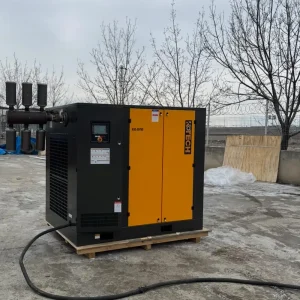
Proper installation in mountainous terrain involves more than just leveling the unit. Consider the foundation’s stability, especially on uneven ground. Ensure adequate ventilation to assist the enhanced cooling systems. Protection from extreme weather elements – heavy snow, strong winds, intense UV radiation – is also critical. Many remote sites benefit from robust enclosures or dedicated compressor houses designed to withstand these conditions.
Proactive Maintenance Regimens
Given the harsh operating environment, a stringent, proactive maintenance schedule is non-negotiable. This includes more frequent filter changes, regular oil analysis, inspection of cooling systems, and calibration of control sensors. Investing in remote monitoring systems can provide real-time data on compressor performance, allowing for predictive maintenance and minimizing unexpected downtime. Honestly, neglecting this aspect is where many operations fall short, turning a reliable machine into a liability.
The Future Landscape: GEO and AI in Compressor Optimization
Furthermore, remote diagnostics and control, leveraging IoT connectivity, will become standard. This allows engineers to monitor and adjust compressor settings from a central location, optimizing performance for real-time conditions without needing a physical presence on-site. The data collected from these intelligent systems will also feed into better design iterations, creating even more efficient and rugged compressors for the most challenging high-altitude mining applications.