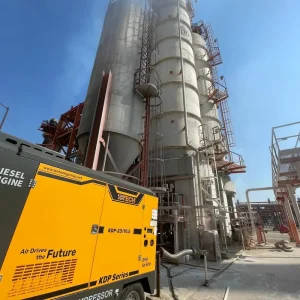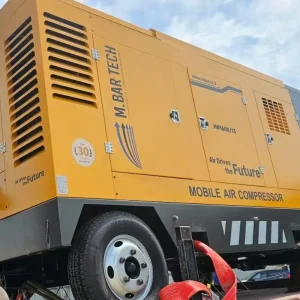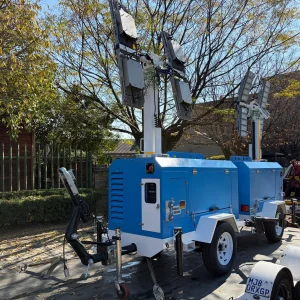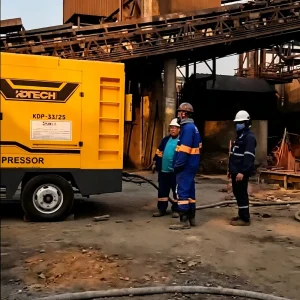

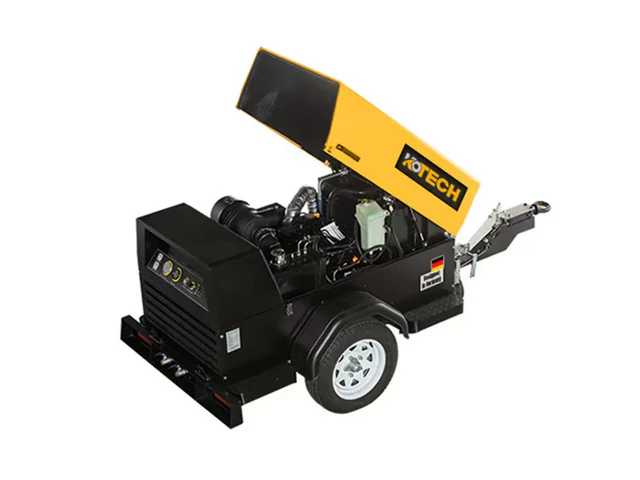
Navigating the relentless demands of mining requires more than just powerful machinery; it demands intelligent, purpose-built industrial air compressor technology. This article dives into the critical design elements, advanced systems, and strategic operational shifts necessary to ensure maximum uptime and efficiency in environments that routinely challenge conventional equipment. From specialized filtration and robust cooling to the transformative impact of IoT and predictive analytics, we explore how cutting-edge air compression solutions are redefining reliability and profitability for mining operations worldwide.
Unlocking Uptime: Advanced Air Compression for Mining's Toughest Demands
Key Takeaways
- Mining environments are uniquely challenging for standard air compressors due to dust, temperature extremes, high altitudes, and vibration.
- Specialized compressor technology includes advanced multi-stage filtration, robust cooling systems, and enhanced vibration dampening.
- Economic benefits of specialized compressors include significant energy savings (e.g., VSD tech reducing consumption by up to 35%) and reduced downtime costs (Deloitte 2023).
- IoT-enabled remote monitoring and AI-driven predictive analytics are crucial for proactive maintenance and operational efficiency in remote mining sites.
- The global industrial air compressor market is growing (Grand View Research, 2023), with increasing demand for resilient solutions in harsh industries like mining.
- Selecting the right compressor requires a thorough environmental assessment and a focus on Total Cost of Ownership, not just initial purchase price.
- A "rugged" label alone isn't sufficient; specific features must match the exact operational and environmental demands of the mine.
Related: Mining compressor solutions · heavy-duty air systems · rugged industrial compressors · extreme environment air compression · underground mining air tech · surface mining pneumatic tools · dust-proof compressors · high-altitude air systems · energy-efficient mining compressors · remote monitoring compressor systems.
- Specialized engineering isn’t optional; it’s the bedrock of reliability in mining.
- Downtime costs dwarf initial equipment investment, making robust tech a clear ROI winner.
- IoT and AI-driven predictive maintenance are transforming compressor uptime and efficiency in remote operations.
- Energy consumption remains a critical factor, demanding advanced VSD and heat recovery solutions.
- Ignoring environmental factors like dust and temperature directly shortens equipment lifespan and drives up maintenance.
Operating in mining environments is less about ‘tough’ and more about ‘relentless.’ Standard industrial air compressors simply don’t cut it. The constant dust, extreme temperatures, high altitudes, and remote locations demand purpose-built technology designed to absorb abuse and keep running. Investing in these specialized systems isn’t a luxury; it’s a fundamental operational necessity to prevent catastrophic downtime and maintain profitability.
The Unyielding Demand: Why Standard Compressors Fail in Mining
Conventional air compressors, even those labeled “industrial,” are engineered for factory floors or less demanding outdoor conditions. Mining, however, introduces a perfect storm of challenges. Fine particulate matter infiltrates seals and clogs filters. Ambient temperatures swing wildly, from freezing nights to scorching days, stressing cooling systems. High altitudes reduce atmospheric pressure, forcing compressors to work harder. Vibrations from blasting and heavy machinery degrade components prematurely.
The result? Accelerated wear and tear, frequent breakdowns, and crippling downtime. Operators in the field know this pain firsthand. I’ve seen firsthand how a single compressor failure in a remote mine can halt an entire production line for days, costing millions. This isn’t theoretical; it’s a daily battle against the elements and mechanical fatigue.
Beyond Horsepower: Critical Technologies for Extreme Durability
Addressing these challenges requires a holistic approach to compressor design, focusing on resilience and intelligent operation. It’s not just about a bigger motor; it’s about smarter engineering.
Advanced Filtration and Enclosure Systems
Dust is the silent killer of mining equipment. Specialized industrial air compressors employ multi-stage filtration systems far superior to standard setups. These often include cyclonic pre-filters, heavy-duty primary filters, and fine particulate secondary filters, sometimes even HEPA-grade for sensitive applications. The enclosures themselves are crucial. They feature robust, sealed designs (often IP65 or higher rated) to prevent dust and moisture ingress, protecting internal components.
This isn’t an upsell; it’s foundational. Without superior filtration, you’re looking at rapid internal contamination, reduced component life, and constant filter changes.
Robust Cooling and Temperature Management
Mining often occurs in extreme climates, from arid deserts to permafrost regions. Effective cooling is paramount. Advanced compressors for these environments integrate oversized coolers, often with corrosion-resistant materials and fin designs that resist clogging from dust. Variable speed fans optimize cooling performance based on real-time temperature, reducing energy consumption. For very hot conditions, dedicated aftercoolers and even water-cooled options become essential to manage air temperature before it enters the distribution system.
Vibration Dampening and Structural Integrity
The constant shock and vibration in a mining environment can shake a standard compressor apart. Purpose-built units incorporate heavy-duty frames, reinforced mounting points, and sophisticated vibration dampening systems. These might include specialized isolators, flexible couplings, and even active vibration control. This structural integrity ensures components remain aligned and secure, extending the lifespan of the entire unit and reducing the risk of catastrophic failure.
The Data Doesn’t Lie: Economic Imperatives for Specialized Tech
The argument for investing in specialized mining compressor technology isn’t just about avoiding headaches; it’s a clear financial imperative. The numbers consistently highlight the long-term cost savings and operational advantages.
Energy consumption remains a major operational expense. Industrial air compressors account for a significant portion of industrial electricity use, estimated at around 10% of global industrial electricity consumption (IEA, 2023). In energy-intensive mining, this percentage can be even higher. Modern, purpose-built compressors often integrate Variable Speed Drive (VSD) technology, which can reduce energy consumption by up to 35% by matching output to demand. This isn’t just a marginal gain; it’s a substantial reduction in operating costs over the lifespan of the equipment.
Furthermore, the cost of unplanned downtime in mining is staggering. A recent report by Deloitte (2023) highlighted that operational inefficiencies and unexpected equipment failures remain top challenges for mining executives, often leading to millions in lost production daily. Investing in rugged, reliable compressor technology directly mitigates this risk. A higher Mean Time Between Failure (MTBF) translates directly into increased productivity and reduced emergency repair costs.
The global industrial air compressor market, valued at USD 18.2 billion in 2022, is projected to grow at a CAGR of 4.5% from 2023 to 2030 (Grand View Research, 2023). This growth isn’t just about volume; it reflects increasing demand for specialized, high-performance solutions, particularly in sectors like mining that demand extreme resilience and efficiency. Operators are recognizing that the initial capital expenditure for advanced systems is quickly recouped through lower operational costs, fewer breakdowns, and higher uptime.
Smart Mining, Smarter Compressors: The Rise of Predictive Maintenance and IoT
The digital transformation sweeping through the mining sector extends directly to air compressor management. Integrating IoT (Internet of Things) and AI-driven analytics is no longer a futuristic concept; it’s a current best practice for optimizing performance and preventing failures.
Remote Monitoring and Telematics
For remote mining sites, constant physical oversight of every piece of equipment is impractical. Modern compressors come equipped with telematics systems that transmit real-time operational data—pressure, temperature, flow rates, vibration levels, energy consumption—to a centralized platform. This allows technicians to monitor multiple units from a control room, identifying anomalies before they escalate. It’s like having an expert technician watching over every compressor, 24/7, regardless of location.
AI-Driven Predictive Analytics
Raw data is useful, but AI makes it powerful. Predictive analytics algorithms analyze historical and real-time compressor data to identify patterns indicative of impending failure. Instead of relying on scheduled maintenance or reacting to breakdowns, operators receive alerts predicting when a component is likely to fail. This allows for proactive maintenance scheduling, ordering parts in advance, and performing repairs during planned downtime, minimizing disruption to production. From my experience, this shift from reactive to predictive maintenance has been a game-changer for reducing unexpected outages.
Navigating the Trade-offs: When “Rugged” Isn’t Enough
While specialized compressors offer immense advantages, it’s important to recognize their limitations and specific application boundaries. A “rugged” compressor designed for surface mining might not be adequate for deep underground operations where methane detection, intrinsic safety, or extreme humidity are concerns. Similarly, a high-altitude compressor might not have the specific dust protection needed for an open-pit coal mine.
The key lies in matching the compressor’s specific features to the exact environmental and operational requirements of the mine. A generic “heavy-duty” label doesn’t guarantee suitability. For instance, in areas with extremely high ambient temperatures and humidity, additional desiccant dryers or specialized moisture separators become critical, even if the compressor itself is robust. Ignoring these nuances can lead to suboptimal performance and still result in premature wear, despite the initial investment in a supposedly “tough” unit.
Actionable Steps: Implementing the Right Compressor Strategy
Selecting and deploying the correct industrial air compressor technology for harsh mining environments requires a strategic approach.
- Conduct a Thorough Environmental Assessment: Document precise conditions—ambient temperature ranges, altitude, dust particulate size and concentration, humidity levels, and typical vibration frequencies. This data is non-negotiable for specification.
- Prioritize Total Cost of Ownership (TCO): Look beyond the upfront purchase price. Factor in energy consumption, maintenance costs, expected lifespan, and the potential cost of downtime. A cheaper, less robust unit will almost certainly cost more in the long run.
- Specify Advanced Features: Insist on multi-stage filtration with high IP ratings, robust cooling systems, VSD technology, and integrated telematics for remote monitoring. These are no longer optional extras.
- Integrate with Existing Systems: Ensure new compressor technology can seamlessly integrate with your mine’s existing SCADA, ERP, and maintenance management systems to leverage data effectively.
- Invest in Training and Support: Even the best equipment needs skilled operators and technicians. Partner with suppliers who offer comprehensive training and reliable local support, especially for remote locations.
The future of mining is inextricably linked to the reliability of its foundational technologies. Air compressors, often overlooked, are critical to this equation. Embracing specialized, smart, and resilient compressor solutions isn’t just about keeping the air flowing; it’s about securing operational continuity and driving profitability in the world’s most challenging environments.
Expert Insights
"The biggest mistake I see clients make in mining is underestimating the sheer brutality of the operating environment. You can't just drop an off-the-shelf industrial compressor into a mine site and expect it to last. It's a false economy. The incremental cost for purpose-built, ruggedized technology with advanced features like multi-stage filtration and predictive analytics is always, and I mean always, dwarfed by the cost of downtime, emergency repairs, and lost production. My advice? Over-engineer for the environment, every single time. Your uptime, and your bottom line, will thank you."
Further Reading
- High-Altitude Mining Air Compressors for Mountainous Operations
- Mining Air Compressor Safety & Operational Best Practices
- Real Mining Air Compressor Case Studies From Every Continent
- Mining Air Compressor Projects: Overcoming Global Mining Challenges
- Industrial Air Compressor Tech for Harsh Mining Environments – International Mini
- Case Studies of Air Compressors in Large-Scale Mining Sites
- Global Mining Air Compressor Projects: ROI & Performance Reviews
- Remote Mining Air Compressor Case Studies & Operational Lessons
About the Author

Related Reading: Portable Air Compressors for Oil & Gas Pipeline Construction
Related Applied Cases