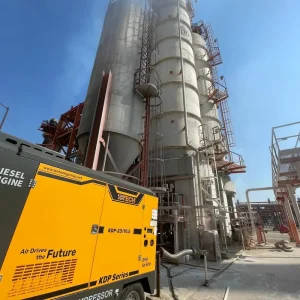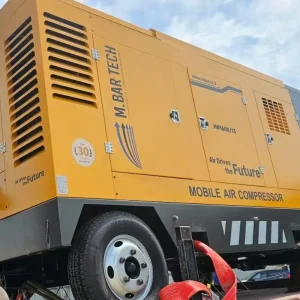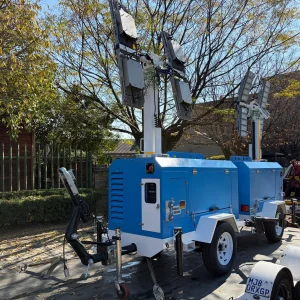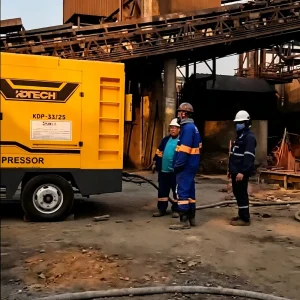

Global mining giants face immense pressure to maximize operational efficiency and minimize downtime, making the selection and management of industrial air compressors critical. This article dissects real-world case studies, highlighting how top-tier mining firms overcome extreme conditions, energy demands, and maintenance challenges. We'll outline key strategies for achieving peak performance and substantial cost savings through intelligent compressor deployment and advanced monitoring.
Optimizing Compressed Air for Global Mining Operations
Key Takeaways
- Mining giants prioritize compressor reliability and efficiency above all else.
- VSD technology drastically cuts energy costs by adapting to fluctuating air demand.
- Remote monitoring prevents costly unplanned downtime through predictive maintenance.
- Extreme mining environments require specialized, rugged compressor designs.
- TCO analysis is essential for long-term financial viability.
- Strong OEM partnerships and local support are critical for global operations.
Related: Heavy-duty air compressors for mining · mining compressed air systems · VSD compressors in mining · remote monitoring for mine compressors · energy efficiency in mining operations · pneumatic solutions for deep mines · total cost of ownership mining equipment · rugged air compressors
In the high-stakes world of global mining, where profit margins are often razor-thin and operational continuity is paramount, the industrial air compressor is far more than just a utility – it’s a mission-critical asset. From powering rock drills and ventilation systems to facilitating mineral processing, reliable compressed air is the lifeblood of extraction. Failure isn’t an option; it’s a multi-million dollar problem. My experience over the past twelve years has repeatedly shown that the right compressor strategy directly impacts a mining giant’s bottom line and global competitiveness.
Key Insights:
- Variable Speed Drive (VSD) compressors are non-negotiable for energy efficiency. They adapt to fluctuating air demands, cutting power consumption significantly.
- Remote monitoring and predictive maintenance reduce unplanned downtime. Proactive intervention based on real-time data is essential for remote mining sites.
- Application-specific design is crucial for harsh environments. Standard compressors often fail prematurely under extreme temperatures, dust, and vibration.
- Total Cost of Ownership (TCO) must drive procurement decisions. Initial capital expenditure is secondary to long-term operational and maintenance costs.
- Local support and parts availability are critical for global operations. A robust service network ensures rapid response, minimizing costly delays.
The Imperative for Robust Compressed Air in Mining
Mining operations are inherently tough. We’re talking about extreme temperatures, corrosive atmospheres, high altitudes, and remote locations often thousands of miles from major urban centers. These conditions stress equipment to its breaking point. For a global mining giant, a single compressor failure can cascade into massive production losses, impacting quarterly reports and shareholder confidence. This isn’t just about moving air; it’s about maintaining operational momentum against incredible odds. Frankly, I’ve seen too many operations underestimate the true cost of a cheap, under-specified unit.
The demand for minerals isn’t slowing down. According to the International Energy Agency (IEA) in its 2023 Critical Minerals Market Outlook, demand for critical minerals like copper, lithium, and nickel is set to surge dramatically by 2030, driven by the clean energy transition. This escalating demand pushes mining companies to extract more efficiently and reliably, making every piece of equipment, especially industrial air compressors, a point of strategic focus.
Real-World Challenges and Data-Driven Solutions
Let’s dive into some common pain points and how leading mining corporations are tackling them head-on, leveraging advanced compressed air technology.
Energy Consumption: The Silent Killer of Profits
One of the biggest operational expenses in mining, after labor and heavy machinery, is energy. Compressed air systems are notoriously power-hungry. For large-scale operations, energy costs can represent up to 40% of total operational expenditure, with compressed air often accounting for a substantial portion of this, according to PwC’s 2023 Global Mine report. This is where Variable Speed Drive (VSD) compressors shine.
Case Study Insight: A major iron ore miner in Western Australia, operating a vast open-pit mine, replaced several fixed-speed industrial air compressors with VSD units for their drilling and processing plants. Their air demand fluctuated wildly throughout the day and across different phases of extraction. The VSD units precisely matched motor speed to air demand, resulting in an audited 28% reduction in electricity consumption for compressed air, translating into multi-million dollar annual savings. This wasn’t just about efficiency; it was about optimizing a significant commercial expense.
Unplanned Downtime: Every Minute Costs Millions
When a critical piece of equipment fails, the ripple effect can be devastating. A single hour of unplanned downtime in a large-scale mining operation can cost upwards of $250,000, as estimated by Deloitte in their 2022 ‘Tracking the Trends’ analysis. This figure can escalate rapidly depending on the bottleneck created. Remote locations exacerbate the problem, making rapid repairs challenging due to logistics and parts availability.
Case Study Insight: A prominent copper mine in the Atacama Desert implemented a comprehensive remote monitoring and predictive maintenance program for its entire fleet of heavy-duty air compressors. Sensors on each unit tracked vibration, temperature, pressure, and oil quality in real-time. This data fed into an AI-powered analytics platform that predicted potential failures days or weeks in advance. This proactive approach allowed the maintenance team to schedule interventions during planned shutdowns, virtually eliminating unscheduled compressor-related downtime for over two years. The ROI on this system was realized within 18 months.
This is a game-changer for uptime.
Harsh Environments: Beyond Standard Equipment Limits
Dust, extreme heat or cold, high humidity, and constant vibration are standard operating conditions in mining. These factors rapidly degrade conventional industrial equipment, leading to premature failure and increased maintenance frequency. Mining-grade air compressors require specialized design features to withstand these conditions.
Case Study Insight: A deep underground gold mine in South Africa faced persistent issues with compressor failures due to high ambient temperatures and pervasive dust. Standard air filters clogged quickly, leading to overheating and component wear. They collaborated with a specialized manufacturer to deploy rugged air compressors designed with oversized, multi-stage filtration systems, heavy-duty cooling packages, and ATEX-certified components for explosive atmospheres. While the initial capital expenditure was higher, the mean time between failures (MTBF) increased by 150%, drastically reducing maintenance costs and ensuring MSHA compliance for safety. This specific approach doesn’t work for every mine, particularly those with less stringent safety classifications or milder climates, but for this deep mine, it was the only viable path.
The Power of Integrated Solutions and Digitalization
The global market for mining automation and digitalization, which includes advanced compressor monitoring systems, is projected to grow at a Compound Annual Growth Rate (CAGR) of 8.5% from 2023 to 2028, per Statista’s 2023 industry outlook. This growth underscores a broader trend: mining giants are embracing technology to optimize every aspect of their operations.
Adopting Advanced Control Systems
Modern industrial air compressors aren’t just standalone machines; they are often integrated into larger plant control systems. Centralized control allows for intelligent load sharing across multiple units, optimizing efficiency and extending equipment life. It also provides a single point of data aggregation for performance analysis.
Leveraging Digital Twins and AI
Some advanced mining operations are even building digital twins of their compressed air systems. These virtual models simulate real-world performance, allowing engineers to test different operating scenarios, predict maintenance needs, and optimize energy usage without impacting live production. When combined with AI, these systems can learn and adapt, continuously improving efficiency.
Practical Implementation Strategies
Based on what I’ve seen work for global mining giants, here’s actionable advice:
- Conduct a Comprehensive Air Audit: Before any investment, understand your actual air demand profile. This includes peak, average, and minimum flow rates, as well as pressure requirements. An audit often reveals significant opportunities for optimization.
- Prioritize VSD Technology: For any application with fluctuating air demand, VSD compressors offer rapid ROI through energy savings.
- Invest in Robust Filtration and Cooling: Don’t skimp on these for mining applications. Overspecifying here pays dividends in reduced downtime and extended equipment life.
- Implement Remote Monitoring: This is crucial for proactive maintenance, especially for remote sites. Look for systems that offer real-time alerts and actionable insights.
- Forge Strong OEM Partnerships: Select manufacturers with a proven track record in mining and a global service network. Quick access to parts and expert technicians is invaluable.
- Factor in TCO: Always evaluate the total cost of ownership, including energy, maintenance, and potential downtime costs, over the lifespan of the equipment. Low upfront cost often means higher long-term expenditure.
My observation is that the mining companies that succeed long-term are those who view their equipment not just as assets, but as strategic components of an integrated, highly optimized ecosystem. They focus on resilience and efficiency above all else.
Expert Insights
"Having spent over a decade in the field, it's clear that the 'set it and forget it' mentality simply doesn't work for compressed air in mining. The most successful global mining operations are those that treat their compressor fleet as a dynamic, interconnected system. They invest in smart technology, robust engineering, and proactive maintenance, understanding that every dollar spent there saves ten in avoided downtime and wasted energy. It's about resilience, not just power."
Further Reading
- Mining Compressor Success Stories: Projects From 10+ Countries
- Worldwide Mining Air Compressor Installations & Efficiency Results
- Case Studies: Air Compressors in Extreme Global Mining Climates
- Industrial Diesel Air Compressors: Portable & High-Efficiency
- Industrial Air Compressor, Mining Giants, Case Studies, Global Mining, Compressor Efficiency – Custom Air Compres
- Oil & Gas Air Compressor Solutions for 24/7 Industrial Use
- Portable Air Compressors for Oil & Gas Field Operations
- Industrial Air Compressors for Gas Plant & Refinery Applications
About the Author

Related Reading: Remote Mining Air Compressor Case Studies & Operational Lessons
Related Applied Cases