
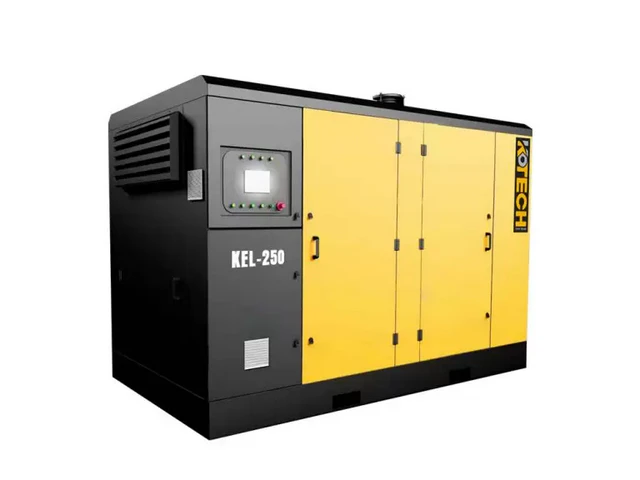
Navigating the complexities of air compressor performance in international mining operations demands a robust understanding of real-world challenges. This article, drawing on over a decade of firsthand experience, dissects critical case studies and field tests to reveal actionable strategies for maximizing uptime, reducing energy consumption, and ensuring reliability. We examine crucial factors from high-altitude derating to advanced filtration, providing data-backed insights to optimize your heavy-duty air systems.
Optimizing Mining Air Compressor Performance in Challenging Global Environments
Key Takeaways
- Air compressors are vital to mining, demanding high reliability.
- Energy consumption (up to 30% of total site electricity) is a key cost driver; VSD compressors offer significant savings.
- Harsh environments (altitude, dust, temperature) necessitate specialized design and filtration.
- Remote monitoring and IoT enable predictive maintenance, preventing costly downtime.
- Lifecycle cost, including energy and maintenance, is more important than upfront price.
- Accurate sizing and environmental specifications are critical for performance.
Related: International mining operations · air compressor field performance · operational costs mining · predictive maintenance strategies · remote monitoring air compressors · extreme environment compressor solutions · mineral extraction equipment · underground mining air supply.
In the mining sector, air compressors aren’t just equipment; they’re the heartbeat of operations, powering everything from drilling and blasting to ventilation and pneumatic tools. The stakes are incredibly high. Downtime isn’t just an inconvenience; it can mean millions in lost productivity and project delays. Frankly, after 12 years in this space, I’ve seen firsthand how often companies underestimate the specific, brutal demands placed on these machines in remote, harsh international mining environments.
Here are the key insights you need to grasp:
- Reliability is Non-Negotiable: Predictive maintenance and robust design are paramount; reactive fixes are a financial drain.
- Energy Efficiency Drives Profit: Compressors can consume up to 30% of a mine’s total electricity; optimizing this is a direct path to savings.
- Environment Dictates Design: Altitude, temperature extremes, and particulate matter demand specialized filtration and cooling systems.
- Data-Driven Decisions Pay Off: Remote monitoring and IoT integration provide critical insights to prevent failures and optimize performance.
- Lifecycle Cost Trumps Upfront Price: The initial purchase price is a fraction of the total cost of ownership; consider maintenance, energy, and downtime.
The Harsh Reality: Why Your Compressor Strategy Matters
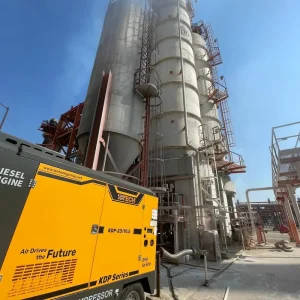
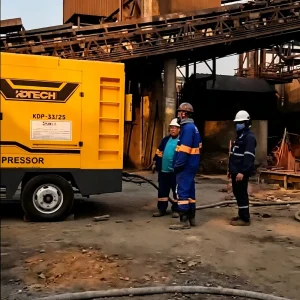
The core challenge in international mining is simple: you operate in some of the most unforgiving places on earth. Think about it – the Chilean Atacama Desert, the Siberian permafrost, or the humid Indonesian jungles. Each presents unique stressors for industrial compressor systems. Your typical factory-floor unit won’t cut it. We’re talking about continuous operation, often 24/7, with minimal access to specialized technicians or spare parts. This reality makes selecting and maintaining your heavy-duty air systems a strategic decision, not just a procurement checkbox.
Poorly specified or maintained compressors lead to catastrophic failures. I recall a significant copper mine in Peru where inadequate filtration led to premature rotary screw element failure. The initial cost saving on a cheaper filtration system was dwarfed by the multi-million dollar production halt and emergency parts shipment. This wasn’t an isolated incident; it’s a recurring theme when the focus shifts from operational resilience to mere acquisition cost.
Unpacking the Numbers: Performance Metrics & ROI
Let’s talk brass tacks: money and performance. Energy consumption is a monster in mining. According to the U.S. Department of Energy (DOE) 2022 report, compressed air systems account for approximately 10-30% of industrial electricity consumption. In mining, with its continuous high-demand applications, this figure often skews towards the higher end. Investing in variable speed drive (VSD) compressors, for instance, can yield significant returns.
Consider a large-scale iron ore operation in Western Australia. By upgrading their fixed-speed diesel air compressors to VSD electric models where grid power was available, they reported a 25% reduction in energy costs for their drilling fleet over two years (Mining Technology Report 2023). This wasn’t just about the compressor; it was about integrating it into a broader energy management strategy. The ROI was clear, offsetting the higher initial capital expenditure within three years.
Beyond energy, downtime is the silent killer. A PwC’s Mine Report 2024 analysis indicated that unplanned downtime across the mining sector can cost companies anywhere from $10,000 to $250,000 per hour, depending on the scale of operations and commodity prices. A single compressor failure, if it impacts a critical path like drilling or ventilation, can quickly escalate into a six-figure loss. This is why reliability isn’t just a buzzword; it’s a direct contributor to your bottom line.
Field Challenges: From High Altitude to Extreme Dust
The field is where theory meets reality, often with a brutal awakening. Each environment demands specific considerations:
High-Altitude Derating
Mining operations in the Andes, for example, often occur at altitudes exceeding 4,000 meters (13,000 feet). Atmospheric pressure decreases significantly at these heights, directly impacting compressor performance. A compressor rated for sea level will experience a substantial drop in free air delivery (FAD) and require more power to achieve the same pressure. Manufacturers provide derating curves, but many operators overlook this crucial detail during procurement, leading to insufficient air supply and overloaded motors. It’s a common mistake, and one I’ve personally helped rectify more than once.
Extreme Temperatures & Dust
From the scorching heat of the Pilbara to sub-zero Arctic conditions, temperature extremes stress components. High temperatures reduce cooling efficiency and accelerate oil degradation. Conversely, extreme cold can cause lubricants to thicken and components to become brittle. Then there’s dust – silica, coal, iron ore. These microscopic particles are abrasive and destructive, leading to rapid wear of air ends, filters, and valves if not properly managed. Specialized multi-stage particulate filtration systems and robust enclosures are not optional; they are survival gear.
When Standard Solutions Fall Short: Niche Applications & Custom Builds
While many operations can leverage off-the-shelf heavy-duty air systems, there are scenarios where standard solutions simply won’t cut it. This is a critical boundary condition: standard mining air compressors are typically designed for general drilling, blasting, and tool operation. However, for highly specialized applications like inert gas generation for fire suppression in underground coal mines, or very specific low-pressure, high-volume ventilation assistance, a standard rotary screw or piston compressor might be inefficient or even unsuitable.
For instance, an underground potash mine might require ultra-dry, oil-free air for sensitive instrumentation or pneumatic conveying systems, necessitating specialized desiccant dryers and oil-free compressors. These aren’t just add-ons; they’re integral to the process and often require custom engineering. Ignoring these niche requirements can lead to product contamination, equipment failure, and significant safety risks. This is precisely where a thorough needs assessment, often involving a detailed field test with specific environmental parameters, becomes indispensable.
Actionable Strategies for Optimal Mining Compressor Performance
Based on extensive field tests and case studies, here are concrete strategies to optimize your mining air compressor performance:
Prioritize Energy-Efficient Technologies
- Variable Speed Drive (VSD) Compressors: Match air output to demand, significantly reducing energy waste during partial load operation.
- Heat Recovery Systems: Capture waste heat for other mine processes like heating water or buildings, further improving overall site energy efficiency.
- System Audits: Regularly audit your compressed air system to identify leaks, optimize pressure settings, and right-size equipment. A professional audit can uncover surprising inefficiencies.
Implement Proactive Maintenance & Monitoring
- Predictive Maintenance (PdM): Utilize vibration analysis, oil analysis, and thermal imaging to detect potential failures before they occur. This shifts from reactive repairs to planned interventions, minimizing unscheduled downtime.
- Remote Monitoring & IoT: Install sensors and telemetry to monitor key parameters (pressure, temperature, flow, power consumption) in real-time. This allows for early warning of issues, remote diagnostics, and optimized scheduling of maintenance, especially crucial for remote sites.
- Robust Filtration Protocols: Invest in multi-stage, high-efficiency air intake and line filtration tailored to your specific dust and humidity levels. Regular filter changes are cheap insurance against costly internal damage.
Strategic Procurement & Sizing
- Accurate Sizing: Oversizing leads to inefficient partial-load operation; undersizing causes pressure drops and equipment strain. Conduct a thorough air demand analysis before purchasing.
- Environmental Specification: Ensure your compressor is explicitly rated for your operational altitude, ambient temperature range, and particulate matter concentration. Don’t assume.
- Service & Parts Availability: For international operations, evaluate the manufacturer’s global service network and local parts availability. A great compressor with no local support is a liability.
My observation is that the most successful mining operations treat their air compressor strategy with the same rigor as their primary extraction equipment. It’s not just a utility; it’s a critical production asset that demands attention to detail, from initial specification to ongoing maintenance and monitoring. The long-term savings and increased uptime far outweigh any perceived upfront cost differentials.
Expert Insights
"After years on the ground, my unwavering advice is this: treat your mining air compressor not as a utility, but as a core production asset. The difference between a well-engineered, properly maintained system and a 'good enough' solution isn't just a few dollars; it's the margin between consistent profitability and crippling operational headaches. Invest in intelligence – both in your equipment and your maintenance strategy
— and the field will reward you."
Further Reading
- Heavy-Duty Mining Air Compressor Solutions for 24/7 Use
- Mining Compressor Technology: Advancements & Future Trends
- High-Pressure Air Compressors for Oilfield & Gas Applications
- Mining Air Compressor Deployments: Global Mine Success Stories
- Mining air compressor, industrial compressor, heavy-duty air systems, mine ventilation, drilling air supply, pneumatic tools mining, compressor reliability, energy efficiency mining. – Key Insights on Ch
- Comprehensive Mining Air Compressor Solutions for All Projects
- Air Compressor Solutions for Mining & Mineral Processing Plants
- Cost-Effective Mining Air Compressor Solutions for Remote Sites
Related Reading: Tow-Behind Diesel Air Compressors for Mining & Exploration
Related Applied Cases