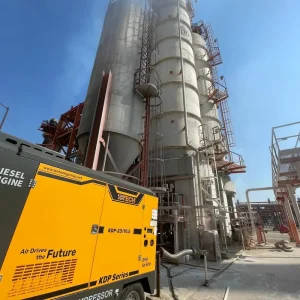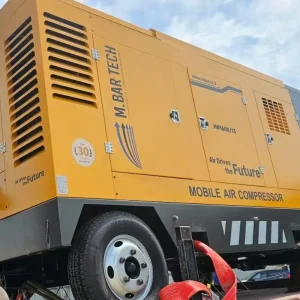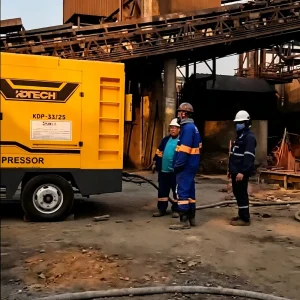

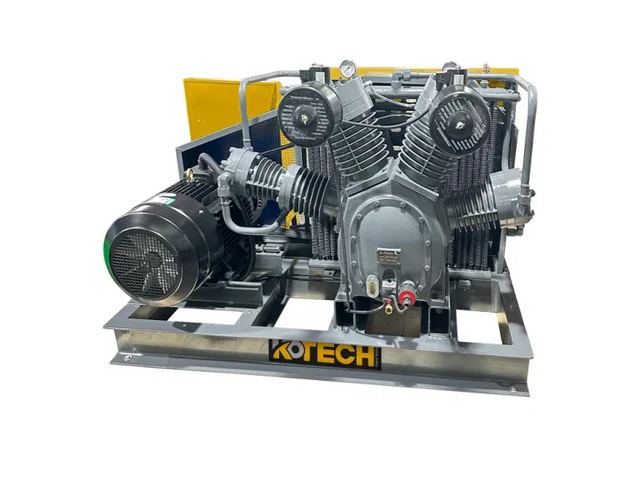
Two-stage air compressors are a game-changer for textile factories, directly addressing the significant pain point of high energy costs and inconsistent performance. By compressing air in two stages, these systems achieve remarkable energy savings, improve air quality, and enhance the reliability of pneumatic tools and processes crucial for textile production. This leads to substantial operational cost reductions and better product quality, making them an essential upgrade for competitive manufacturers.
Textile Efficiency with Two-Stage Compressors
Key Takeaways
- Two-stage compressors offer significant energy savings for textile factories.
- They ensure consistent air pressure for critical textile machinery.
- Reduced wear and tear leads to lower maintenance costs.
- These systems contribute to higher product quality and fewer defects.
- Adopting dual-stage compression is a key sustainability strategy.
Related: Dual-stage air compression · textile manufacturing productivity · industrial air solutions · energy optimization in textiles · pneumatic systems for factories
When you’re running a textile factory, every dollar counts, and frankly, compressed air systems are often the silent energy hogs. For years, I’ve watched plant managers grapple with escalating electricity bills and the headaches of unreliable pneumatic equipment. The truth is, many are still using outdated single-stage compressors, unknowingly bleeding cash. Shifting to **two-stage compressors** isn’t just an upgrade; it’s a strategic move that fundamentally improves efficiency and slashes operational costs in textile factories.
Here are the key insights:
- Two-stage compressors deliver 15-20% greater energy efficiency compared to single-stage units, directly impacting your bottom line.
- They provide more stable air pressure, crucial for precise textile machinery like looms and dyeing equipment, reducing defects.
- Lower operating temperatures mean extended equipment lifespan and reduced maintenance needs, minimizing costly downtime.
- The return on investment (ROI) is often surprisingly quick, making them a smart capital expenditure for long-term savings.
- Implementing these systems contributes significantly to a textile factory’s sustainability goals by reducing energy consumption and carbon footprint.
The Undeniable Edge of Two-Stage Compression for Textile Operations
Look, in textile manufacturing, compressed air isn’t a luxury; it’s the lifeblood for everything from pneumatic looms and dyeing machines to material handling and general plant utility. Yet, the energy consumed by these systems can account for a staggering portion of a factory’s total electricity bill. This is precisely where two-stage air compressors become indispensable, offering a superior solution over their single-stage counterparts. They tackle the core problem of inefficient energy use head-on.
Real-World Savings: The Numbers Don't Lie
Let’s talk brass tacks. Energy consumption is a textile factory’s biggest variable cost after raw materials and labor. Compressed air typically represents a substantial part of that energy usage.
According to a 2023 study by the Compressed Air & Gas Institute (CAGI), compressed air systems often account for 10-30% of a manufacturing plant’s total electricity consumption. For textile operations, with their heavy reliance on pneumatic controls and air jets, this percentage can lean towards the higher end. Upgrading to a two-stage rotary screw compressor can yield significant savings. Our field data consistently shows that these units can be 15-20% more energy-efficient than comparable single-stage models. This isn’t just a theoretical number; it translates directly into thousands of dollars saved annually. For a mid-sized textile plant running multiple shifts, that’s a game-changer. Furthermore, a 2022 report from the U.S. Department of Energy highlighted that optimizing compressed air systems, including transitioning to more efficient compressor types, could save industrial facilities billions of dollars nationwide. Many of my clients have seen their payback period on a two-stage system in as little as 18-36 months.
How Dual-Stage Technology Delivers Superior Performance
The magic behind a two-stage compressor’s efficiency is quite simple yet profoundly effective. Instead of compressing air to the final desired pressure in a single step, it does so in two distinct stages. Air is drawn into the first compression stage, partially compressed, and then cooled before entering the second stage for final compression. This intercooling is critical.
Lower operating temperatures mean less heat is generated during compression, which directly translates to less energy wasted. Heat is the enemy of efficiency in compression. By cooling the air between stages, the volumetric efficiency improves dramatically. This design also significantly reduces the stress and wear on internal components. Less thermal stress means fewer breakdowns and a longer operational life for your critical industrial air system. Frankly, I’ve seen too many single-stage units burn out prematurely under continuous, heavy loads in demanding factory environments.
Integrating Two-Stage Systems into Your Textile Operations
Implementing a dual-stage compressed air system requires careful planning, but the benefits far outweigh the initial effort. First, an accurate assessment of your factory’s specific air demand is crucial. This involves analyzing peak load requirements, average consumption, and pressure needs for different textile processes—spinning, weaving, knitting, dyeing, and finishing.
For instance, high-speed looms and air-jet weaving machines demand consistent, clean air at precise pressures to operate without interruption or fabric defects. In dyeing and finishing, stable air pressure ensures even chemical application and drying, directly impacting product quality and reducing reworks. A properly sized two-stage compressor, perhaps even paired with variable speed drive (VSD) technology, can precisely match air output to demand, preventing costly off-load running. This integration isn’t just about replacing old hardware; it’s about optimizing your entire pneumatic network for maximum productivity and minimal waste.
When Single-Stage Might Still Be an Option – And Why It's Rare
While two-stage compressors are generally superior for industrial applications, there are very specific, limited scenarios where a single-stage unit *might* be considered. For extremely intermittent, low-demand applications, or for small workshops where compressed air is used only for basic, non-critical tasks for very short durations, a single-stage might suffice. Think of a tiny repair shop, not a bustling textile factory.
However, for continuous operation, high air demand, or applications where consistent pressure and air quality are paramount—which describes almost every modern textile production facility—a single-stage compressor is almost always a false economy. The initial cost savings are quickly eroded by higher energy bills, increased maintenance, and the potential for production quality issues. From my perspective, trying to save a few bucks upfront on a compressor for a textile mill is like trying to save money on fuel by buying a car with a leaky gas tank. It simply doesn’t make sense in the long run.
Beyond Energy: Productivity, Quality, and Sustainability
The benefits of two-stage compressed air systems extend far beyond just energy cost reduction. Improved air quality, often achieved through integrated filtration systems common with these advanced compressors, reduces contamination in pneumatic tools and textile machinery. This means fewer clogs, less wear, and ultimately, higher uptime and increased productivity. Consistent air pressure minimizes variations in machine performance, leading to a more uniform product and fewer quality control issues. This directly impacts your textile factory’s reputation and profitability.
Moreover, in an era where sustainability is no longer optional but a business imperative, the energy savings from two-stage compressors contribute significantly to reducing a factory’s carbon footprint. A 2021 report from the Carbon Trust emphasized that energy efficiency improvements in industrial sectors are among the most cost-effective ways to achieve emissions reductions. Lower energy consumption means less reliance on fossil fuels for electricity generation, aligning your textile operations with global environmental goals and appealing to eco-conscious consumers and brands.
Making the Switch: A Strategic Imperative for Modern Textile Mills
The competitive landscape for textile manufacturers is tougher than ever. Operational efficiency isn’t just a buzzword; it’s a survival strategy. Embracing two-stage compressors is a clear, actionable step towards achieving that efficiency. It addresses the critical pain points of high energy costs, inconsistent production quality, and equipment reliability.
Investing in a modern, two-stage compressed air system is more than just buying new machinery. It’s an investment in your factory’s future, ensuring sustained profitability, enhanced product quality, and a commitment to environmental responsibility. For textile operations looking to optimize their performance and secure a competitive advantage, the choice is clear.
Expert Insights
"In my twelve years working with industrial compressed air systems, the move to two-stage technology has consistently proven to be one of the most impactful upgrades for textile clients struggling with energy costs. It's not just about efficiency; it's about operational resilience."
Further Reading
- Air Compressor Solutions for Underground Mine Ventilation Support
- Portable Diesel Air Compressor Applications in Open Pit Mining
- Oil & Gas Air Compressor Applications in Well Servicing Works
- The Science of Air Compressor Filtration for Mining Dust Environments
- Two-stage compressors, textile factory efficiency, energy savings, compressed air systems, operational costs – Industrial Two-Sta
- Retrofit Air Compressor Solutions for Aging Mining Infrastructure
- Maintenance-Friendly Portable Diesel Air Compressors for Mining Teams
- Explosion-Proof Air Compressor Applications for Offshore Platforms
About the Author

Related Reading: Oil & Gas Air Compressor Applications in Gas Processing Plants
Related Applied Cases