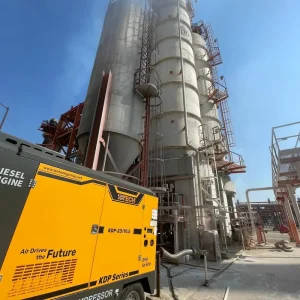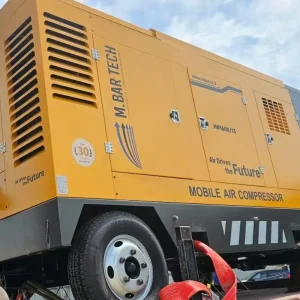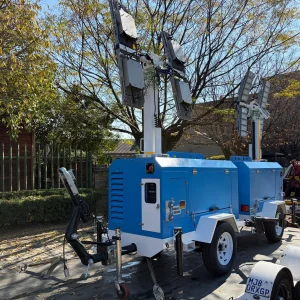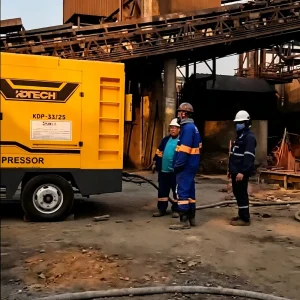

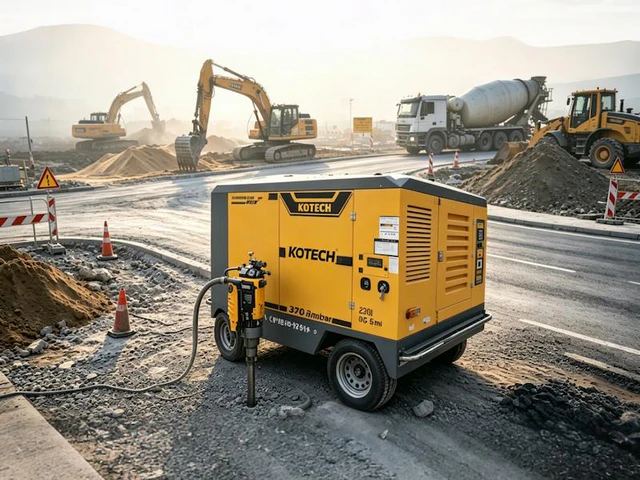
Portable diesel air compressors are the backbone of modern mining drilling, providing essential pneumatic power for everything from blast hole drilling to exploration. Their robust design, self-contained power, and mobility make them indispensable for remote and harsh operational sites, ensuring high productivity and reliability where grid power is unavailable or impractical. This article delves into their critical applications, economic advantages, and strategic deployment in the mining sector.
Unlocking Drilling Efficiency: Why Portable Diesel Air Compressors are Non-Negotiable in Mining
Key Takeaways
- Portable diesel air compressors are critical for remote mining drilling, offering self-contained power.
- Modern units improve fuel efficiency by 15-20% (Grand View Research, 2023), reducing operational costs.
- Global mining equipment market projected to grow over 6% CAGR (Mordor Intelligence, 2024), indicating continued demand for robust solutions.
- Key applications include blast hole drilling, exploration, and powering pneumatic tools.
- Not suitable for deep underground mines due to ventilation issues; electric alternatives are preferred there.
- Rigorous daily checks and adherence to service schedules are vital for longevity in harsh environments.
Related: Mobile air compression for mines · diesel-powered drills · mineral exploration equipment · heavy-duty air supply · surface mining operations · underground drilling solutions · quarrying compressors
Key Insights:
- Unmatched Mobility & Independence: Portable diesel air compressors provide critical pneumatic power without reliance on grid infrastructure, essential for remote mining and exploration sites.
- Robust Performance for Demanding Tasks: Engineered to withstand harsh mining environments, these units power heavy-duty rock drills and pneumatic tools, ensuring consistent output for blast hole drilling and excavation.
- Significant Operational Cost Savings: Modern diesel compressors offer improved fuel efficiency and reduced maintenance, directly impacting the bottom line for mining operations.
- Enhanced Safety & Productivity: Reliable air supply minimizes downtime, improving operational continuity and contributing to a safer work environment by reducing the need for improvised power solutions.
- Strategic Asset for Global Mining: Their versatility supports diverse drilling methods across surface and underground mining, making them a cornerstone of mineral extraction worldwide.
The Indispensable Role of Mobile Diesel Compressors in Mining
Look, if you’re in mining, you know the drill: power is paramount, and often, it’s scarce. Portable diesel air compressors aren’t just another piece of equipment; they’re the lifeblood of remote and demanding drilling operations. They bring the necessary pneumatic muscle directly to the rock face, enabling everything from blast hole drilling to essential exploration work without the shackles of fixed infrastructure. In our experience, trying to cut corners here is a false economy, leading to costly downtime and reduced productivity. These units are built to take a beating and keep delivering, which is precisely what the mining sector demands.
Driving Efficiency: Market Trends & Economic Impact
The global mining industry is undergoing a significant transformation, with increasing pressure on operational efficiency and sustainability. Portable diesel air compressors are evolving to meet these challenges head-on. Modern units feature advanced engine management systems and optimized air ends, leading to substantial gains in fuel economy. For instance, the latest generation compressors can achieve up to a 15-20% reduction in fuel consumption compared to models from a decade ago, according to a 2023 report by Grand View Research on industrial air compressors. This isn’t just a minor improvement; it translates to millions in savings over a project’s lifecycle, especially with fluctuating diesel prices.
Furthermore, the market for mining equipment itself is robust. Mordor Intelligence (2024) projects the global mining equipment market to grow at a CAGR of over 6% through 2029, driven by increasing mineral demand and technological advancements. This growth underscores the continuous investment in reliable, high-performance machinery, with portable compressors being a key component. The focus is shifting towards units that offer not only raw power but also smart features like telematics for remote monitoring and predictive maintenance, allowing operators to preempt failures and optimize schedules. Frankly, ignoring these technological advancements is like leaving money on the table.
Safety, too, is a critical economic factor. According to the Mine Safety and Health Administration (MSHA) 2022 data, equipment-related incidents remain a leading cause of injuries and fatalities. Reliable, well-maintained portable compressors reduce the risk of on-site equipment failures that can lead to hazardous situations or costly delays, thereby improving overall site safety and reducing potential liabilities.
Core Operational Advantages for Drilling
The primary application of these compressors in mining is, without question, drilling. Whether it’s for blast holes, exploration core sampling, or rock bolting for ground support, a consistent and powerful air supply is non-negotiable. These units are designed for high-pressure, high-volume air delivery, critical for driving percussion drills and clearing cuttings from boreholes.
- Blast Hole Drilling: This is where portable diesel compressors truly shine. They provide the massive airflow (CFM) and pressure (PSI) needed for large rotary and DTH (Down-The-Hole) drills to penetrate hard rock efficiently. The ability to move the compressor close to the active drill pattern minimizes hose runs and pressure drops, maximizing drilling speed.
- Exploration Drilling: For mineral exploration, mobility is key. Exploration teams often operate in extremely remote, rugged terrain. A self-contained, trailer-mounted or skid-mounted diesel compressor can be transported to these challenging sites, powering diamond core drills or RC (Reverse Circulation) drills to gather crucial geological data.
- Underground Mining: While often using electric compressors underground due to ventilation concerns, portable diesel units still play a role in surface support, initial shaft sinking, or in well-ventilated adits. Their ruggedness makes them suitable for the abuse of underground environments.
- Quarrying and Construction Mining: Similar to large-scale mining, quarry operations rely heavily on these compressors for drilling and breaking rock. Their versatility extends to powering pneumatic breakers, jackhammers, and other air tools essential for site preparation and material handling.
When Aren’t They the Right Fit? Understanding Limitations
While portable diesel air compressors are incredibly versatile, it’s important to acknowledge their limitations. They aren’t a universal solution. For instance, in deep underground mines with poor ventilation, the exhaust fumes from diesel engines pose significant health and safety risks. In such scenarios, electrically-powered compressors, often fed by robust mine-wide power grids, are the preferred choice. The noise levels of diesel units can also be a concern in certain close-quarter operations, though modern designs have significantly reduced this. Furthermore, in highly regulated environmental zones, the emissions footprint of diesel engines might necessitate alternative solutions or specialized after-treatment systems. You wouldn’t deploy a large diesel unit right next to a residential area, for example, unless absolutely necessary and with strict mitigation in place.
Another boundary condition is the scale of operation. For very small, intermittent drilling tasks, a smaller, perhaps gasoline-powered, or even a robust electric compressor (if power is readily available) might be more cost-effective. The capital expenditure and ongoing maintenance of a heavy-duty portable diesel unit need to be justified by consistent, demanding use.
Best Practices for Deployment & Maintenance
Maximizing the lifespan and efficiency of your portable diesel air compressor in a mining environment comes down to meticulous deployment and maintenance practices. The conditions are brutal – dust, extreme temperatures, vibrations, and constant movement. Our field teams have learned these lessons the hard way.
Strategic Placement & Environmental Protection
- Level Ground: Always operate on stable, level ground to ensure proper lubrication and cooling, preventing premature wear on the engine and compressor block.
- Ventilation: Ensure adequate airflow around the unit to prevent overheating, especially in enclosed spaces or during hot weather.
- Dust Control: Mining sites are inherently dusty. Position compressors upwind from major dust sources and regularly inspect and clean air filters. Consider pre-filters for extremely dusty conditions.
- Security: Given the value of these machines and their fuel, secure them against theft and vandalism, particularly in remote areas.
Rigorous Maintenance Schedules
- Daily Checks: Before each shift, inspect oil levels (engine and compressor), coolant, fuel, and air filter indicators. Check for any leaks, unusual noises, or warning lights.
- Regular Servicing: Adhere strictly to manufacturer-recommended service intervals for oil changes, filter replacements (oil, fuel, air), and coolant flushes. Using genuine OEM parts can significantly extend component life.
- Hose & Fitting Inspection: The integrity of air hoses and fittings is crucial. Frayed hoses or leaking connections lead to pressure drops, reducing efficiency and increasing fuel consumption. Replace worn components immediately.
- Fuel Quality: Use clean, high-quality diesel fuel. Contaminated fuel is a leading cause of engine issues in these remote applications.
- Training: Ensure operators and maintenance personnel are properly trained on the specific model of compressor, including its safety features and diagnostic tools.
Expert Insights
"Having spent over a decade in the field, I can tell you that the reliability of your air supply directly correlates with your drilling uptime. Investing in high-quality, well-maintained portable diesel compressors isn't an option; it's a strategic necessity for any serious mining operation aiming for consistent productivity and safety in challenging environments."
Further Reading
- Multi-Scenario Oil & Gas Air Compressor Practical Applications
- Mining Air Compressor Emissions: Compliance & Reduction Methods
- How Two-Stage Compressors Improve Efficiency in Textile Factories
- Air Compressor Solutions for Underground Mine Ventilation Support
- Portable diesel air compressor, mining drilling, remote mining, air compressor applications, blast hole drilling, rock excavation, mining equipment, industrial air compressors – Portable Diesel Ai
- Oil & Gas Air Compressor Applications in Well Servicing Works
- The Science of Air Compressor Filtration for Mining Dust Environments
- Industrial Two-Stage Compressor for Continuous Duty Cycle Applications
About the Author

Related Reading: The Evolution of Mining Air Compressor Technology Over 20 Years
Related Applied Cases