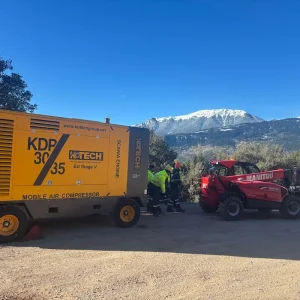

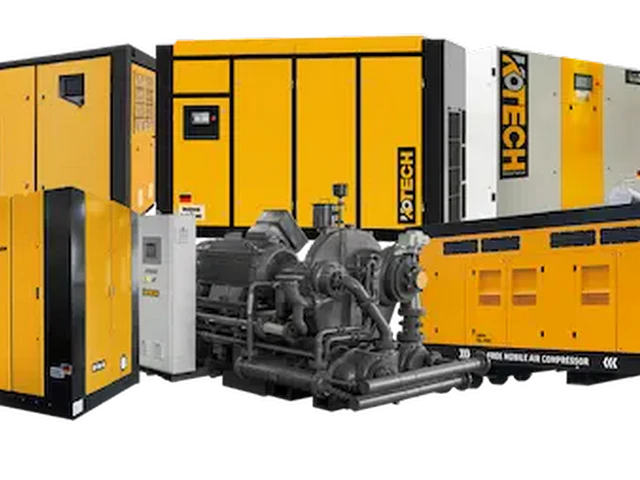
For mining operations, the choice of a portable diesel air compressor directly impacts profitability and compliance. This article cuts through the noise, showing why units designed for low fuel consumption are not just an option, but a strategic necessity, offering tangible savings and robust performance in demanding mine environments.
Fuel-Efficient Portable Diesel Compressors: A Mining Imperative
Key Takeaways
- Fuel costs are a huge factor in mining; efficient compressors cut these significantly.
- Newer models offer 15-20% better fuel economy than older units.
- Environmental compliance and corporate ESG goals are driving demand for greener equipment.
- TCO analysis is crucial: fuel savings often outweigh higher upfront costs.
- Look for Tier 4 Final engines, optimized air ends, and intelligent control systems.
Related: Fuel-efficient mining compressors · mobile air compressors for mining · diesel air compressors for underground · energy-saving mining equipment · TCO diesel compressors · mine site air supply solutions
In the unforgiving world of mining, every operational cost is scrutinized, and frankly, fuel consumption in heavy machinery is often the biggest culprit. Choosing a portable diesel air compressor for your mine isn’t just about cubic feet per minute (CFM); it’s increasingly about how many gallons it sips, not gulps. The bottom line is clear: investing in portable diesel air compressors with low fuel consumption for mines is no longer a luxury; it’s a critical business decision that impacts your entire operation’s efficiency and environmental footprint.
Key Insights:
- Fuel efficiency is a primary driver of Total Cost of Ownership (TCO) for mine compressors.
- Modern diesel engines in compressors offer significant fuel savings, often 15-20% over older models.
- Environmental regulations and corporate sustainability goals demand lower emissions and reduced fuel burn.
- Downtime due to inefficient or unreliable equipment in mines is astronomically expensive.
- Selecting the right compressor requires a holistic view beyond upfront cost, prioritizing long-term operational savings.
The Imperative for Fuel Efficiency in Mining Operations
Mining is an energy-intensive industry. From drilling and blasting to ventilation and material handling, reliable compressed air is indispensable. Historically, the focus was purely on power and durability. However, the landscape has shifted dramatically. Global fuel prices remain volatile, and environmental pressures are mounting, forcing mine operators to rethink every aspect of their equipment fleet. The demand for compressed air at a mine site is often intermittent, yet the compressor needs to be ready at a moment’s notice. This dynamic usage profile makes fuel efficiency paramount.
According to the International Energy Agency (IEA) in its 2023 report on energy efficiency, industrial sectors like mining can achieve substantial energy savings, often exceeding 10-15%, by adopting best available technologies. Diesel consumption represents a significant portion of operational expenses for many mines, sometimes accounting for over 30% of total site costs, as highlighted by a PwC Mining Report from 2023. Cutting this cost directly translates into improved profitability.
Why Every Gallon Counts for Mine Operators
Every gallon of diesel saved is a dollar earned, especially when operating multiple units across vast or remote mining sites. The logistical challenges of transporting fuel to isolated locations further amplify the cost implications of inefficient compressors. Moreover, the industry is under increasing scrutiny regarding its carbon footprint. Regulatory bodies and stakeholders are pushing for greener mining practices. Deploying fuel-efficient portable diesel air compressors aligns perfectly with these sustainability goals, potentially reducing greenhouse gas emissions and improving a company’s environmental profile.
Beyond the Price Tag: Realizing Operational Savings and Enhanced Reliability
While the initial purchase price of a premium, fuel-efficient portable diesel air compressor might be slightly higher, the long-term operational savings far outweigh this upfront investment. This isn’t just theoretical; it’s a measurable return on investment (ROI). Modern compressors integrate advanced engine management systems, variable speed drives, and optimized air ends that work in concert to minimize fuel consumption without sacrificing performance.
For instance, a leading manufacturer’s data from 2024 shows that their latest generation of portable diesel compressors can achieve up to 20% better fuel economy compared to models from five years ago, primarily due to more efficient engines and intelligent control systems. This translates to tens of thousands of dollars in annual savings for a single unit operating continuously. Think about the cumulative impact across an entire fleet. Additionally, these newer, more efficient units often come with enhanced diagnostic capabilities, leading to proactive maintenance and reduced unscheduled downtime. Downtime in a mining operation can cost anywhere from thousands to hundreds of thousands of dollars per hour, making reliability as crucial as efficiency.
The Total Cost of Ownership (TCO) Advantage
When evaluating portable diesel air compressors for mining applications, a holistic Total Cost of Ownership (TCO) approach is essential. TCO includes not just the initial capital expenditure, but also fuel consumption, maintenance, parts, labor, and the cost of potential downtime over the asset’s lifespan. Fuel-efficient models significantly reduce the largest variable cost: fuel. Furthermore, optimized engine operation often results in less wear and tear, extending service intervals and reducing maintenance expenses. From my perspective, neglecting TCO in favor of the lowest bid upfront is a classic procurement mistake that can haunt an operation for years.
Key Features of a Mine-Ready, Fuel-Efficient Portable Compressor
What defines a top-tier portable diesel air compressor for mining with low fuel consumption? It’s a combination of robust engineering and smart technology.
- Advanced Diesel Engines: Look for engines compliant with Tier 4 Final or EU Stage V emissions standards. These engines incorporate sophisticated fuel injection systems, turbocharging, and after-treatment technologies that maximize combustion efficiency and minimize emissions while consuming less fuel.
- Optimized Air End: The compressor’s air end is its heart. High-efficiency rotary screw air ends are designed to deliver maximum airflow (CFM) for a given power input, reducing the load on the engine and, consequently, fuel usage.
- Intelligent Control Systems: Modern compressors feature advanced control panels that automatically adjust engine speed and air output to match demand. This prevents the compressor from running at full throttle unnecessarily, saving substantial fuel during periods of lower demand.
- Rugged Construction: Mining environments are harsh. The compressor must be built to withstand dust, vibration, extreme temperatures, and rough handling. Features like heavy-duty chassis, reinforced enclosures, and robust filtration systems ensure longevity and consistent performance.
- Portability and Maneuverability: Despite their power, these units must be easily transportable across challenging mine terrains. Compact designs, robust towing packages, and appropriate ground clearance are vital for effective deployment.
- Safety Features: Essential for any mine equipment, including emergency stops, spill containment, and spark arrestors, are non-negotiable.
When Low Fuel Consumption Isn’t the Only Metric
While fuel efficiency is paramount, it’s not a silver bullet for every single scenario. There are boundary conditions to consider. For example, in extremely confined underground mines where diesel exhaust is a significant ventilation challenge, fully electric or battery-powered compressors might be a more suitable, albeit often more expensive, alternative. Additionally, if a compressor is only used for very short, infrequent tasks, the marginal fuel savings of a premium unit might not justify a substantially higher upfront cost. However, for any sustained operation, the TCO model strongly favors fuel-efficient options. Frankly, I’ve seen too many operations get fixated on the initial sticker price, only to bleed money through the fuel tank for years.
Making the Right Choice: A Procurement Guide for Mine Operators
Selecting the best portable diesel air compressor for your mine requires careful consideration beyond just the spec sheet.
- Assess Your Needs: Clearly define your CFM and PSI requirements, considering peak demand and typical usage patterns. Understand the specific environmental conditions of your mine (e.g., altitude, temperature, dust levels).
- Calculate TCO: Don’t just look at the purchase price. Request detailed fuel consumption data from manufacturers under various load conditions. Factor in projected maintenance costs, parts availability, and the expected lifespan of the unit.
- Evaluate Engine Technology: Prioritize compressors with the latest emissions-compliant engines. These are inherently more fuel-efficient and future-proof against tightening regulations.
- Consider Smart Controls: Look for compressors with advanced telemetry and control systems that optimize performance and provide real-time data on fuel consumption, enabling better operational management.
- Manufacturer Reputation & Support: Choose reputable brands known for durability, reliability, and excellent after-sales service in mining regions. Parts availability and technical support are crucial for minimizing downtime.
- Rental vs. Purchase: For shorter-term projects or fluctuating demand, consider renting a modern, fuel-efficient unit. This allows you to test different models and avoid capital outlay.
In our experience, a thorough evaluation process, coupled with a focus on long-term operational costs, consistently leads to smarter investments in portable compressed air solutions for the mining sector.
Expert Insights
"Frankly, in my 12+ years consulting on heavy equipment for industrial applications, the shift towards prioritizing fuel efficiency in mining compressors has been the most impactful trend for operational budgets. Ignoring it is akin to leaving money on the table, year after year."
Further Reading
- Air Compressor Solutions for Oilfield Acidizing & Stimulation
- Continuous-Duty Mining Air Compressors for 24/7 Production Cycles
- Two-Stage Air Compressor Applications in Automotive Manufacturing
- Compressed Air Technology for Mining: Key Innovations
- Portable Diesel Air Compressors with Low Fuel Consumption for Mines – High-Performance D
- Explosion-Proof Air Compressors for Offshore Oil & Gas Rigs
- Low-Emission Mining Air Compressors for Eco-Conscious Operations
- Multi-Stage Mining Air Compressors for Ultra-High Pressure Tasks
About the Author

Related Reading: Low-Noise Mining Air Compressors for Near-Settlement Mining