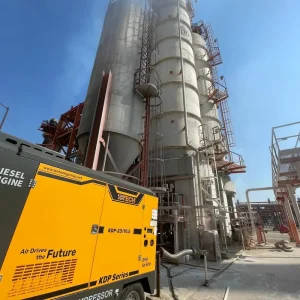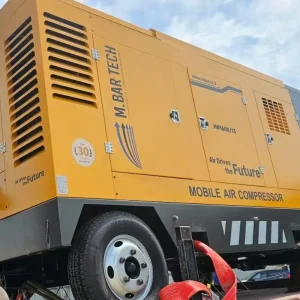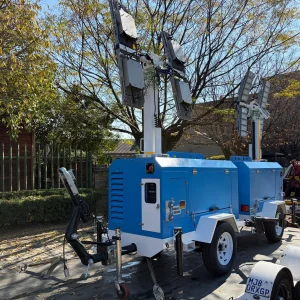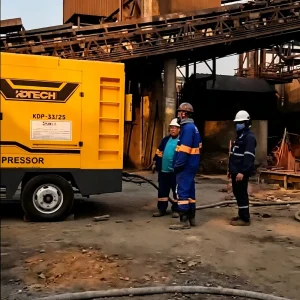

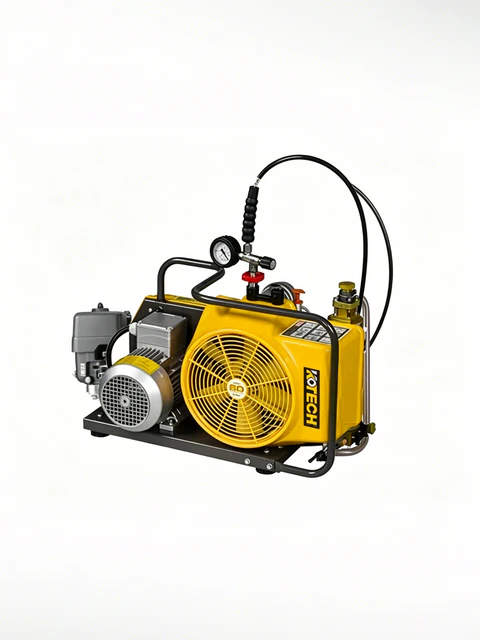
In the demanding oil and gas sector, air compressors aren't just utility machines; they're critical enablers for everything from drilling operations to refining processes. This guide dives into the practical applications of air compressors across the entire O&G value chain, highlighting common challenges and offering actionable strategies for ensuring reliability, efficiency, and safety. We'll examine how different compressor technologies perform in upstream, midstream, and downstream scenarios, providing insights drawn from years of hands-on field experience.
Optimizing Air Compression Across the Oil & Gas Value Chain
Key Takeaways
- O&G air compressors are critical for operational continuity and safety across all sectors.
- Upstream demands rugged, explosion-proof units for extreme conditions.
- Midstream focuses on reliable instrument air for pipeline integrity and processing.
- Downstream requires precise, often oil-free, air for complex refining and petrochemical processes.
- Energy efficiency (VSDs, audits) and predictive maintenance are key to reducing TCO.
- Choosing the right compressor involves considering environment, air quality, and maintenance access, not just flow/pressure.
Related: Industrial air compression systems · upstream process air · midstream pneumatic controls · downstream refinery compressors · hazardous area air systems · energy-efficient O&G compressors · compressor reliability in extreme conditions · instrument air for oil & gas.
In the oil and gas industry, a reliable air compressor isn’t just a nice-to-have; it’s a non-negotiable operational cornerstone. Whether you’re miles offshore or deep in a desert refinery, these machines power everything from critical safety systems to complex process controls. Getting it wrong leads to significant downtime, safety hazards, and massive financial hits. My goal here is to cut through the noise and give you a clear picture of what works, and what doesn’t, in the real world of multi-scenario oil & gas air compressor practical applications.
Here are the key insights you need to grasp immediately:
- Reliability and uptime are paramount. A compressor failure can halt an entire operation, making robust design and proactive maintenance non-negotiable.
- Application dictates technology. There’s no one-size-fits-all; rotary screw, reciprocating, and centrifugal compressors each have their sweet spot depending on pressure, flow, and environmental conditions.
- Energy efficiency directly impacts profitability. With increasing energy costs, optimizing compressor power consumption offers substantial operational savings.
- Safety and compliance in hazardous environments demand specialized solutions. Explosion-proof designs and certified components are critical, not optional.
Understanding the O&G Compressor Landscape: A Primer
The oil and gas industry is incredibly diverse, stretching from the wellhead to the fuel pump. Each segment – upstream, midstream, and downstream – presents unique challenges for air compression systems. From my perspective, many procurement decisions fail because they don’t adequately account for these distinct operational environments.
We’re talking about conditions that push equipment to its absolute limits: extreme temperatures, corrosive atmospheres, high vibration, and often, remote locations with limited access for maintenance. The compressor unit isn’t just generating air; it’s providing the lifeblood for pneumatic tools, instrument air for controls, process air for various treatments, and even starting air for large engines.
Upstream Operations: Tackling the Extremes
Upstream operations, encompassing exploration and production, are arguably the harshest environments for any equipment. Think offshore platforms, drilling rigs, and remote well sites. Here, air compressors face salt spray, intense heat or freezing cold, constant motion, and the ever-present risk of explosive atmospheres.
Drilling Rigs and Well Sites
On drilling rigs, air compressors are vital for a range of tasks. They power pneumatic tools, operate rig components like pipe handling systems, and supply instrument air for various control systems. Given the often intermittent but high-demand nature of these tasks, robust rotary screw compressors are frequently chosen for their continuous duty capability and tolerance for dusty conditions. Reciprocating compressors also find use for high-pressure applications like air drilling or well stimulation, though their maintenance demands can be higher.
Offshore Platforms and FPSOs
Offshore, space is at a premium, and corrosion is a constant battle. Compressors for instrument air, utility air, and nitrogen generation (for inerting) must be compact, highly reliable, and built with marine-grade materials. Explosion-proof designs (ATEX or NEMA compliant) are mandatory. According to a 2023 report by the U.S. Energy Information Administration (EIA), offshore oil production still accounts for a significant portion of global supply, underscoring the critical need for resilient infrastructure in these environments.
Midstream Infrastructure: Ensuring Flow and Integrity
Midstream operations involve the transportation and storage of crude oil and natural gas, primarily through pipelines, storage terminals, and processing plants. Here, the focus shifts to maintaining flow, ensuring pipeline integrity, and supporting gas processing.
Pipeline Operations and Pumping Stations
Along pipelines, air compressors provide instrument air for valve actuation, pressure monitoring, and control systems at compressor stations and pumping facilities. They also supply utility air for maintenance tasks. Given the vast distances and often remote locations, reliability is key to avoiding costly interruptions. Many of these applications benefit from energy-efficient variable speed drive (VSD) compressors, which can adjust output to match fluctuating demands, saving significant power over fixed-speed units.
Gas Processing Plants
At gas processing plants, air compressors are crucial for instrument air, which controls everything from gas sweetening units to dehydration processes. They also provide process air for specific applications, such as sulfur recovery units (SRUs) where air is injected to oxidize hydrogen sulfide. The air quality requirements here are often stringent, demanding oil-free compression to prevent contamination of sensitive processes and catalysts.
Downstream Processing: Precision and Purity
Downstream operations, primarily refining and petrochemicals, involve complex chemical processes that convert crude oil and natural gas into refined products. These facilities are characterized by high temperatures, corrosive chemicals, and stringent safety protocols.
Refineries and Petrochemical Plants
In refineries, air compressors are ubiquitous. They supply instrument air for thousands of control valves, sensors, and pneumatic actuators that manage intricate distillation columns, catalytic crackers, and hydrotreaters. Process air is used in combustion processes, oxidation reactions, and wastewater treatment. The demand for highly reliable, oil-free air is critical to prevent contamination of catalysts and final products, which can lead to off-spec batches and significant financial losses. We’ve seen firsthand how a single compressor hiccup can ripple through an entire processing unit.
Safety is paramount. According to a 2022 analysis by IHS Markit, operational safety incidents in the refining sector, though decreasing, still represent a significant concern, with equipment failure often being a contributing factor. This reinforces the need for robust, well-maintained compression systems.
Addressing Common Pain Points with Modern Solutions
Beyond the specific applications, several overarching pain points plague O&G air compressor users. Modern technology offers solutions.
- Downtime and Reliability: Harsh environments accelerate wear. Solutions include heavy-duty construction, redundant systems, and advanced condition monitoring (IIoT sensors, predictive analytics) that flag potential issues before they become failures.
- Energy Consumption: Compressors are energy hogs. VSD technology, intelligent control systems, and heat recovery units can dramatically reduce electricity bills. A 2023 report by the Compressed Air & Gas Institute (CAGI) highlighted that optimizing industrial compressed air systems can lead to energy savings of 20-50%.
- Maintenance Costs and Complexity: Remote locations amplify maintenance challenges. Modular designs, extended service intervals, and remote diagnostics streamline upkeep.
- Safety in Hazardous Areas: Explosion-proof motors, sealed enclosures, and certified components are non-negotiable for ATEX/NEMA classified zones.
Choosing the Right Compressor: Beyond the Basics
Selecting the right air compressor involves more than just matching flow and pressure. It requires a deep dive into the operating environment, air quality requirements, and total cost of ownership (TCO). For instance, while a rotary screw compressor is excellent for continuous, high-volume utility air, it wouldn’t be suitable for ultra-high pressure, low-flow applications like specialized gas boosting, where a reciprocating compressor excels. Conversely, a large centrifugal compressor might be ideal for a refinery’s bulk process air, but it wouldn’t make sense for a small, intermittent instrument air demand on a remote well pad. That’s a mistake I’ve seen made more than once, leading to oversized equipment and wasted capital.
Consider:
- Air Quality: Oil-free for critical instrument air and process applications; oil-lubricated for utility air where some oil carryover is acceptable.
- Environmental Factors: Temperature extremes, humidity, dust, corrosive agents, hazardous area classification.
- Maintenance Access: How easy is it to get parts and skilled technicians to the site?
- Footprint and Weight: Especially critical for offshore or mobile applications.
The Future: Efficiency and Digital Integration
The oil and gas industry is increasingly focused on sustainability and operational efficiency. This translates directly to air compression. We’re seeing a push towards:
- Smart Compressors: Integrated with IIoT (Industrial Internet of Things) platforms for real-time monitoring, predictive maintenance, and remote control.
- Hybrid Systems: Combining different compression technologies to optimize performance across varying loads.
- Alternative Power Sources: Exploring solar, wind, or even gas-powered compressors for remote locations to reduce reliance on grid electricity or diesel generators.
Practical Steps for Optimizing Your Compressor Fleet
Improving your air compression systems isn’t just about buying new equipment. It’s about strategic planning and execution.
- Conduct a Comprehensive Air Audit: Understand your actual demand, identify leaks, and assess current system efficiency. This is often the lowest-hanging fruit for savings.
- Right-Size Your Compressors: Avoid oversizing. It leads to short cycling and wasted energy.
- Implement Advanced Controls: Master controllers can optimize multiple compressors, ensuring only necessary units run at peak efficiency.
- Prioritize Preventive Maintenance: Stick to manufacturer schedules, use genuine parts, and don’t cut corners.
- Invest in Air Treatment: Dryers, filters, and separators are crucial for protecting downstream equipment and ensuring air quality.
- Train Your Team: Operators and maintenance personnel need to understand the system’s nuances to operate and maintain it effectively.
Expert Insights
Based on my twelve years in this field, the biggest oversight I consistently observe is underestimating the true cost of downtime. People focus on the upfront capital expenditure of an air compressor, but the cost of a single day's production loss on an offshore platform or a refinery unit dwarfs the price difference between a cheap, unreliable unit and a robust, purpose
— built system. Invest in quality and intelligent design; it pays dividends.
Further Reading
- Underground Mining Air Compressor Industry Development Insights
- Mining Air Compressor Competitive Landscape & Industry Analysis
- Post-Pandemic Mining Air Compressor Industry Market Changes
- Mining Air Compressor Industry Challenges & Development Opportunities
- Oil & Gas Air Compressor Applications – Mining Air Compres
- Global Mining Air Compressor Industry Analysis & Market Outlook
- Portable Diesel Air Compressor Applications for Mountain Mining Sites
- High-CFM Portable Diesel Compressor Applications in Large Mining
About the Author

Related Reading: Air Compressors for Oil & Gas Drilling Operations: Key Applications
Related Applied Cases