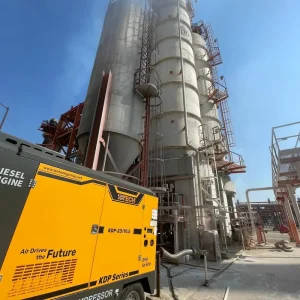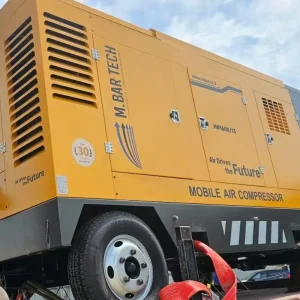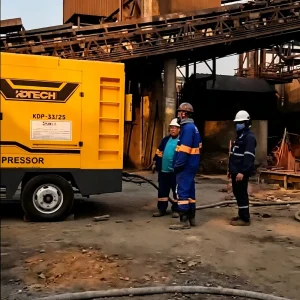

The underground mining air compressor industry is undergoing a significant transformation, driven by demands for greater efficiency, enhanced safety, and reduced environmental impact. Operations are shifting towards smart, energy-efficient systems that leverage digital integration and predictive analytics to cut costs and improve uptime. This article unpacks the current landscape, highlighting key trends and offering actionable strategies for navigating this evolving market.
Optimizing Underground Mine Air Compression: A Deep Dive
Key Takeaways
- Underground mining air compressors are shifting from brute force to intelligent, energy-efficient systems.
- Market growth is driven by mineral demand and investment in mining automation/electrification.
- VSD technology offers significant energy savings (up to 35%) for fluctuating air demand.
- Digital integration via IoT enables predictive maintenance, reducing costly downtime.
- Electric and battery-powered compressors address decarbonization and improve working conditions.
- Challenges include infrastructure readiness for digital tech and a skilled labor gap.
- Actionable steps: comprehensive air audits, prioritizing smart systems, TCO analysis for electric options, and workforce training.
Related: Mine air compression systems · subterranean drilling compressors · mining pneumatic tools · energy-efficient mining compressors · digital mine air solutions · safety in underground air systems · operational cost reduction mining.
The underground mining sector faces relentless pressure to optimize operations, and frankly, the air compressor is often overlooked despite being a critical workhorse. It’s not just about pushing air anymore; it’s about smart, sustainable power delivery. We’re seeing a decisive pivot towards systems that offer more than brute force—they deliver intelligence and efficiency, directly impacting the bottom line and worker safety.
Key Insights:
- Energy Efficiency is Paramount: Variable Speed Drive (VSD) compressors are becoming the standard, significantly cutting power consumption in fluctuating demand environments.
- Digital Integration & Predictive Maintenance: IoT sensors and data analytics are transforming maintenance from reactive to proactive, minimizing costly downtime.
- Enhanced Safety & Ergonomics: Quieter, cooler, and more compact units are improving working conditions in confined underground spaces.
- Sustainability & Emissions Reduction: Electric and battery-powered options are gaining traction, addressing environmental concerns and stricter regulations.
- Modular & Scalable Solutions: Flexibility in compressor deployment allows for easier adaptation to changing mine layouts and operational needs.
Current Industry Landscape: Navigating New Pressures
The core challenge in underground mining has always been operational cost, with energy consumption leading the charge. Air compressors, often running 24/7, represent a significant portion of that energy bill. Beyond this, safety regulations are tightening globally, pushing manufacturers and operators to innovate. We’re not just selling hardware; we’re providing solutions to complex operational problems.
For years, the focus was sheer power. Now, it’s about intelligent power. Mines are deeper, more remote, and require more sophisticated air management. This shift is particularly pronounced in mature mining regions where older infrastructure meets new environmental and efficiency mandates. It’s a tricky balance, I’ve seen firsthand, upgrading legacy systems without disrupting ongoing production.
Market Dynamics & Growth Drivers: What the Numbers Say
The global mining equipment market, including air compressors, is projected to reach approximately $200 billion by 2030, growing at a CAGR of 6.5% from 2023 (Grand View Research, 2023). This growth is fueled by increased demand for minerals, but specifically, the underground segment is seeing significant investment in automation and electrification. This translates directly to a demand for advanced air compression systems.
Energy efficiency is no longer a luxury; it’s a necessity. Data from the Compressed Air and Gas Institute (CAGI) consistently shows that compressed air can account for 10-30% of a plant’s total electricity consumption. In a mine, with its extensive network and varying demands, this percentage can be even higher. Adopting VSD technology, for instance, can reduce energy consumption by up to 35% in applications with fluctuating air demand (Atlas Copco internal data, 2022). This isn’t just marketing hype; it’s verifiable savings that directly impact profitability.
Furthermore, the drive for safety and reduced human exposure in hazardous environments is accelerating the adoption of remote-controlled and automated drilling equipment. These machines rely on consistent, high-quality compressed air, demanding more reliable and robust compressor units. The market isn’t just growing in volume; it’s growing in technological sophistication.
Technological Evolution: Beyond Just CFM and PSI
The conversation around underground mining air compressors has moved well past basic Cubic Feet per Minute (CFM) and Pounds per Square Inch (PSI) ratings. Today, it’s about integrated systems. Manufacturers are embedding advanced controls, telematics, and IoT connectivity into their units. This allows for real-time monitoring of pressure, temperature, flow, and energy consumption. Imagine knowing exactly when a filter needs changing or when a bearing is showing early signs of wear, all from a control room miles away. This predictive capability significantly reduces unplanned downtime, a major pain point for any mine manager.
Another area of rapid development is the move towards electric and battery-powered compressors. With increasing pressure to decarbonize mining operations, diesel-powered units, despite their robustness, are becoming less attractive. Electric compressors eliminate exhaust fumes, reduce noise levels, and often have lower maintenance requirements. While the initial investment can be higher, the long-term operational savings, especially in ventilation costs, are compelling. Battery-electric models, though still nascent for larger applications, promise even greater flexibility and reduced infrastructure needs in certain scenarios.
I’ve observed that the push for modularity is also key. Underground environments are dynamic. Being able to easily move, connect, or expand compressor stations without massive engineering overhauls saves time and money. Skid-mounted, containerized, or even track-mounted units offer this flexibility, making them ideal for development phases or changing operational fronts.
Challenges and Caveats: Where Traditional Solutions Fall Short
While the advancements are exciting, it’s crucial to acknowledge that not every new technology is a universal panacea. For example, while Variable Speed Drive (VSD) compressors offer significant energy savings for fluctuating air demands, they might not be the optimal choice for operations with consistently high and stable air requirements, such as a continuous large-scale drilling program. In such cases, a fixed-speed unit could still present a lower upfront cost and potentially simpler maintenance, provided its sizing is perfectly matched to demand. Over-specifying a VSD for a constant load environment won’t yield the expected energy savings and might even introduce unnecessary complexity.
Furthermore, the integration of IoT and digital monitoring systems, while powerful, requires robust network infrastructure underground. Many older mines struggle with reliable connectivity, making real-time data transmission challenging. Without a solid backbone, these advanced features become underutilized. This is a boundary condition many operations face: the technology exists, but the existing physical infrastructure might not support its full potential.
Another practical consideration is the skilled labor gap. Advanced compressors require technicians with new skill sets—part mechanical, part electrical, part IT. Training existing staff or attracting new talent is a significant hurdle that can slow down the adoption and effective utilization of these cutting-edge systems. It’s a point I’ve heard repeatedly from clients: “The machine is smart, but are my people smart enough to run it?”
Strategic Adoption: Actionable Steps for Mining Operations
For any underground mining operation looking to upgrade or expand its air compression capabilities, a strategic approach is vital. First, conduct a comprehensive air audit. Understand your actual air demand profile—peak, average, and minimum. This data is indispensable for correctly sizing any new system, whether VSD or fixed speed. Don’t rely on guesswork; use data loggers. This alone can prevent significant overspending on oversized equipment.
Second, prioritize systems with strong digital integration. Look for compressors that offer remote monitoring, predictive analytics, and integration with existing mine management systems. This isn’t just about flashy dashboards; it’s about actionable intelligence that reduces downtime and optimizes maintenance schedules. Invest in the network infrastructure to support these systems, if necessary, as the ROI on reduced downtime will often justify the expense.
Third, explore electric and battery-powered options, especially for new developments or expansions. While the initial capital expenditure might be higher, calculate the total cost of ownership (TCO) over the unit’s lifespan, factoring in energy costs, ventilation requirements, and maintenance. The environmental benefits are an added bonus that can improve your social license to operate. Finally, invest in training. Equip your maintenance teams with the skills to manage these advanced systems. A sophisticated compressor is only as good as the people maintaining it.
Expert Insights
"From my vantage point, the biggest shift we've seen isn't just in the hardware, but in the intelligence integrated into these systems. Mines are no longer just buying a compressor; they're investing in a data-driven power solution that directly impacts their productivity and environmental footprint. It's a game-changer for operational efficiency, but only if the underlying infrastructure and workforce skills keep pace."
Further Reading
- Mining Air Compressor Competitive Landscape & Industry Analysis
- Post-Pandemic Mining Air Compressor Industry Market Changes
- Mining Air Compressor Industry Challenges & Development Opportunities
- Mining Air Compressor Industry Demand & Consumption Trends
- Underground Mining Air Compressor – Global Mining Air
- Portable Diesel Air Compressor Applications for Mountain Mining Sites
- High-CFM Portable Diesel Compressor Applications in Large Mining
- Portable Diesel Air Compressor Applications for Mine Equipment Repair
About the Author

Related Reading: Multi-Scenario Oil & Gas Air Compressor Practical Applications
Related Applied Cases