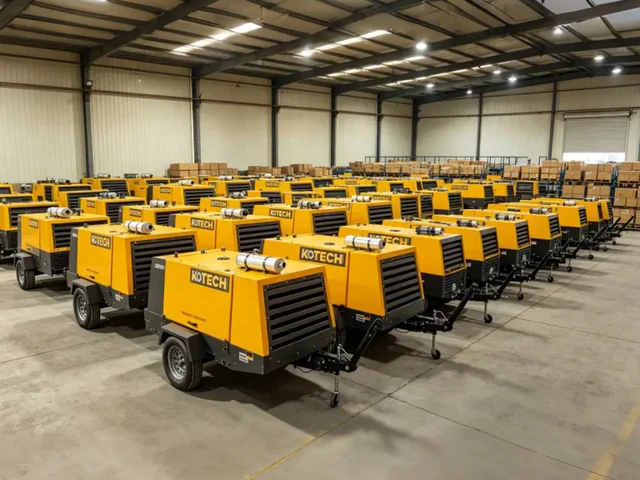
Navigating the New Normal: Mining Air Compressor Industry Post-COVID
The mining air compressor industry isn’t just recovering from the pandemic; it’s fundamentally transformed. What we’re seeing now is a market defined by urgent demand for critical minerals, relentless pressure on operational efficiency, and a hard pivot toward sustainability. Frankly, if your compressed air strategy hasn’t evolved in the last two years, you’re already behind.
The New Reality: Post-Pandemic Shifts in Mining Air Compressor Demand
The pandemic, while initially causing a slowdown, ultimately accelerated several underlying trends within the mining sector, directly impacting air compressor demand. The immediate shock of lockdowns gave way to a powerful surge driven by global decarbonization efforts and geopolitical shifts. Mines are pushing harder and deeper, often in more challenging environments, demanding equipment that can withstand extreme conditions while delivering peak efficiency. The old “run-it-till-it-breaks” mentality is a relic; uptime is gold.
Data-Driven Insights: Quantifying the Market Evolution
The numbers tell a clear story. The global industrial air compressor market, a significant portion of which serves mining, is projected to grow substantially. Specifically, the push for critical minerals like copper, nickel, and lithium—essential for electric vehicles and renewable energy infrastructure—is creating new demand hotspots. The International Energy Agency (IEA 2024) highlighted that demand for critical minerals is set to soar, with some minerals seeing a 40-fold increase by 2040 under net-zero scenarios. This directly translates to increased mining activity and a corresponding need for robust compressed air systems for drilling, ventilation, and processing. Furthermore, energy costs remain a top concern. According to the U.S. Energy Information Administration (EIA 2023), industrial electricity prices have seen significant volatility, directly impacting the operational expenditure of power-hungry equipment like air compressors. This constant pressure on the bottom line is why operators are scrutinizing every kilowatt-hour.
Underlying Drivers: Why the Market is Changing
Several interconnected factors are reshaping procurement and operational strategies for mining air compressors. Understanding these drivers is crucial for any operator looking to stay competitive.
ESG Mandates and Operational Efficiency
Environmental, Social, and Governance (ESG) criteria are no longer just buzzwords; they’re hard requirements from investors, regulators, and local communities. Mining companies are under immense pressure to reduce their carbon footprint, minimize water usage, and ensure responsible operations. For air compressors, this means a strong preference for electric-powered units over diesel, especially in underground mines where emissions are a critical health and safety concern.
The Critical Minerals Rush and Supply Chain Resilience
The global race for critical minerals has intensified, fueled by the accelerating energy transition. This demand translates into new mine developments and expansions, particularly in regions rich in these resources. However, the pandemic exposed the fragility of global supply chains. Lead times for new equipment and critical spare parts stretched from weeks to months, causing costly downtime. Operators are now looking for suppliers with strong local presence, diversified manufacturing bases, and robust service networks to mitigate future disruptions. They’re also stockpiling key components more strategically, a shift from just-in-time inventory.
Navigating the Nuances: When Standard Solutions Fall Short
While the shift towards efficiency and digitalization is broad, it’s important to recognize that a one-size-fits-all approach doesn’t work. For instance, while electric VSD compressors are ideal for many applications, they might not be the optimal solution in extremely remote greenfield sites with no grid access, where diesel-powered, robust rotary screw compressors might still be the only practical option, at least initially. The boundary condition here is infrastructure availability. Similarly, advanced predictive maintenance systems are fantastic for large-scale operations with dedicated IT infrastructure, but for smaller, artisanal mining operations, simpler, more rugged designs with easier field maintenance might offer better overall value and less complexity. It really boils down to balancing capital expenditure, operational costs, and the specific site’s constraints.
Actionable Strategies for Mining Operations
Adapting to these market changes requires a proactive approach.
Embracing Smart Compressor Technology
Investing in smart compressor technology is no longer optional; it’s a strategic imperative. This means opting for units equipped with IoT capabilities for remote monitoring and diagnostics. This allows for real-time performance tracking, proactive fault detection, and optimized maintenance scheduling, significantly reducing unexpected downtime. Implementing these systems can cut energy costs and extend equipment life, directly impacting your total cost of ownership.
Optimizing Maintenance and Service Models
Given the persistent supply chain challenges and the high cost of downtime, re-evaluating maintenance strategies is critical. Furthermore, establishing strong relationships with local service providers and considering service contracts that guarantee uptime and parts availability can be invaluable. Some operations are even investing in on-site training for their own teams to handle more complex maintenance tasks, reducing reliance on external technicians for routine issues.
Strategic Procurement and Supplier Relationships
The days of simply buying the cheapest unit are over. Strategic procurement now means evaluating suppliers based on their global footprint, local support, spare parts availability, and commitment to sustainability. Prioritize manufacturers who offer modular designs, ease of serviceability, and a clear path for upgrades. Developing long-term partnerships with key suppliers can secure better pricing, faster delivery, and access to specialized technical support, which is critical in a volatile market. It’s about building resilience into your supply chain, not just cost-cutting.