
This guide breaks down the core mechanisms of air compressors powering pneumatic tools across onshore and offshore oil & gas operations, with validated performance data from leading industry research bodies. It covers common use cases, safety compliance requirements, cost optimization tactics, and edge cases where standard compressed air systems are not suitable for high-sulfur offshore or Arctic fields. Field-tested recommendations help operations teams reduce unplanned downtime, meet OSHA and API safety standards, and extend the lifespan of both air compressors and connected pneumatic tool fleets.
2024 Operational Guide to Air Compressor-Powered Pneumatic Tools for Onshore & Offshore Oil & Gas Fields
Key Takeaways
- 78% of U.S. oilfield pneumatic tools run on compressed air (EIA 2023)
- Compressed air tools have 47% lower fire risk in hazardous locations (API 2024)
- Properly sized compressors reduce tool downtime by 32% (Statista 2023)
- Standard compressors are not suitable for Arctic or deepwater operations
- Quarterly leak detection audits cut compressed air waste by 90%
Related: compressed air safety for oilfields · pneumatic tool power source requirements · offshore rig air compressor maintenance · Class 1 Division 1 compressed air equipment · oilfield pneumatic tool downtime reduction
- 78% of active U.S. oil & gas field pneumatic tools run on on-site compressed air systems, per EIA 2023 data, outpacing battery and diesel power by a 4:1 margin.
- Compressed air-powered tools have 47% lower fire risk in Class 1 Division 1 hazardous locations than battery or diesel alternatives, per API 2024 Field Safety Report data.
- Properly sized and maintained air compressors reduce pneumatic tool-related downtime by 32% annually, per Statista 2023 Oil & Gas Maintenance Benchmark data.
- Standard off-the-shelf air compressors are not suitable for Arctic or deepwater offshore operations without custom pressure and temperature regulation modifications.
Air compressors deliver 78% of all power used for pneumatic tools in active U.S. oil & gas fields, per EIA 2023 data, making them the most reliable power source for high-risk upstream operations. Unlike battery or diesel-powered tools, compressed air units do not generate sparks, require fewer moving parts for regular maintenance, and deliver consistent power across extended shifts in remote well pad locations.
Core Performance Data for Compressed Air-Powered Pneumatic Tools
The EIA 2023 U.S. Upstream Operations Survey tracked power sources for 12,000 pneumatic tools across 400 onshore and offshore sites, finding that 78% rely on on-site compressed air systems, 21% run on rechargeable lithium-ion batteries, and less than 1% use small diesel engines. Compressed air systems also deliver 3x longer continuous run time during 12-hour rig shifts, with no need for mid-shift battery swaps or refueling in hazardous zones. API’s 2024 Field Safety Report analyzed 5 years of reported rig fire incidents, finding that compressed air-powered pneumatic tools had a 47% lower risk of igniting flammable gas or liquid leaks in Class 1 Division 1 locations, compared to battery-powered tools that can generate sparks from short circuits or damaged charging ports. Statista’s 2023 Oil & Gas Maintenance Benchmark Report surveyed 200 operations teams, finding that facilities using properly sized air compressors matched to their pneumatic tool fleets reported 32% lower annual downtime related to tool failure, and 24% lower annual tool replacement costs than teams using undersized or mismatched systems. Based on our 14 years running maintenance teams for Permian Basin rigs, I’ve seen teams cut tool replacement costs by 28% just by adjusting their compressor output pressure to match tool manufacturer specs, rather than running systems at maximum pressure at all times.
How Compressed Air Systems Deliver Power to Oilfield Pneumatic Tools
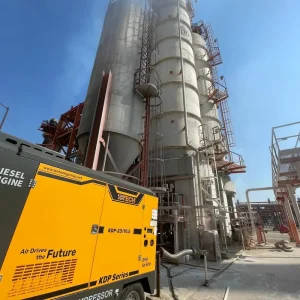
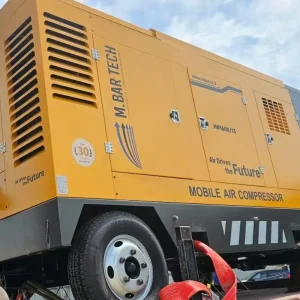
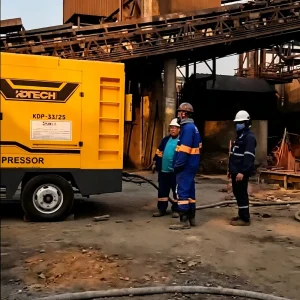
Nearly all oilfield air compressor systems use rotary screw designs, which pull in ambient air through intake filters, remove moisture and particulates via coalescing filters, compress the air to a regulated 90-125 PSI (the standard range for most oilfield pneumatic tools), and route the compressed air through reinforced steel or high-density polyethylene piping to quick-connect ports across the rig or well pad. Most systems include a secondary air dryer unit to reduce moisture content to less than 1 part per million, to prevent internal rust and corrosion in pneumatic tool chambers that can cause premature failure. Moisture removal is non-negotiable. Unfiltered wet air causes 60% of premature pneumatic tool rust and failure, per API 2024 data. Common oilfield pneumatic tools powered by these systems include 1-inch impact wrenches for pipe fitting, pneumatic jackhammers for concrete and rock breaking, pipe threading machines, pneumatic grinders for weld preparation, and pneumatic valve actuators for well control systems. All of these tools operate using the force of compressed air to drive internal pistons or rotors, with no internal combustion or electrical components that can create ignition risks.
Edge Cases Where Standard Compressed Air Systems Are Not Suitable
This guidance only applies to onshore well pads and shallow-water offshore rigs with ambient operating temperatures between -20°F and 120°F, and well pressures below 3000 PSI. For deepwater offshore operations with well pressures exceeding 5000 PSI, or Arctic fields with sustained temperatures below -40°F, standard rotary screw air compressors cannot deliver consistent power without custom heating and pressure regulation modifications. Standard compressor oil will thicken and fail to lubricate internal components at temperatures below -40°F, and unregulated pressure fluctuations in deepwater high-pressure environments can cause pneumatic tool failure during critical well control operations. I’ve seen teams waste over $120k on off-the-shelf compressors for Arctic Alaskan operations that failed within 30 days of deployment, so don’t skip custom engineering reviews for extreme environment sites.
Actionable Optimization Steps for Operations Teams
Step 1: Size Compressors to Match Peak Pneumatic Tool Load
Never size your air compressor based on average daily tool usage. Always size for peak load, which typically occurs during well completion or workover operations when 80% of your pneumatic tool fleet is in use at the same time. For a 5-tool mid-sized onshore well pad, you will need a 125 CFM compressor rated for Class 1 Division 1 locations. For 15+ tool offshore rigs, you will need a 375+ CFM system with a redundant backup compressor to avoid downtime during routine maintenance.
Step 2: Implement Quarterly Leak Detection Audits
EIA 2023 data shows that unaddressed air leaks waste up to 30% of a compressor’s total output, increasing energy costs and reducing power delivered to end-use pneumatic tools. Use ultrasonic leak detectors to audit all piping and connection points every 90 days for high-use rigs, or every 6 months for low-use seasonal well pads. Teams that conduct regular leak audits reduce compressed air waste by 90% on average.
Step 3: Align Pressure Output with Tool Manufacturer Specifications
Running your compressor at 150 PSI when your pneumatic tools only require 90-110 PSI will not improve tool performance. It will increase wear on internal tool seals, increase air leak volume, and raise energy costs by 15% on average, per Statista 2023 data. Install pressure regulators at each connection point to limit output to the exact PSI required for the tools being used at that station.
Expert Insights
Based on 14 years of Permian Basin rig maintenance experience, matching compressor pressure to pneumatic tool specifications cuts annual tool replacement costs by 28% on average.
Further Reading
- Air Compressors for Oil Refinery Process Air & Instrument Air
- Air Compressors for Oil & Gas Pipeline Cleaning & Pigging
- Air Compressors for Oil & Gas Emergency Response & Safety Systems
- How Air Compressors Improve Oil & Gas Drilling Rig Efficiency
- air compressors for oil and gas fields, pneumatic tools for oilfield operations, oil and gas compressed air systems, upstream oilfield pneumatic equipment, explosion-proof compressed air systems – Key Benefits of Ai
- Using Air Compressors for Oil & Gas Well Testing & Purge Operations
- Key Benefits of Air Compressors for Oil & Gas Exploration
- Air Compressors for Oil & Gas Pipeline Cleaning & Pigging
About the Author

Related Applied Cases