Selecting the Right All-Terrain Air Compressor for Unforgiving Oil & Gas Environments
In the brutal world of remote oil and gas, your equipment isn’t just a tool; it’s the lifeline of your operation. And when it comes to compressed air, a standard unit simply won’t cut it. You need specialized all-terrain air compressors for remote oil & gas field work – machines engineered from the ground up to laugh in the face of sandstorms, sub-zero temperatures, and relentless vibration. Our core conclusion is simple: investing in purpose-built, heavy-duty compressors is not an option, it’s a non-negotiable requirement for maximizing uptime and controlling spiraling operational costs.
The Unforgiving Reality: Why Standard Compressors Fail in Remote O&G
It always ends the same way: breakdowns. These aren’t just inconvenient; they’re catastrophic. The environmental extremes—dust, sand, mud, extreme heat, bitter cold—combined with constant vibration from transport and operation, quickly overwhelm components not designed for such abuse. They simply aren’t sealed or robust enough to handle the sheer grit and grime of a typical oilfield.
Think about the constant movement. These units aren’t sitting on a paved lot. They’re being dragged across uneven terrain, encountering potholes, rocks, and gradients that put immense stress on frames, axles, and tow hitches. A standard compressor’s chassis often can’t handle the torsional forces, leading to cracks and structural fatigue. Then there’s the power supply. Remote sites rarely have reliable grid power, making diesel-driven units essential, but these too need to be designed for continuous, heavy-duty operation in isolation, often running for days or weeks without direct supervision.
Hard Numbers: The Cost of Inefficiency and Downtime
The price tag on equipment is just the beginning. The real cost lies in operational expenditures (OPEX) and, more critically, downtime. If you’re running a critical pneumatic tool for drilling or a well service operation, a compressor going down can halt production entirely.
Fuel efficiency is another massive, often overlooked, cost driver. Remote operations mean fuel has to be transported, sometimes hundreds of miles, at significant expense. Over a 5-year lifespan, those savings accumulate into a substantial sum. This isn’t just about the engine’s fuel consumption; it’s about the entire system’s efficiency, from the air end to the control logic.
Maintenance costs also factor in heavily. Standard units often require more frequent servicing due to component wear in harsh conditions. Labor rates for specialized technicians in remote areas are notoriously high, and travel time adds even more to the bill. This is where the long-term value of a purpose-built rugged air compressor truly shines.
Beyond Horsepower: What Defines a True All-Terrain Unit
When we talk about all-terrain air compressors for remote O&G, we’re not just talking about heavy-duty tires. We’re talking about a holistic design philosophy focused on survivability and sustained performance. Here’s what to look for:
- Robust Chassis and Undercarriage: A heavy-gauge steel frame, often with reinforced articulation points, is crucial. Look for high ground clearance and a wide-track axle for stability on uneven terrain. Oversized, puncture-resistant tires are a must.
- Sealed Enclosures and Filtration: Dust and moisture are the enemy. Units should feature fully sealed enclosures, IP-rated electrical components, and multi-stage heavy-duty air intake filtration systems. Some even integrate pre-cleaners for extreme dust environments.
- Engineered for Extreme Temperatures: Whether it’s -40°F or 120°F, the compressor needs to start and run reliably. This means advanced cold-start packages (block heaters, battery warmers) for winter and oversized cooling systems for desert heat.
- Extended Service Intervals: Designed for remote deployment, these units feature larger fuel tanks, extended-life filters, and components specified for longer run times between service events. This reduces costly field visits.
- Advanced Controls and Telematics: Modern units integrate robust control panels that can withstand vibration and extreme temperatures. More importantly, telematics systems for remote monitoring are becoming standard, providing real-time data on performance, fuel levels, and potential issues.
- Corrosion Resistance: Components should be treated or made from materials resistant to the corrosive elements often found in oilfield environments, including saltwater spray if near coastal operations.
When “Good Enough” Just Isn’t: The Limits of General-Purpose Compressors
You might think a “heavy-duty” compressor from a general construction rental yard will suffice for a remote oil patch. Honestly, that’s a gamble you can’t afford. Those units are designed for intermittent use on relatively stable ground, not continuous operation in a constantly changing, hostile environment. Their frames are lighter, their filtration systems are basic, and their cooling packages are often undersized for the relentless heat of a desert or the sustained load of a drilling operation. A general-purpose unit might last a few weeks, maybe a month, before component failure starts to snowball. This isn’t just about the compressor itself; it’s about the entire operation that depends on it.
Furthermore, standard compressors typically lack the advanced telemetry and robust control systems necessary for true remote management. In a world where every minute of downtime costs thousands, relying on a unit that requires constant physical checks is inefficient and risky. While a general-purpose compressor might be cheaper upfront, its lifecycle cost, factoring in fuel, maintenance, and potential downtime, will quickly eclipse the initial savings. This approach only makes sense for very short-term, low-impact tasks in easily accessible areas, which is rarely the case in O&G field work.
Choosing Your Workhorse: Practical Considerations for Procurement
Selecting the right heavy-duty air compressor for oil and gas isn’t just about CFM and PSI. It’s about matching the machine to the mission. Start by accurately assessing your air demand. What pneumatic tools will you be running? What are their peak and continuous CFM requirements? Over-specifying means higher CAPEX and fuel consumption, while under-specifying leads to insufficient power and potential damage to the compressor.
Consider the logistical challenges. How will the unit be transported? What are the access roads like? This directly influences the required undercarriage robustness and overall footprint. Look at dealer support and parts availability in your operating region. A great compressor is useless if you can’t get it serviced or find replacement parts quickly. Many top-tier manufacturers offer specialized O&G packages with enhanced features specifically for this sector.
Finally, factor in environmental compliance. Emissions standards are tightening globally. Opt for engines that meet the latest EPA Tier standards to ensure long-term usability and avoid potential fines. Some regions are even pushing for electric or hybrid options, though these are less common for truly remote, high-power applications due to charging infrastructure limitations.
Optimizing Your Fleet: Telematics and Predictive Maintenance
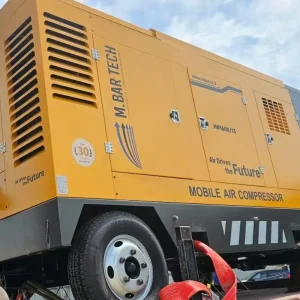
With integrated telematics, your mobile air compressor for exploration can send real-time data on engine parameters, fuel levels, air end temperature, pressure, and even GPS location directly to your operations center. This allows for proactive maintenance scheduling, identifying potential issues before they become critical failures. Imagine getting an alert that a fuel filter is showing signs of clogging, allowing you to dispatch a technician with the right part before the unit breaks down. This minimizes unplanned downtime and optimizes resource allocation.
Predictive maintenance algorithms, fueled by this data, can forecast component lifespan, further refining service schedules. This means fewer emergency call-outs, reduced technician travel, and a significant improvement in overall operational efficiency. For truly remote sites, this capability is invaluable, transforming reactive maintenance into a strategic, data-driven process.