
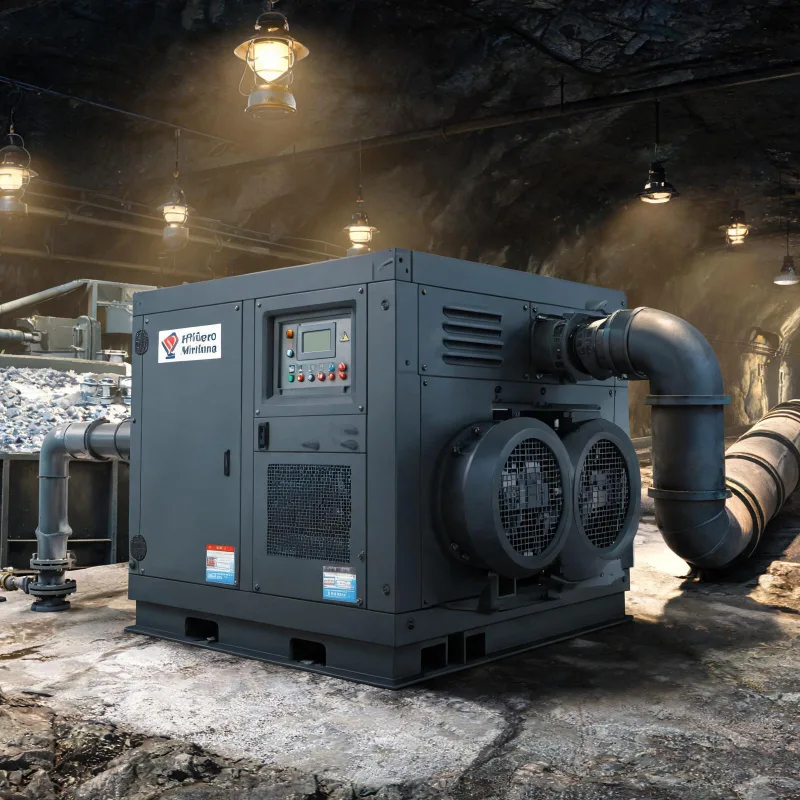
- Not recommended for small-scale intermittent surface mining operations
RFP Requirement Breakdown for Compressed Air Systems
Most mining project RFPs list two core requirements for compressed air systems: consistent purity for process use, and reliable, safe operation for underground ventilation. Too many bid responses generalize benefits without tying performance to these specific use cases.
That leaves procurement teams without clear data to compare options.
Most of that contamination comes from oil leaks in lubricated compressors.
Technical Response: Use Case Specific Advantages
We break advantages down by the two core use cases named in most mining RFPs, with measurable, auditable outcomes.
Advantages for Mineral Flotation
Froth flotation relies on consistent surface chemistry for ore particle separation. Even small amounts of oil in compressed air create a thin film on ore particles, which disrupts froth formation and reduces the attachment of target minerals to froth bubbles.
This benefit only holds for flotation processes processing sulfide, precious metal, or industrial mineral ores that rely on froth stability. It does not apply to aggregate or coarse coal mining that does not use froth flotation for concentration.
That turns into direct top-line revenue gains that offset higher upfront capital costs within 3-5 years for most operations.
Advantages for Underground Ventilation
Underground ventilation systems rely on compressed air to drive booster fans, and many operations also use compressed air for personnel breathing air systems. Oil leaks from lubricated compressors release oil mist into the ventilation air stream.
Oil mist creates two critical risks: it increases fire hazard in gaseous underground mines, and it exposes workers to respirable hydrocarbon contaminants that violate global mine safety standards. Oil-free systems eliminate this risk entirely.
That also reduced their regulatory inspection findings.
Risk Disclosure: Common Failure Modes from Misapplication
No solution works for every mining operation. We disclose clear failure modes to help teams avoid bad investments.
The most common failure comes from misapplying low-pressure oil-free units to high-pressure drilling or process applications that require 12+ bar pressure. This leads to premature wear and unplanned downtime within 2 years of installation.
Another common issue is skipping hazardous location certification. Not all oil-free compressors are rated for underground gaseous mining areas. Uncertified units can trigger regulatory shutdowns.
For small-scale operations with annual output under 500kt, or operations with intermittent compressed air use, the higher upfront cost never pays back.
Procurement Delivery & Acceptance Boundaries
We outline clear, auditable acceptance criteria that can be verified on site before final payment.
All units for underground use must come with a valid MSHA or IECEx hazardous location certification for the specific gas classification of your mine. This is non-negotiable for regulatory compliance.
All units must pass a third-party ISO 8573-1 Class 0 air purity test before delivery. A factory test report must be provided with the unit for audit purposes.
The supplier must provide a 10-year performance warranty for all non-lubricated core components. This covers any defects in the compression module that lead to oil contamination.
On-site acceptance testing requires measuring residual oil content in the output air. It must measure less than 0.01 mg/m³ to meet Class 0 requirements.
Decision Matrix
| Operation Scale | Core Application | Oil-Free Recommended? |
|---|---|---|
| >1Mt/year underground | Flotation + ventilation | Yes |
| 500kt-1Mt/year | Continuous flotation | Yes |
| <500kt/year | Intermittent surface use | No |
|—————–|——————|————————| | >1Mt/year underground | Flotation + ventilation | Yes | | 500kt-1Mt/year | Continuous flotation | Yes | | <500kt/year | Intermittent surface use | No |
Use Cases
- Large-scale underground hard rock mining
- Froth flotation circuits for sulfide and precious metals
- Primary and emergency underground ventilation systems
- Breathing air systems for underground mining personnel
Specs Snapshot
- Air purity rating: ISO 8573-1 Class 0
- Hazard certification: MSHA / IECEx Ex d
- Working pressure range: 7 bar – 15 bar
- Expected service life: 15+ years continuous operation
Cost Factors
Procurement Checklist
- Verify third-party ISO 8573-1 Class 0 air purity test report
- Confirm hazardous location certification is valid for your mine region
- Check for a 10-year performance warranty for non-lubricated components
- Verify quoted flow rate meets peak demand for flotation and ventilation




