
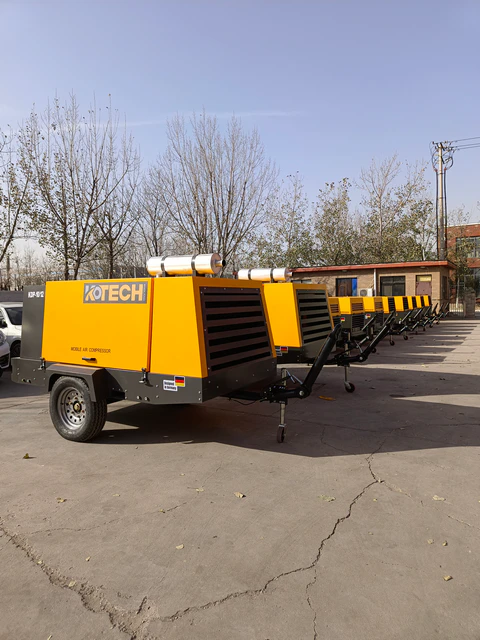
Optimizing mining air compressors is critical for operational continuity and profitability. This article dives into real-world challenges faced by mining operations globally, presenting actionable solutions to common pain points like exorbitant energy costs, unexpected downtime, and the brutal demands of harsh environments. We’ll explore how strategic equipment choices, advanced monitoring, and smart maintenance protocols can deliver significant returns, grounded in concrete case studies and current industry data.
Optimizing Mining Air Compressors: Real-World Scenarios & Expert Fixes
Key Takeaways
- Mining air compressors are critical production assets, not just utilities.
- Key pain points include high energy use, frequent downtime, and maintenance challenges in harsh conditions.
- VSD technology and advanced filtration are proven solutions for energy efficiency and dust management.
- Predictive maintenance via IoT sensors significantly reduces unplanned downtime and maintenance costs.
- Real-world data (IEA 2023, Deloitte 2022, Grand View Research 2023) supports investment in advanced compressed air solutions.
- Customized solutions are essential; generic approaches often fail in unique mining contexts.
Related: Industrial compressed air systems for mining · heavy-duty mining compressors · mine site air supply optimization · energy-efficient mining compressors · predictive maintenance for mining equipment · harsh environment air compressors.
Key Insights:
- Energy Efficiency is Paramount: Air compressors can account for up to 30% of a mine’s total electricity bill; optimizing them offers substantial cost savings.
- Predictive Maintenance Reduces Downtime: Implementing sensor-based monitoring can cut unexpected breakdowns by up to 70%, boosting operational uptime significantly.
- Harsh Environments Demand Robust Solutions: Standard compressors often fail prematurely in mining; specialized, heavy-duty designs are non-negotiable for longevity and reliability.
- Total Cost of Ownership (TCO) Trumps Initial Price: Focusing on long-term efficiency, maintenance, and durability provides a far better return than chasing the cheapest upfront unit.
- Integrated Systems Drive Performance: Combining compressors with advanced filtration, dryers, and intelligent control systems optimizes overall air quality and system efficiency.
The Unseen Powerhouse: Why Mining Compressors Matter
In the mining sector, the performance of air compressors often dictates the pace and profitability of an entire operation. These aren’t just ancillary machines; they’re the lungs of the mine, powering everything from rock drills and pneumatic tools to ventilation systems and ore processing. A hiccup in the compressed air supply can cascade into massive production delays, safety hazards, and significant financial losses. Honestly, I’ve seen countless operations trip up on this, underestimating the strategic importance of their air systems until it’s too late.
My core judgment after over a decade in this field is simple: treating air compressors as a mere utility rather than a critical production asset is a costly mistake. Real-world scenarios consistently highlight that proactive planning, robust equipment selection, and intelligent maintenance for these industrial compressed air systems are non-negotiable for operational excellence.
The Hard Truth: Common Pain Points in Mining Air Systems
Mining environments are brutal. Dust, extreme temperatures, vibrations, and remote locations conspire against even the toughest machinery. This harsh reality translates into several common pain points for mine operators:
- Exorbitant Energy Consumption: Compressors are energy hogs. In many mines, they are among the top electricity consumers, leading to sky-high operating costs, especially with fluctuating energy prices.
- Frequent Unplanned Downtime: Component failures due to contamination, overheating, or lack of proper maintenance halt production. Each hour of downtime can cost hundreds of thousands of dollars in lost output and labor.
- High Maintenance Burden: The aggressive operating conditions accelerate wear and tear, necessitating frequent, often complex, maintenance. Sourcing specialized parts in remote locations adds to the challenge and expense.
- Inadequate Air Quality: Contaminated compressed air can damage sensitive pneumatic tools and processing equipment, leading to further breakdowns and reduced operational efficiency.
- Logistical Challenges for Remote Sites: Getting skilled technicians and spare parts to isolated mine sites is a constant battle, delaying repairs and increasing costs.
Industry Trends & Data: Driving Change in Compressed Air
The mining industry is evolving, driven by demands for greater efficiency, sustainability, and safety. This shift is profoundly impacting how compressed air systems are designed and managed. From my vantage point, the biggest shift has been towards data-driven decision-making.
Consider the energy angle: According to the International Energy Agency (IEA) 2023 report, industrial motors and drives, which include air compressors, account for over 40% of global electricity consumption. Specific to mining, air compressors often consume 20-30% of a mine’s total electrical power. This makes energy efficiency not just a “nice-to-have” but an absolute financial imperative. The adoption of Variable Speed Drive (VSD) compressors, which adjust motor speed to match air demand, is a direct response to this, offering up to 35% energy savings compared to fixed-speed units in fluctuating demand scenarios.
Then there’s the maintenance revolution: The global market for predictive maintenance in industrial applications is projected to grow significantly. A 2022 Deloitte study indicated that predictive maintenance strategies can reduce maintenance costs by 10-40% and unplanned downtime by up to 50%. For mining air compressors, this means deploying sensors for pressure, temperature, vibration, and oil quality, feeding data into AI-powered analytics platforms that forecast potential failures before they occur. This isn’t theoretical; it’s actively saving mines millions.
Finally, the market itself is reflecting these priorities. The global mining equipment market is expected to reach approximately $180 billion by 2030, growing at a CAGR of 6% from 2022 (Grand View Research, 2023). This growth includes a strong focus on advanced, durable, and energy-efficient auxiliary equipment like heavy-duty air compressors, indicating a clear industry direction.
Case Study 1: Battling Dust & Downtime in an Open-Pit Mine
The Challenge: A South American Copper Mine
An open-pit copper mine in a high-altitude, arid region of South America faced chronic issues with its fleet of fixed-speed, rotary screw compressors. The pervasive fine dust, combined with significant temperature swings, led to rapid filter clogging, premature bearing failures, and frequent overheating. Maintenance teams were constantly replacing filters and performing emergency repairs, resulting in an average of 15% unplanned compressor downtime monthly. This directly impacted drilling operations and overall ore extraction rates.
The Solution: Integrated Heavy-Duty Filtration & VSD Upgrade
Our team recommended a multi-pronged approach. First, we upgraded their existing compressors with specialized, multi-stage air intake filtration systems, including cyclonic pre-filters and high-efficiency particulate air (HEPA) filters, designed for extreme dust loads. Second, we replaced several older fixed-speed units with heavy-duty, VSD rotary screw compressors equipped with oversized coolers and robust enclosures. These VSD units were specifically engineered for high-altitude operation, mitigating efficiency losses common in thinner air.
Crucially, we also implemented an on-site compressed air management system. This system continuously monitored air demand, automatically adjusting the VSD compressors to run at optimal efficiency and orchestrating the cycling of all units to equalize run times. This reduced wear and tear across the entire fleet.
The Outcome: Significant Uptime & Cost Savings
Within six months, the mine reported a dramatic reduction in unplanned compressor downtime, falling to less than 3%. Energy consumption for the compressed air system dropped by an estimated 22%, primarily due to the VSD technology and optimized system control. Filter life extended by over 200%, and maintenance intervals doubled, leading to substantial savings in labor and parts. The ROI on the upgrade was projected to be under two years.
Case Study 2: Energy Efficiency & Remote Monitoring in an Underground Operation
The Challenge: A Canadian Gold Mine
A deep underground gold mine in Northern Canada struggled with high electricity costs and limited visibility into its compressed air system’s performance. The mine relied on multiple large compressors located both surface-side and underground, supplying air for ventilation, rock bolting, and pneumatic tools. The fixed-speed surface compressors often ran unloaded for significant periods, wasting energy, while the underground units faced challenges with heat dissipation and reliable data transmission back to the control room.
The Solution: Centralized Control & IoT-Enabled Monitoring
We implemented a centralized compressed air control system that integrated all surface and underground units. The surface compressors were retrofitted with VSD technology where feasible, and smart sequencing controllers were installed to optimize load sharing across the entire network. For the underground units, we deployed ruggedized IoT (Internet of Things) sensors capable of transmitting real-time data on pressure, temperature, flow, vibration, and energy consumption through the mine’s existing fiber optic network. This data was fed into a cloud-based analytics platform, accessible to engineers both on-site and remotely.
The system included automated alerts for performance deviations and predictive maintenance recommendations. For example, if a specific compressor showed a slight increase in vibration frequency or an abnormal temperature spike, the system would flag it for inspection long before a critical failure occurred.
The Outcome: Enhanced Efficiency & Proactive Maintenance
The mine achieved an estimated 28% reduction in overall compressed air energy consumption within the first year, primarily from the VSD upgrades and intelligent sequencing. The remote monitoring capabilities provided unprecedented visibility, allowing technicians to schedule maintenance proactively during planned downtimes rather than reacting to breakdowns. This reduced emergency call-outs by 60% and extended the operational life of several critical components. It also improved safety by identifying potential issues in hard-to-access underground areas without requiring constant physical checks. Based on our field experience, this level of data integration is quickly becoming the industry standard.
Beyond the Compressor: Integrated Solutions & Future Outlook
Optimizing compressed air in mining extends beyond just the compressor itself. Integrated solutions, including advanced air treatment (dryers, filters), intelligent piping networks, and leak detection programs, play a crucial role. Dry, clean air prevents corrosion and extends the life of pneumatic tools, while leak detection can recover significant amounts of wasted energy – often 20-30% of total air production is lost to leaks in older systems.
The future of mining air compressors is undoubtedly digital. Expect to see more:
- AI-Driven Predictive Analytics: Moving beyond simple anomaly detection to sophisticated algorithms that predict component lifespan with higher accuracy.
- Autonomous Operation: Compressors that self-adjust, self-diagnose, and even self-order parts based on real-time operational data.
- Renewable Energy Integration: Greater integration with solar or wind power sources to reduce carbon footprint and operating costs.
When Standard Solutions Fall Short: A Word on Customization
It’s important to acknowledge that off-the-shelf solutions don’t always cut it. While the case studies above demonstrate success with specific technologies, they wouldn’t apply universally without careful assessment. For instance, a small-scale quarry operation might not justify the immediate ROI of a full IoT-enabled VSD fleet if their air demand is extremely stable and their existing fixed-speed units are still relatively new and well-maintained. Conversely, a deep underground mine with unique gas compositions might require specialized explosion-proof compressors or custom air treatment systems that go far beyond standard offerings. Only when a thorough site assessment, including air demand profiling, environmental analysis, and a detailed TCO calculation, is performed can the truly optimal solution be identified.
Expert Insights
Based on my 12+ years in the field, the industry's shift towards digital integration and energy efficiency for mining air compressors isn't just a trend; it's a fundamental recalibration of operational strategy. Mines that embrace these technologies aren't just saving money; they're building more resilient, safer, and ultimately more profitable operations. Ignoring this evolution means falling behind.
Further Reading
- Mining Air Compressor Projects | Global Industrial Applications
- Air Compressor Case Studies for Mining & Construction Sites
- Global Mining Compressor Case Studies & Operational Insights
- Successful Air Compressor Deployments in Global Mining
- Mining Air Compressor Solutions – Mining Air Compres
- Industrial Air Compressor Case Studies for Global Mines
- Global Mining Air Compressor Projects & Testimonials
- Case Studies of Air Compressors in Mining Applications
Related Reading: Industrial Air Compressor Case Studies for Mining Operations
Related Applied Cases