
Mining operations face unique challenges requiring more than just standard air compressors. This article, penned by a seasoned industry expert, explores why complete, custom-engineered air compressor systems are non-negotiable for optimizing performance, reducing downtime, and ensuring safety in the demanding mining sector. We delve into specific user pain points, provide actionable insights, and highlight critical industry trends and data to guide your investment in robust, reliable compressed air infrastructure.
Unlocking Efficiency: Tailored Air Compression for Mining
Key Takeaways
- Mining environments require custom-engineered air compressor systems, not standard industrial units.
- Key pain points addressed by custom solutions include dust, temperature extremes, remote locations, and high energy costs.
- Energy efficiency is crucial; IEA 2023 data highlights potential for significant savings through optimization.
- Customization involves tailored compressor technology, heavy-duty enclosures, advanced filtration, and specialized cooling.
- Complete systems integrate compressors with air treatment (dryers, filters), storage, and distribution networks.
- Modern systems leverage remote monitoring and predictive maintenance to reduce downtime.
- Industry trends include VSD compressors for energy savings and integration into broader mine management platforms.
- Deloitte 2023 report emphasizes operational efficiency and decarbonization as top mining priorities, supported by optimized air systems.
- Choosing an experienced partner for design, installation, and support is critical for long-term success.
Related: Mining compressed air solutions · tailored air compression systems · heavy-duty air compressors · underground mining air systems · open-pit air compression · mineral processing air supply · energy-efficient mining compressors · pneumatic systems for mining · compressed air audits mining · remote monitoring air compressors.
Mining operations are inherently demanding environments, requiring robust and reliable equipment to ensure continuous productivity and maintain safety standards. Frankly, off-the-shelf air compressor systems rarely cut it. From deep underground shafts to sprawling open-pit sites, the unique challenges of dust, extreme temperatures, remote locations, and continuous operation necessitate solutions engineered specifically for the task. Investing in complete mining air compressor systems and custom solutions isn’t just a choice; it’s a strategic imperative for operational efficiency and long-term profitability.
Here are some key insights:
- Customization is King: Standard air compressors fail quickly under mining’s harsh conditions, leading to costly downtime and inefficient power usage.
- Energy Efficiency Drives ROI: Compressed air is a major energy consumer; optimized systems can slash operational costs significantly.
- Reliability is Non-Negotiable: Downtime due to compressor failure directly impacts production targets and safety protocols.
- Integrated Systems Outperform: A holistic approach, including air treatment and distribution, ensures peak performance and longevity.
- Predictive Maintenance is Key: Modern systems leverage data for proactive servicing, preventing major breakdowns before they occur.
The Unseen Costs of Subpar Air Compression
Many mining companies underestimate the true cost of an inadequate compressed air system. It’s not just about the purchase price; the real expenses stem from operational inefficiencies, frequent breakdowns, and the ripple effect on production schedules. Imagine a critical drilling operation grinding to a halt because a standard industrial compressor, ill-suited for the dusty, vibrating environment, choked. That’s lost time, wasted labor, and deferred output.
Energy consumption is another massive drain. Compressed air systems can account for up to 30% of total industrial electricity usage in some applications. A poorly sized or inefficient compressor can inflate energy bills dramatically. According to the International Energy Agency (IEA 2023), optimizing industrial motor-driven systems, including compressors, could reduce global electricity demand by as much as 10%, translating into billions in savings for energy-intensive sectors like mining.
Beyond energy, maintenance costs skyrocket with generic equipment. Parts wear out faster. Filters clog more frequently. The constant strain on components not designed for extreme duty cycles leads to premature failure. This isn’t just an inconvenience; it’s a direct hit to your bottom line, requiring specialized technicians and often hard-to-source parts for equipment that wasn’t spec’d right from the start.
Why “Off-the-Shelf” Fails in Mining
The core issue with standard commercial air compressors in a mining context boils down to a fundamental mismatch between design intent and operational reality. Commercial units are built for controlled factory environments, not the brutal conditions of a mine. They lack the robust filtration, heavy-duty enclosures, specialized cooling, and vibration dampening required to survive and perform consistently.
Consider the dust. Mining operations generate incredible amounts of particulate matter. Standard air intake filters become overwhelmed rapidly, leading to contaminated air entering the compressor, causing accelerated wear on rotors, valves, and other internal components. This dramatically shortens the lifespan of the equipment and compromises the quality of the compressed air, impacting downstream pneumatic tools and processes. I’ve personally seen filters on non-mining-spec units clog completely within days on certain sites, a scenario that simply isn’t sustainable.
Temperature extremes also play a significant role. Underground mines can be incredibly hot and humid, while open-pit sites might experience freezing winters and scorching summers. Standard compressors struggle to maintain optimal operating temperatures in these conditions, leading to overheating, reduced efficiency, and potential system shutdowns. A custom-engineered system accounts for these variables, incorporating specialized cooling systems, robust heat exchangers, and appropriate lubricants to ensure stable performance regardless of the ambient environment.
However, it’s worth noting that for very small, isolated surface operations with minimal dust and stable temperatures, a robust industrial-grade compressor might suffice for non-critical tasks. But this is the exception, not the rule, and only applies when the operational footprint is small and failure impact is negligible.
Engineering Your Edge: Custom Solutions
A true “complete mining air compressor system” goes far beyond just the compressor unit itself. It encompasses a holistic approach, from air intake and filtration to air treatment, storage, and distribution, all tailored to the specific demands of your mine. This starts with a comprehensive site assessment, analyzing environmental factors, power availability, specific application requirements (e.g., drilling, ventilation, material handling, processing plants), and future expansion plans.
Customization means selecting the right compressor technology – rotary screw, centrifugal, or piston – based on pressure, flow rate, and duty cycle. It involves heavy-duty enclosures to protect against impact and corrosion, advanced multi-stage filtration systems to handle extreme dust loads, and specialized cooling solutions. For underground applications, intrinsically safe designs, explosion-proof components, and strict adherence to ventilation requirements are paramount. These aren’t optional extras; they are fundamental safety and operational necessities.
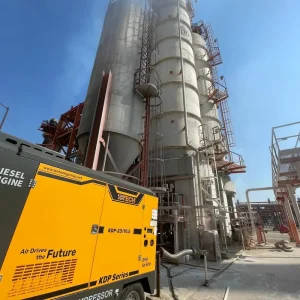
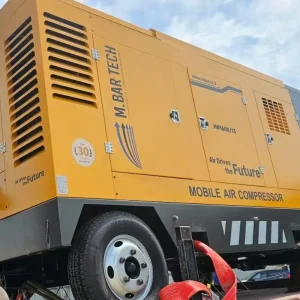
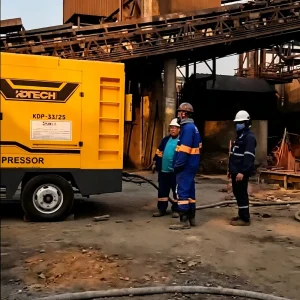
For instance, a large-scale open-pit mine might require multiple high-capacity, containerized rotary screw compressors, designed for easy relocation and robust protection against the elements. An underground operation, conversely, might need compact, mobile units with specialized exhaust systems and advanced monitoring for air quality and safety. These tailored solutions ensure peak performance while minimizing footprint and maximizing safety compliance.
Beyond the Compressor: Complete System Integration
The compressor is only one part of the puzzle. A complete system integrates several critical components to deliver clean, dry, and reliable compressed air at the point of use. This includes high-efficiency air dryers (refrigerant or desiccant, depending on dew point requirements), coalescing filters to remove oil and particulates, and large-capacity air receivers for stable pressure and demand fluctuations. The piping network itself is crucial; properly sized and installed piping minimizes pressure drop and leaks, which are significant energy wastes.
Modern systems also incorporate advanced control and monitoring. Remote telemetry allows operators to track performance, pressure, temperature, and energy consumption from a central control room, or even off-site. Predictive maintenance algorithms, leveraging sensor data, can alert teams to potential issues before they escalate into costly failures. This proactive approach significantly reduces unplanned downtime and extends equipment life. The global mining equipment market is projected to reach over $180 billion by 2029 (Statista 2024), with a significant portion of this growth driven by demand for more efficient, integrated, and intelligent solutions that include advanced compressed air systems.
Navigating the Future: Trends in Mining Air Systems
The mining industry is continuously evolving, driven by sustainability goals, automation, and the pursuit of greater efficiency. Compressed air systems are no exception. We’re seeing a strong trend towards Variable Speed Drive (VSD) compressors, which adjust motor speed to match air demand, leading to significant energy savings – often 30% or more compared to fixed-speed units. This is particularly relevant as mining operations fluctuate demand based on different phases of extraction and processing.
Another emerging trend is the integration of compressed air systems into broader mine management platforms. This allows for real-time data sharing, optimizing not just air supply but its interaction with other critical processes like ventilation and drilling automation. Furthermore, as mines go deeper and become more remote, the emphasis on modular, easily deployable, and highly resilient systems increases. The focus is on solutions that can operate autonomously for extended periods with minimal human intervention, relying on robust design and intelligent diagnostics.
The push for decarbonization also influences compressed air. While direct electrification of heavy machinery is a major goal, optimizing existing energy-intensive processes like air compression remains critical. Deloitte’s 2023 “Tracking the Trends” report highlighted operational efficiency and decarbonization as top priorities for mining executives, underscoring the importance of energy-efficient compressed air solutions as a key enabler for achieving these strategic objectives.
Choosing Your Partner: A Critical Decision
Selecting the right partner for your mining air compressor systems is as crucial as the technology itself. You need a provider with deep industry experience, a proven track record in custom engineering for harsh environments, and comprehensive after-sales support. Look for a team that understands not just compressors, but the intricacies of mining operations, safety regulations, and the long-term cost implications of every decision. A true partner will conduct thorough assessments, design a system that maximizes uptime and efficiency, and provide ongoing service to ensure your investment continues to deliver peak performance throughout its lifecycle.
Don’t settle for less than a complete, custom-engineered solution. Your mine’s productivity, safety, and profitability depend on it.
Expert Insights
Based on over a decade in this field, the biggest mistake I've seen companies make is trying to force a square peg into a round hole with their compressed air. You simply cannot expect a compressor built for a clean manufacturing plant to survive, let alone thrive, in a dusty, vibrating, and often remote mine site. The upfront savings on a generic unit are almost always dwarfed by the massive operational costs, lost production, and safety risks down the line. Investing in a truly complete, custom
— engineered system is not an expenditure; it's a critical infrastructure investment that pays dividends in reliability and efficiency for years.
Further Reading
- Industrial Air Compressor Insights for Mining Operations
- Towable Diesel Air Compressors for Remote Mining Operations
- Industrial Air Compressors for Oilfield & Gas Operations
- Successful Mining Air Compressor Installations Worldwide
- Mining Air Compressor Systems, Custom Air Compressor Solutions, Industrial Air Compressors for Mining – Industrial Compres
- Mining Air Compressor Technology: Trends & Best Practices
- Portable Diesel Air Compressors for Mining & Construction Sites
- Oil & Gas Air Compressor Solutions for Drilling & Production
Related Reading: Air Compressor Case Studies for Mining & Heavy Industry
Related Applied Cases