
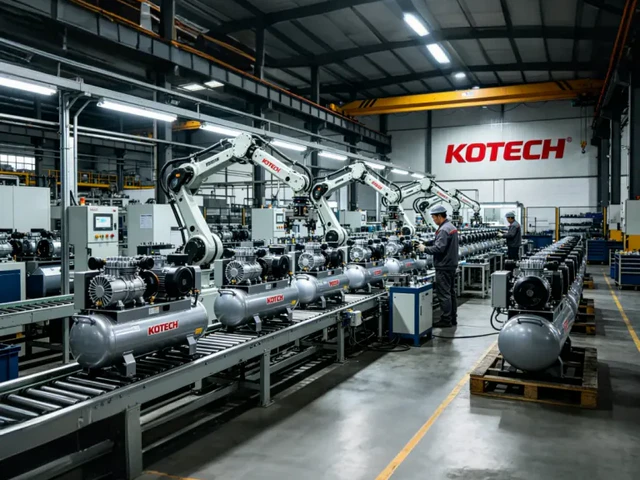
Operating in gas fields demands air compressors that are not just functional, but profoundly reliable. This article, from a seasoned industry perspective, dives into the critical applications, common pain points, and actionable strategies for selecting, deploying, and maintaining dependable air compression systems that withstand the harshest conditions, minimize downtime, and optimize operational efficiency. We'll explore the real-world implications of unreliable equipment and outline solutions that prioritize long-term performance and safety.
Ensuring Uptime: Reliable Air Compression in Gas Field Operations
Key Takeaways
- Gas field compressors require specialized engineering for extreme conditions (corrosion, temperature).
- Standard industrial compressors are often insufficient for O&G field demands.
- Predictive maintenance and remote monitoring significantly boost uptime and reduce costs.
- Energy efficiency and methane emission reduction are key trends impacting compressor selection.
- Redundancy and robust spare parts management are essential for critical applications.
Related: Natural gas extraction compression · wellhead air systems · instrument air for gas processing · process air in upstream O&G · robust compression solutions · harsh environment compressors · methane emission reduction · predictive maintenance for gas field compressors.
Key Insights:
- Reliability is Non-Negotiable: Unplanned compressor downtime in gas fields directly translates to significant production losses and safety risks.
- Harsh Conditions Demand Specialized Solutions: Standard industrial compressors often fail prematurely in the corrosive, remote, and extreme environments of gas fields.
- Predictive Maintenance Drives Uptime: Leveraging data analytics for maintenance can drastically reduce operational costs and extend equipment life.
- Energy Efficiency & Methane Reduction are Critical: Modern compressor designs and operational strategies must address both power consumption and environmental compliance.
- Total Cost of Ownership (TCO) Matters Most: Initial capital expenditure should always be weighed against long-term operational costs, including maintenance, energy, and potential downtime.
Key to Uninterrupted Gas Field Operations
Look, in the oil and gas industry, especially in remote gas fields, the stakes are incredibly high. When an air compressor goes down, it’s not just an inconvenience; it can halt production, compromise safety systems, and trigger massive financial losses. We’re talking about essential applications like instrument air for control valves and pneumatic tools, process air for regeneration or purging, and even crucial starting air for gas turbines or engines. The backbone of any successful gas field operation, frankly, hinges on rock-solid, reliable air compression.
The core issue isn’t simply having an air compressor. It’s about having one that consistently performs under duress. From my experience, operators often underestimate the specific demands of gas field environments until they’re knee-deep in expensive downtime.
Market Dynamics and Uptime Imperatives
The global oil and gas air compressor market is projected to reach over $5 billion by 2030, growing at a CAGR of 4.5% from 2023 (Mordor Intelligence 2023). This growth signals a clear recognition of these systems’ critical role. But it’s not just about market size; it’s about the cost of failure. Unplanned downtime in the oil and gas sector can cost upwards of $2 million per day for offshore platforms (DNV GL, now DNV, 2018 report). For onshore gas fields, while potentially lower, these figures are still substantial and quickly erode profit margins.
This isn’t just about financial impact. The IEA’s 2023 report highlighted that methane emissions from oil and gas operations represent 40% of all methane from human activity. This drives demand for more efficient, leak-free compression systems that don’t contribute to environmental non-compliance.
Engineering for Extreme Conditions: Why It Matters
Gas fields are notoriously tough on machinery. We’re talking about everything from corrosive gases and dust-laden air to extreme temperatures—both scorching heat and freezing cold. A reliable compressor isn’t just built; it’s engineered for these specific challenges.
Corrosion Resistance
Components exposed to sour gas (H2S), high humidity, or saltwater spray need specialized materials like stainless steel or corrosion-resistant coatings. A standard industrial unit will rust out in months where a properly specified oil & gas compressor will last years.
Temperature Extremes
Whether it’s the intense desert sun or sub-zero arctic conditions, compressors must start and operate efficiently. This means robust cooling systems for heat and cold-weather packages (heaters, specialized lubricants) for freezing conditions.
Remote Operations & Maintenance
Many gas fields are miles from the nearest service center. This makes ease of maintenance, extended service intervals, and remote monitoring capabilities absolutely vital. Downtime troubleshooting can take days if parts aren’t readily available or if specialized technicians have to travel extensively.
When Standard Solutions Fall Short: The Limits of Off-the-Shelf Compressors
It’s a common pitfall: assuming a compressor designed for a factory floor can handle a gas field. Honestly, I’ve seen too many operations cut corners on compressor specifications only to pay tenfold in lost production and repair costs down the line. A standard industrial compressor, while cheaper upfront, will likely fail prematurely due to inadequate filtration, material incompatibility with corrosive elements, or lack of robust controls to handle fluctuating loads inherent in field operations.
These units often lack the necessary certifications (like ATEX for hazardous areas) or adherence to API standards (like API 619 for rotary screw compressors) that are mandatory for safety and operational integrity in oil & gas. Trying to adapt an off-the-shelf unit usually results in a patchwork solution that’s harder to maintain and less reliable.
Implementing Robust Compression Systems: Practical Steps
Building a truly reliable air compression system for a gas field involves more than just buying a good compressor. It’s about a holistic approach.
Accurate Sizing and Selection
First, don’t guess. Over-sizing wastes energy; under-sizing leads to constant cycling and premature wear. Analyze your actual air demand for instrument air, process air, and utility air. Consider peak loads, future expansion, and redundancy requirements. Reciprocating compressors are often preferred for high-pressure, low-volume applications, while rotary screw compressors excel in continuous, high-volume demand.
Advanced Filtration and Drying
Clean, dry air is paramount, especially for instrument air. Multi-stage filtration (particulate, coalescing, activated carbon) and appropriate dryers (refrigerated, desiccant) are non-negotiable. Contaminated air can foul instruments, corrode piping, and compromise pneumatic controls.
Remote Monitoring & Predictive Maintenance
This is where modern technology truly shines. Implementing predictive maintenance strategies can reduce maintenance costs by 25-30% and improve uptime by 10-15% (Accenture 2022). Sensors track vibration, temperature, pressure, and oil quality. Data is transmitted to a central control room, allowing for proactive intervention before a minor issue escalates into a catastrophic failure. This is particularly crucial for remote gas fields where physical inspections are less frequent.
Redundancy and Spares Management
For critical applications, N+1 or even N+2 redundancy is often a smart investment. Having a backup unit ready to kick in automatically prevents costly shutdowns. A well-managed inventory of critical spare parts, especially for long-lead items, is equally vital.
Future-Proofing Your Gas Field Assets
Looking ahead, the drive for operational efficiency and environmental compliance will only intensify. Investing in VFD (Variable Frequency Drive) compressors, for instance, can significantly reduce energy consumption by matching motor speed to actual air demand. This isn’t just about saving money; it’s about reducing your carbon footprint and meeting increasingly stringent regulations. From my twenty years in the field, the biggest shift I’ve noticed isn’t just about raw power, but about intelligent integration and sustainability.
Moreover, modular designs and skid-mounted packages are gaining traction. They simplify transportation, installation, and relocation, which is a huge advantage for dynamic gas field projects. These integrated units often come pre-piped and wired, reducing on-site labor and commissioning time—a true game-changer in remote locations.
Expert Insights
"In gas fields, a compressor isn't just a piece of equipment; it's a critical lifeline for operations and safety. My biggest takeaway over the years is that penny-pinching on initial compressor investment almost always leads to dollar-draining downtime later. Invest in robust, purpose
— built systems with smart monitoring, and you'll sleep a lot easier."
Further Reading
- Two-Stage Compressor for Powering Pneumatic Conveying Systems
- Mining Air Compressors for Construction, Mining & Exploration
- Long-Run Portable Diesel Compressors for 24/7 Mining Projects
- Common Oil & Gas Air Compressor Applications for Drilling Projects
- Oil & Gas Air Compressor Applications, Gas Fields, Reliable Compressors – Mining Air Compres
- How Two-Stage Compressors Improve Efficiency in Textile Factories
- Mining Air Compressors for Construction, Mining & Exploration
- Oil & Gas Air Compressor Applications in Onshore Oilfield Operations
About the Author

Related Reading: Portable & Stationary Mining Air Compressors for All Operations
Related Applied Cases