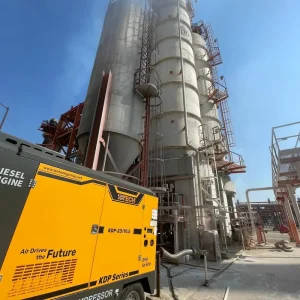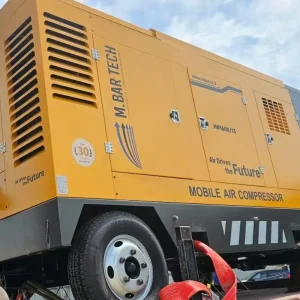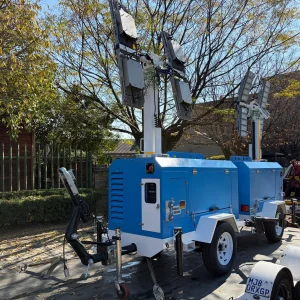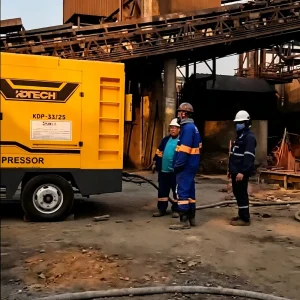

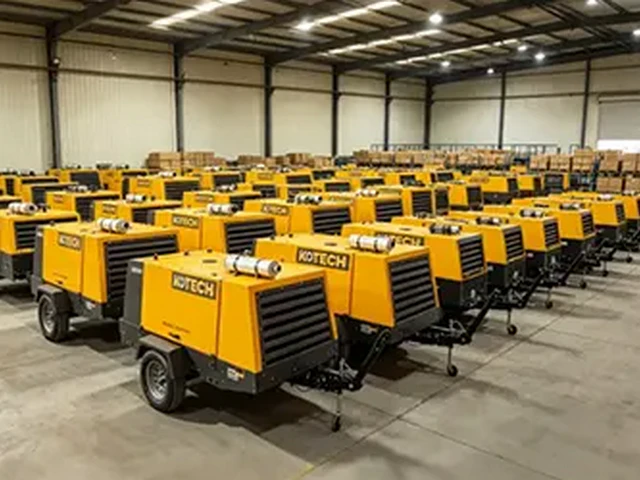
In the dynamic mining sector, fixed infrastructure often stifles growth and inflates costs. Modular mining air compressor systems are the definitive answer for operations requiring flexible, scalable power. They allow for precise CAPEX alignment with production phases, significantly reduce downtime, and enhance energy efficiency, making them essential for sustainable, long-term mining success.
Unlocking Growth: Modular Air Compressors in Mining
Key Takeaways
- Modular systems align CAPEX with mining phases, preventing premature overspending.
- Scalability allows easy adjustment of air capacity to match production changes.
- Enhanced reliability and maintenance due to hot-swappable modules.
- Significant energy savings through precise demand matching and VSD technology.
- Ideal for remote and dynamic mining operations requiring rapid deployment and relocation.
Related: Scalable air compression · phased mine expansion · CAPEX optimization mining · flexible compressor solutions · mining operational efficiency · portable air compressors · hot-swappable modules
When it comes to powering modern mining operations, flexibility isn’t just a buzzword – it’s a non-negotiable requirement. For years, I’ve watched mines grapple with oversized, underutilized, or rapidly outgrown fixed air compressor installations. The industry moves fast, and your infrastructure needs to keep pace without breaking the bank. This is precisely where modular mining air compressor systems shine, offering a strategic advantage for phased expansion that traditional setups simply can’t match.
Key Insights:
- CAPEX Optimization: Modular systems allow investment to precisely track production growth, avoiding upfront overspending.
- Unrivaled Scalability: Easily add or remove compressor modules to match fluctuating demand without major overhauls.
- Enhanced Uptime: Hot-swappable units and simplified maintenance minimize costly operational interruptions.
- Superior Energy Efficiency: Match compressed air output to real-time needs, significantly reducing power consumption.
- Rapid Deployment & Relocation: Ideal for remote sites and projects with uncertain lifespans, offering quick setup and mobility.
Why Modular Air Compressors Are No Longer Optional for Mining
The traditional approach to air compression in mining—installing a massive, fixed plant from day one—is increasingly obsolete. It’s a relic of a less dynamic era. Today’s mining projects, especially those with uncertain ore body lifespans or staged development, demand agility. Modular systems provide exactly that, allowing operators to deploy only the capacity needed for the current phase, then scale up seamlessly as operations expand. This isn’t just about convenience; it’s about fundamental financial prudence and operational resilience.
The Hard Numbers: Economic & Operational Imperatives
Let’s talk brass tacks. The economic pressure on mining operations is constant, and every dollar of CAPEX needs to be justified. Fixed air compressor installations often lock in significant capital early on, regardless of initial production volume. A modular approach flips this script.
Consider this: The global mining equipment market is projected to grow at a Compound Annual Growth Rate (CAGR) of 5.5% from 2023 to 2028, according to Mordor Intelligence (2023). This growth isn’t just about more machines; it’s about smarter, more adaptable infrastructure to support evolving extraction methods and increasing commodity demand. Investing in flexible solutions like modular compressors allows mines to participate in this growth without the crippling burden of premature, large-scale fixed asset deployment.
Furthermore, energy consumption is a massive operational cost. The U.S. Department of Energy (2020) highlights that compressed air systems can account for 10% of total electricity use in industrial settings, often exceeding 30% in some facilities. Oversized, inefficient fixed systems run continuously, burning through power even when demand is low. Modular units, however, can be cycled on and off, or variable speed drive (VSD) modules can precisely match output to demand, yielding substantial energy savings. Honestly, I’ve seen this make a tangible difference to monthly utility bills for our clients.
Finally, downtime is a killer. A report by EY (2022) frequently emphasizes that unplanned downtime remains a critical drag on productivity and profitability across the mining sector. Losing a central compressor plant can halt an entire mine. Modular systems mitigate this risk by allowing individual units to be taken offline for maintenance or swapped out without impacting the entire operation. This resilience translates directly into higher uptime and sustained production.
How Modularity Drives Scalability and Efficiency
The core advantage of modularity lies in its inherent flexibility. Imagine a mine starting small, perhaps with initial exploration and limited processing. A few skid-mounted, easily deployable air compressor modules provide ample power for drilling, pneumatic tools, and initial processing. As the mine expands, new ore bodies are accessed, or processing capacity increases, additional modules can be quickly integrated. This “plug-and-play” capability means:
- Precise Capacity Matching: Avoid the inefficiency of running an oversized compressor at partial load, or the frustration of an undersized system struggling to keep up. You pay for precisely what you need, when you need it.
- Reduced Installation Time: Modular units are often pre-engineered and factory-tested, significantly cutting down on complex on-site installation and commissioning. This is particularly valuable for remote mine sites where skilled labor and specialized equipment are scarce.
- Simplified Maintenance & Redundancy: If one module requires service, it can be isolated or replaced without shutting down the entire air supply. This built-in redundancy is a game-changer for critical operations. Many modern systems even incorporate predictive maintenance sensors, allowing for proactive servicing before failures occur.
- Geographic Flexibility: Need to move operations to a new pit or even a different mine site? Modular units can be disconnected, transported, and reinstalled with relative ease, offering asset utilization that fixed plants simply cannot.
When Modular Isn’t the Perfect Fit: Boundary Conditions
While the benefits of modular mining air compressor systems are compelling, it’s important to acknowledge that they aren’t a one-size-fits-all solution. For extremely large, well-established mines with decades of guaranteed operational life and highly stable, consistent air demand, a custom-engineered, centralized fixed plant might still offer marginal advantages in terms of ultimate efficiency per CFM, particularly for very high-pressure or specialized applications. These operations often have the capital and infrastructure to support such a large-scale, permanent installation. However, even in these scenarios, the inherent risks of single-point-of-failure and the difficulty of future upgrades push many towards a hybrid or partially modular approach. Frankly, only when a mine has absolute certainty on its long-term, static demand profile should a purely fixed system be considered.
Implementing a Modular System: Practical Steps
Adopting a modular air compressor strategy requires careful planning, but the payoff is substantial. Based on our experience, here’s how to approach it:
- Assess Current & Future Demand: Don’t just look at today’s CFM requirements. Project your needs for the next 5, 10, and even 15 years, accounting for potential expansion phases, new equipment, and technological upgrades.
- Choose the Right Modules: This involves selecting between rotary screw, reciprocating, or even centrifugal units, considering factors like pressure (PSI), flow (CFM), power source (electric, diesel), and environmental conditions. VSD technology is almost always a good investment for efficiency.
- Plan for Integration: How will new modules connect to existing air lines, power grids, and control systems? Modern modular solutions are designed for seamless integration, but a clear plan is crucial.
- Consider Lifecycle Costs (TCO): Look beyond the initial purchase price. Factor in energy consumption, maintenance, spare parts, and the potential for redeployment. Modular systems often offer a significantly lower Total Cost of Ownership (TCO) over the life of a mine.
- Partner with an Experienced Provider: Work with suppliers who understand the unique challenges of mining and can offer not just equipment, but also engineering support, installation services, and ongoing maintenance contracts. This partnership is key to maximizing your investment.
The mining sector is constantly evolving, driven by commodity prices, technological advancements, and environmental regulations. Your air compression infrastructure should be an enabler of this evolution, not a bottleneck. Modular systems offer the path forward, providing the flexibility, efficiency, and resilience needed for sustainable, profitable growth.
Expert Insights
"Having spent over a decade in this industry, I can confidently say that the shift towards modularity in mining air compression isn't just a trend; it's a fundamental re-evaluation of how we approach infrastructure. It addresses the core pain points of capital constraint and operational uncertainty that plague so many mining projects. Implementing modular systems is a strategic decision that pays dividends in flexibility, efficiency, and ultimately, long
— term profitability."
Further Reading
- Turnkey Mining Air Compressor Solutions for New Mine Development
- Towable Diesel Air Compressor Applications for Mining Operations
- All-Weather Applications of Diesel Portable Mining Compressors
- Air Compressor Applications for Gas Pipeline Leak Detection
- Modular mining air compressor systems – Skid-Mounted Air C
- Intelligent Air Compressor Applications for Modern Oil & Gas Fields
- What’s New in the Global Mining Air Compressor Industry
- Latest Industry Insights for Mining Air Compressor Manufacturing
About the Author

Related Reading: Mining Air Compressor Industry Insights | Market Trends 2026
Related Applied Cases