
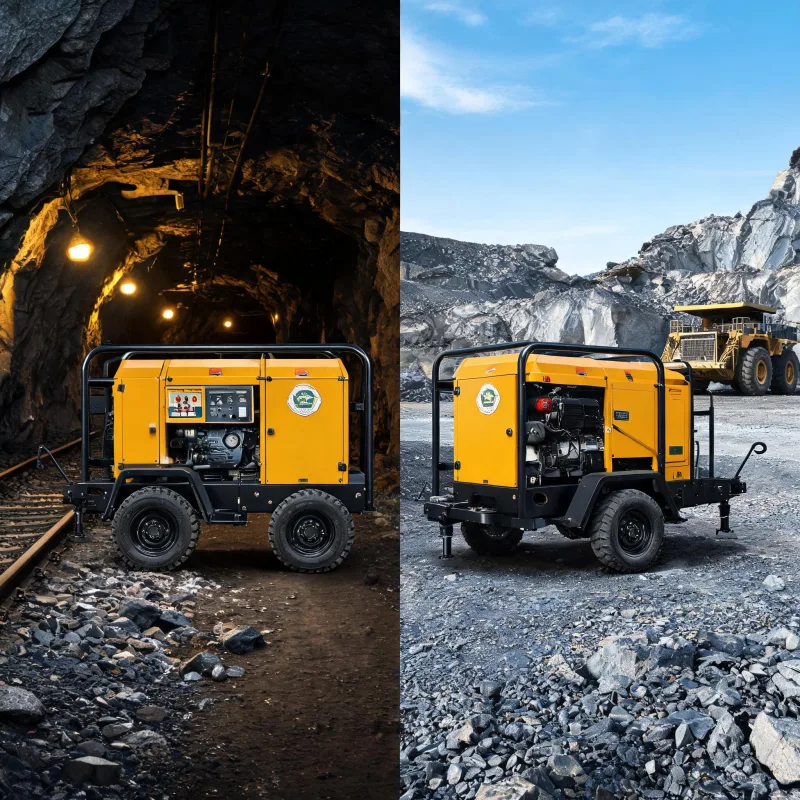
Practical OSHA-Compliant Noise Reduction Strategies for Mining Air Compressor System Design
Why Noise Reduction Is Non-Negotiable for Modern Mining Compressor Systems
Mining operations run compressed air systems 24/7 for drilling, tool operation, and ventilation support. The high cyclic load of these systems creates consistent noise and vibration that carries across both surface and underground work zones.
Fines apply even if no worker reports hearing damage, as regulators measure ambient exposure levels directly.
Most teams only add sound enclosures after receiving a fine, which costs 3x more than building noise controls into the initial system design.
Core Design Principles for Low-Noise Mining Compressor Systems
First, prioritize low-noise compressor models at the selection stage. Rotary screw compressors with variable speed drives (VSD) operate at 5-10dBA lower than fixed-speed reciprocating models, as they adjust output to match demand instead of cycling on and off at full power.
Vibration damping is the second core principle. Install rubber isolation mounts under all compressor units, and use flexible neoprene connectors between compressors and rigid piping to cut structure-borne noise by 12-15dBA.
Third, design ductwork and piping to avoid turbulent airflow. Sharp 90-degree elbows in compressed air lines create 3-5dBA of extra noise from airflow turbulence. Use long-radius 45-degree bends instead, and size piping to keep airflow velocity under 20 feet per second to reduce friction noise.
You do not need full sound enclosures for most applications if you implement these three core principles first.
Step-by-Step Implementation Workflow
Start with a noise audit of your site’s current compressed air demand, per ISO 14121 standards. Map peak and off-peak usage to size VSD compressors correctly, as over-sizing units leads to unnecessary cycling and higher noise output.
Next, install isolation and vibration controls before connecting any piping. Test vibration levels with a decibel meter after mounting units to confirm you have reduced structure-borne noise by at least 10dBA before moving to airflow design.
Then, run piping runs with long-radius bends, and install inline silencers at all air discharge points. Silencers add 8-12dBA of noise reduction for high-velocity exhaust air, which is a far lower cost solution than building full enclosures around entire units.
Finally, add modular sound barriers only for exposed compressor components that still exceed noise targets.
Boundary Conditions for This Design Framework
To be clear, this modular noise reduction framework does not apply to temporary mining sites with an operational lifespan under 6 months, where portable sound barriers deliver better ROI. The upfront cost of building noise controls into a permanent system only pays off for sites operating for 12 months or longer.
This framework also does not apply to high-pressure compressor systems operating above 200 PSI, which require custom sound enclosures to meet noise standards due to their extremely high airflow velocity.
Test all final designs with a third-party noise inspector before full operation to confirm OSHA compliance.




