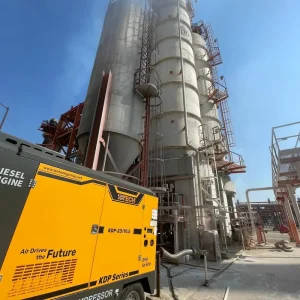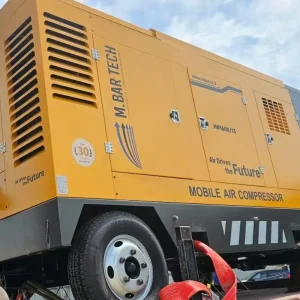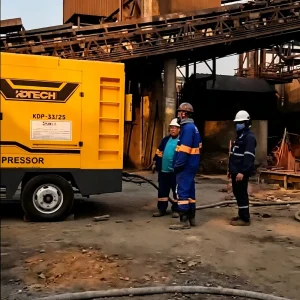

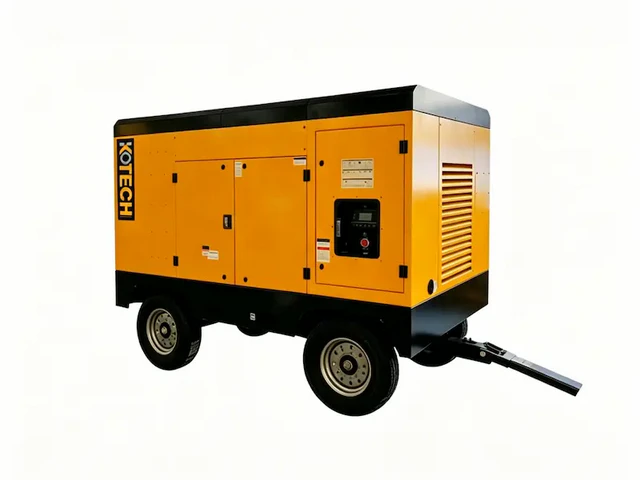
For any mine site construction project, especially those in remote, off-grid locations, portable diesel air compressors aren't just equipment; they're the lifeblood. Their ability to deliver consistent, high-pressure air for critical operations like drilling, blasting, and powering pneumatic tools makes them non-negotiable. This article dives into their indispensable applications, market drivers, and practical strategies for optimizing their deployment and maintenance, ensuring peak operational efficiency and safety in the most demanding environments.
Unlocking Mine Site Productivity with Portable Diesel Air Compressors
Key Takeaways
- Portable diesel air compressors are indispensable for mine site construction due to their self-contained power and robust design.
- They power rock drilling, blasting, pneumatic tools, ventilation, shotcrete application, and dewatering.
- The global mining equipment market growth (6.2% CAGR to 2030, Grand View Research 2022) drives demand for these units.
- Fuel costs (20-30% of op-ex, IEA 2023) and maintenance are significant pain points for mine operators.
- Key features include autonomous operation, high CFM/PSI, durability, wide operating temperature range, and service accessibility.
- Not ideal for fully electrified underground mines or minimal air demand tasks.
- Optimizing involves right-sizing, telematics for remote monitoring (Statista 2023 indicates market growth), VSDs, advanced filtration, and Tier-compliant engines.
- Strict preventative maintenance is critical for extending equipment life and efficiency.
Related: Mobile air compressors for mining · heavy-duty pneumatic tools · rock drilling compressors · blasting air supply · remote site power · mining operational efficiency · diesel-powered air solutions · industrial air compression in mining · mine safety equipment · underground mining ventilation.
For any mine site construction project, especially those in remote, off-grid locations, portable diesel air compressors aren’t just equipment; they’re the lifeblood. Their ability to deliver consistent, high-pressure air for critical operations like drilling, blasting, and powering pneumatic tools makes them non-negotiable.
Key Insights:
- Portable diesel air compressors are indispensable for remote and rugged mine site operations, providing critical power for drilling, blasting, and ventilation where grid power is unavailable.
- Selecting the right compressor hinges on balancing CFM/PSI requirements, fuel efficiency, and robust build quality to withstand harsh mining environments.
- Operational costs, particularly fuel consumption and maintenance, are major pain points; leveraging telematics and predictive maintenance can significantly reduce downtime and expenditure.
- Safety and environmental compliance are non-negotiable, driving demand for lower-emission engines and advanced safety features in modern units.
- The global mining equipment market is witnessing significant growth, emphasizing the need for reliable, efficient air compression solutions.
The Indispensable Role of Portable Diesel Air Compressors in Mining
In the demanding world of mine site construction, reliability and power are paramount. Portable diesel air compressors stand out as essential assets, delivering the high-pressure air needed to run a vast array of pneumatic tools and systems. These units are designed to operate independently, making them perfect for locations far from conventional power grids.
Their mobility allows them to be deployed exactly where needed, from the deepest underground tunnels to the highest open-pit benches. This flexibility minimizes downtime and maximizes productivity across sprawling and often hazardous mining landscapes. Frankly, without these robust machines, many modern mining operations simply wouldn’t be feasible.
Core Applications on the Mine Site
The versatility of these diesel-powered air systems is truly remarkable. They support nearly every phase of mine construction:
- Rock Drilling and Blasting: High-pressure air powers heavy-duty rock drills and jackhammers, essential for creating boreholes for explosives. This is a primary application, directly impacting excavation rates.
- Pneumatic Tool Operation: From impact wrenches for equipment maintenance to chipping hammers for scaling rock faces, a consistent air supply is crucial for various handheld tools.
- Ventilation Systems: Especially in underground mining, air compressors can drive auxiliary ventilation fans, ensuring adequate airflow and removing hazardous fumes.
- Shotcrete Application: For ground support, compressed air is used to spray shotcrete onto tunnel walls and roofs, providing structural stability.
- Dewatering and Pumping: Air-powered pumps are often used to remove water from excavations, a common challenge in many mine sites.
- Equipment Cleaning: High-pressure air is effective for cleaning heavy machinery, removing dust and debris to prevent wear and tear.
Each application underscores the critical nature of a dependable air supply. Any interruption can cascade into significant delays and cost overruns for the entire project.
Market Dynamics and Operational Imperatives: The Data Behind Demand
The global mining equipment market is experiencing robust growth, directly fueling the demand for reliable portable air compression solutions. According to a report by Grand View Research, the global mining equipment market size was valued at USD 131.2 billion in 2022 and is projected to grow at a compound annual growth rate (CAGR) of 6.2% from 2023 to 2030. This expansion is driven by increasing demand for minerals and metals, alongside technological advancements in mining practices.
This growth means more projects, often in increasingly remote and challenging geographies. These new sites require self-sufficient, high-performance equipment. The focus isn’t just on raw power; it’s on smart power.
Fuel Efficiency and Maintenance: The Bottom Line
For mine operators, fuel consumption and maintenance costs represent significant portions of their operational expenditure. Diesel fuel prices fluctuate, and even marginal improvements in fuel efficiency can translate into substantial savings over a project’s lifespan. A recent study published by the International Energy Agency (IEA) in 2023 highlighted that fuel costs often account for 20-30% of total operating expenses in heavy machinery sectors, including mining.
Maintenance, too, is a constant battle. The harsh conditions—dust, extreme temperatures, vibrations—take a toll on equipment. Unscheduled downtime due to compressor failure can halt an entire production line, costing hundreds of thousands of dollars per day. This is where the true pain points emerge for mine managers. They need machines that run, reliably, day in and day out.
Engineered for Extremes: Why Diesel Portables Dominate Mining
Portable diesel air compressors are purpose-built for the rigors of mine site construction. They offer a unique combination of power, durability, and autonomy that electric or gasoline-powered alternatives simply cannot match in many scenarios.
Their robust construction, often featuring heavy-gauge steel enclosures and oversized air filters, protects internal components from abrasive dust and debris. This resilience is key to their longevity in environments that would quickly degrade less specialized equipment. From my perspective, having seen countless units fail, the build quality here isn’t a luxury; it’s a necessity.
Key Features for Rugged Environments
- Autonomous Operation: Diesel engines provide self-contained power, eliminating the need for external electricity or long, vulnerable power cables. This is crucial for remote sites.
- High CFM and PSI Output: They deliver the substantial airflow (CFM) and pressure (PSI) required for demanding tools like large rock drills and blasting applications.
- Durability and Protection: Engineered with heavy-duty chassis, impact-resistant enclosures, and advanced filtration systems to withstand dust, moisture, and rough handling.
- Wide Operating Temperature Range: Capable of performing in extreme heat or bitter cold, ensuring consistent output regardless of climate.
- Accessibility for Service: Designed for easy access to service points, simplifying routine maintenance and reducing downtime in the field.
Know Your Limits: When Portable Diesel Isn’t the Optimal Choice
While portable diesel air compressors are workhorses, they aren’t a universal solution. There are specific boundary conditions where other options might be more suitable. For instance, in fully electrified underground mines with stable power infrastructure and strict emission controls, a stationary electric compressor might be more cost-effective and environmentally friendly. The initial capital outlay for an electric unit can be lower, and it eliminates diesel exhaust fumes in enclosed spaces. Also, for very small-scale, intermittent tasks requiring minimal airflow, a smaller, quieter electric or even battery-powered portable unit could be a better fit, reducing fuel consumption and noise pollution.
The environmental footprint of diesel engines, even modern low-emission ones, is also a consideration. As regulatory pressures increase, especially in developed mining regions, the push towards electrification will likely intensify. However, for the vast majority of new mine site construction and remote operations today, diesel remains the pragmatic and reliable choice.
Strategic Fleet Management: Practical Steps for Mine Operations
Optimizing your fleet of portable diesel air compressors involves more than just buying the latest model. It’s about strategic deployment, proactive maintenance, and leveraging technology to maximize uptime and efficiency.
First, right-sizing is critical. Oversized compressors waste fuel; undersized ones lead to inadequate tool performance and operator frustration. Conduct a thorough assessment of your pneumatic tool requirements (CFM and PSI) for each specific application before making purchasing or rental decisions. This seemingly simple step can save a fortune.
Leveraging Technology for Enhanced Performance
Modern diesel air compressors come equipped with advanced features that can significantly improve operational efficiency:
- Telematics and Remote Monitoring: GPS tracking, engine diagnostics, fuel consumption data, and service alerts can be monitored remotely. This allows for proactive maintenance scheduling and efficient fleet management. Statista reported in 2023 that the global telematics market in construction and mining is expected to grow significantly, indicating broader adoption.
- Variable Speed Drives (VSD): While more common in electric units, some advanced diesel compressors incorporate engine management systems that adjust engine speed to match air demand, leading to significant fuel savings.
- Advanced Filtration Systems: Multi-stage air and fuel filtration prolong engine life and maintain optimal performance in dusty conditions.
- Tier-Compliant Engines: Investing in units with EPA Tier 4 Final or EU Stage V compliant engines reduces emissions, ensuring compliance with environmental regulations and demonstrating corporate responsibility.
Implementing a robust preventative maintenance schedule, based on manufacturer recommendations and augmented by telematics data, is non-negotiable. Regular oil changes, filter replacements, and system checks prevent minor issues from escalating into catastrophic failures. This disciplined approach extends equipment life and maintains peak operational efficiency. Honestly, I’ve seen too many operations cut corners here, and it always costs them more in the long run.
Expert Insights
"In my twelve years working with heavy equipment on mining projects, the reliability of a portable diesel air compressor often dictates the pace of the entire operation. It's not just about having a unit; it's about having the *right* unit, maintained meticulously. Cutting corners here is a false economy. We've seen projects grind to a halt because of a single compressor failure. Investing in robust, telematics-enabled units and a strong maintenance plan pays dividends in uptime and overall project profitability."
Further Reading
- Portable Diesel Air Compressor Applications in Mining Exploration
- Heavy-Duty Portable Diesel Compressor Mining Field Applications
- Air Compressor Applications for Oilfield Cementing & Drilling
- The Role of Compressed Air in Sustainable Mining Practices
- Portable Diesel Air Compressor, Mine Site Construction, Mining Equipment, Air Compressor Applications, Diesel Air Compressor – Energy Recovery Ai
- Air Compressor Solutions for Mining Pipeline Cleaning & Testing
- Compact Air Compressor Solutions for Small-Scale Artisanal Mining
- Air Compressor Solutions for Mining Truck & Equipment Refueling
About the Author

Related Reading: Industry Insights Into High-Efficiency Mining Air Compressor Market
Related Applied Cases