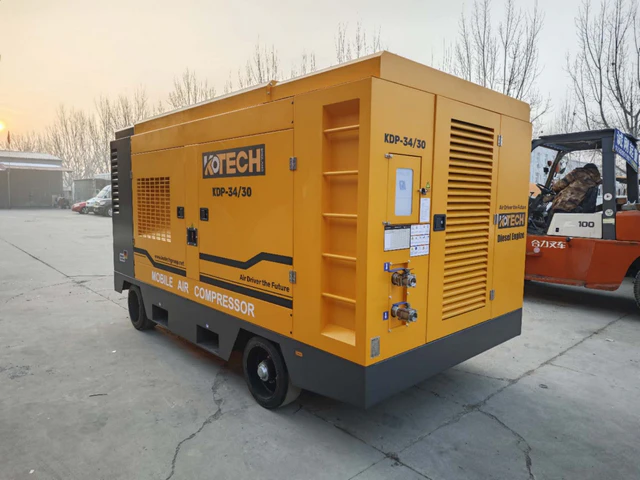
Maximizing Profitability with Mining Air Compressor Heat Recovery
Why Heat Recovery is Non-Negotiable for Modern Mining Operations
Let’s be blunt: if you’re running a mining air compressor without a heat recovery system, you’re literally throwing money away. The economics are stark. Compressed air generation is notoriously energy-intensive, accounting for a significant chunk of industrial electricity bills.
In today’s mining landscape, where margins are tight and environmental, social, and governance (ESG) factors are under increasing scrutiny, ignoring such a fundamental opportunity is simply unsustainable. Companies are looking for any edge they can get to reduce operational expenditure (OPEX) and demonstrate commitment to sustainability. Waste heat utilization from air compressors addresses both these pain points head-on, offering a clear path to improved profitability and a greener footprint.
The Hard Numbers: Unlocking Tangible Savings and Sustainability Gains
The data supporting heat recovery is compelling and consistently points to substantial benefits. For a large-scale mining operation, where energy costs can run into the millions annually, that translates to hundreds of thousands of dollars in savings each year. This isn’t theoretical; it’s a direct reduction in your utility bill.
Beyond direct cost savings, there’s the environmental impact. The International Energy Agency (IEA) highlighted in its 2023 “Energy Efficiency 2023” report that industrial heat recovery is a crucial component of decarbonization strategies. By reducing the demand for primary energy sources, you’re directly lowering your carbon emissions and improving your ESG score. This isn’t just good for the planet; it’s increasingly important for investor relations and regulatory compliance.
Consider a typical 250 kW mining air compressor running 8,000 hours a year. This makes the initial capital outlay for a heat recovery unit a very attractive proposition, far more so than many other capital improvement projects.
How It Works: The Mechanics of Mining Air Compressor Heat Recovery
The principle behind heat recovery from air compressors is straightforward: capture the heat generated during compression and transfer it to a usable medium. There are primarily two types of systems, depending on your compressor type:
Air-Cooled Compressor Heat Recovery
With air-cooled compressors, the heat is typically dissipated into the surrounding air via a fan and heat exchanger. For heat recovery, a ducting system can be installed to capture this warm air. This hot air can then be directed for various uses, such as:
- Space Heating: Heating nearby workshops, offices, or storage facilities. This is particularly effective in colder climates common to many mining regions.
- Mine Ventilation: Pre-heating fresh air intake for underground mines, reducing the load on dedicated mine air heaters. This can significantly improve working conditions and reduce energy consumption.
This method is relatively simple to implement and provides immediate benefits, especially when replacing electric or fossil-fuel-based heating.
Water-Cooled Compressor Heat Recovery
Water-cooled compressors offer an even more efficient method for heat recovery. Here, the heat is transferred to cooling water. A plate heat exchanger or an integrated oil-to-water heat exchanger within the compressor package can then transfer this hot water to a secondary system. Potential applications include:
- Process Water Heating: Heating water for wash plants, dust suppression systems, or even domestic use within the mine site.
- Boiler Feed Water Pre-heating: Reducing the energy required for industrial boilers by pre-heating the incoming water.
- Radiant Floor Heating: Providing comfortable, energy-efficient heating in administrative buildings or maintenance shops.
The key is identifying your site’s thermal energy demands. Where are you currently spending money to generate heat? That’s your target.
When Heat Recovery Might Not Be Your Best Bet: Understanding Limitations
While the benefits are widespread, heat recovery isn’t a silver bullet for every single scenario. The primary limiting factor is often the consistent demand for the recovered heat. If your mining operation has no consistent or significant thermal load that can utilize the captured heat, the ROI diminishes rapidly.
For example, a very small, intermittent operation with only one or two compressors running sporadically, located in a tropical climate with no need for space heating or hot process water, might find the capital investment harder to justify. Similarly, if your existing heating systems are already extremely efficient or use a very low-cost fuel source (like waste methane from a nearby landfill), the incremental savings might not meet your investment threshold. It’s crucial to conduct a thorough energy audit and demand analysis before committing. Don’t just install it because it sounds good; ensure you have a clear, consistent use for the heat.
Implementing Your Heat Recovery System: A Practical Playbook
So, you’re convinced. What’s next? Here’s a practical roadmap based on years of successful implementations:
Step 1: Conduct a Comprehensive Energy Audit and Demand Analysis
Before anything else, understand your current energy consumption and, crucially, your thermal energy demands. Map out where heat is currently used (space heating, process water, ventilation) and quantify the energy required. This will help you size the heat recovery system correctly and identify the most impactful applications. Work with an experienced energy consultant who understands mining environments.
Step 2: Assess Your Existing Compressor Fleet
Identify which compressors are the best candidates for heat recovery. Focus on your largest, most continuously running units. Newer compressors often come with integrated heat recovery options, making installation simpler. For older units, aftermarket kits are available, but their feasibility depends on the compressor’s design and condition.
Step 3: Design the Recovery System
This involves selecting the appropriate heat exchangers (air-to-air, oil-to-water, etc.), piping, ducting, and control systems. Consider factors like heat transfer efficiency, pressure drop, and compatibility with your existing infrastructure. A well-designed system minimizes energy losses and integrates seamlessly with your operations.
Step 4: Installation and Integration
Engage qualified technicians for installation. Proper insulation of hot water pipes or air ducts is critical to prevent heat loss. Ensure the control system is integrated with your existing Building Management System (BMS) or process controls for optimal performance and monitoring. Commissioning is key to verify the system performs as expected.
Step 5: Monitor, Optimize, and Maintain
Once operational, continuously monitor the system’s performance. Track energy savings, heat recovered, and any operational anomalies. Regular maintenance, including cleaning heat exchangers and checking for leaks, will ensure long-term efficiency and reliability. The goal isn’t just to install it, but to maximize its output over its lifespan.
Implementing heat recovery from mining air compressors isn’t just a technical upgrade; it’s a strategic investment. It directly addresses the twin pressures of cost reduction and environmental responsibility, delivering measurable benefits that impact your bottom line and your reputation. Don’t leave free energy on the table.