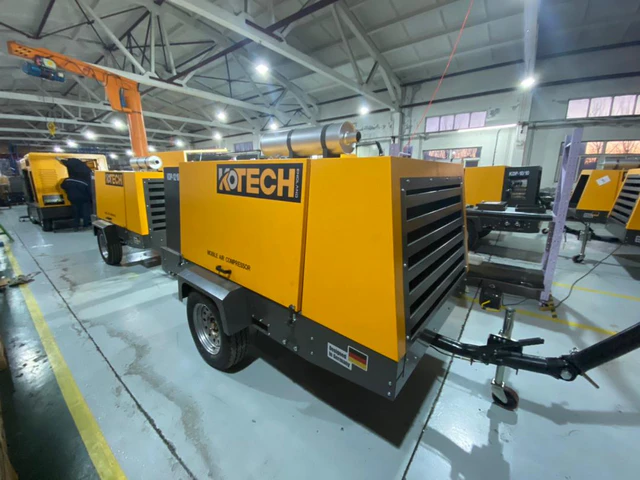
Unlocking Efficiency: The Power of Smart, Remotely Monitored Mining Air Compressors
- Drastically Reduce Operational Costs: Remote monitoring enables proactive maintenance and energy optimization, cutting electricity bills and preventing expensive emergency repairs.
- Boost Uptime and Productivity: Predictive analytics minimize unplanned downtime, keeping operations running smoothly and maximizing output.
- Enhance Safety and Compliance: Real-time alerts for system anomalies reduce risks, ensuring a safer work environment and easier regulatory adherence.
- Extend Asset Lifespan: Continuous condition monitoring allows for optimal performance and timely intervention, prolonging equipment life.
- Drive Data-Driven Decisions: Actionable insights from telemetry data empower mining managers to make informed choices that improve overall efficiency.
Frankly, if you’re still running your mining air compressors without smart, remote monitoring capabilities, you’re leaving money on the table – a lot of it. The shift to digitally integrated solutions isn’t just an industry trend; it’s a fundamental change in how profitable and safe mining operations manage their most critical pneumatic assets. We’re talking about moving beyond reactive fixes to proactive, data-driven management that impacts everything from your energy bill to your production schedule.
The Imperative for Digital Transformation in Mining Air Systems
Mining environments are inherently harsh and demanding. Air compressors are the lungs of many operations, powering everything from pneumatic tools and ventilation systems to processing equipment. Their reliability is non-negotiable, yet traditional management often falls short, leading to significant inefficiencies.
The Cost of Inefficiency and Downtime
The challenges are clear. Unplanned downtime, driven by equipment failure, is a constant specter. Each hour that a critical compressor is offline translates directly into lost production and cascading operational delays. Beyond that, compressed air systems are notorious energy hogs. Without precise control and real-time insights, these systems can consume far more power than necessary, eroding profit margins with every kilowatt-hour.
Bridging the Visibility Gap
Historically, understanding compressor performance often meant manual checks, scheduled maintenance, and reacting to breakdowns. This approach creates a massive visibility gap. You don’t know there’s a problem until it’s too late, or you’re over-maintaining healthy equipment. Smart solutions with remote monitoring bridge this gap, offering a continuous, granular view into every aspect of your air system’s health and performance. This isn’t just about seeing data; it’s about seeing what matters, when it matters.
Unpacking the Data: Why Remote Monitoring is a Game Changer
The numbers don’t lie. Industry data consistently highlights the immense potential for savings and efficiency gains through advanced monitoring.
For energy-intensive mining operations, this percentage can be even higher, making energy optimization a top priority for reducing operational expenditure.
Furthermore, unplanned downtime carries a staggering price tag. When a critical air compressor fails, the ripple effect can bring an entire production line to a halt. Remote monitoring, by enabling predictive maintenance, directly combats this risk, flagging potential issues before they escalate into costly failures.
The broader trend towards digitalization in mining underscores this shift.
How Smart Solutions Address Core Mining Challenges
Remote monitoring transforms a simple air compressor into a strategic asset, actively contributing to operational excellence.
Enhanced Operational Efficiency and Energy Optimization
Smart compressors integrate sensors that continuously collect data on pressure, temperature, flow rates, motor load, and power consumption. This real-time telemetry is transmitted to a central platform, allowing operators to monitor performance from anywhere. AI-driven analytics can identify inefficiencies, such as excessive pressure drops, air leaks, or suboptimal compressor cycling. This enables precise load balancing, identifying opportunities for variable speed drive (VSD) optimization, and ensuring compressors run only when needed, significantly reducing specific energy consumption (SEC). This isn’t just about saving money; it’s about intelligent resource allocation.
Predictive Maintenance and Extended Asset Lifespan
One of the most powerful benefits is the shift from reactive or time-based maintenance to predictive maintenance. Instead of waiting for a breakdown or performing unnecessary overhauls, the system alerts you to potential component failures based on deviations from normal operating parameters. Early detection of issues like bearing wear, valve degradation, or filter clogging allows maintenance teams to schedule interventions precisely when needed, minimizing mean time to repair (MTTR) and extending the mean time between failures (MTBF). This proactive approach not only prevents catastrophic failures but also optimizes the lifespan of expensive equipment.
Bolstering Safety Protocols
Safety is paramount in mining. Remote monitoring provides early warnings for critical system anomalies that could pose safety risks, such as overheating, sudden pressure drops, or electrical faults. By detecting these issues remotely, personnel can avoid hazardous areas during troubleshooting and address problems before they become dangerous situations. Furthermore, maintaining equipment in optimal condition reduces the likelihood of mechanical failures that could injure workers or damage other machinery.
Navigating Implementation: What to Consider
While the benefits are clear, successful implementation isn’t plug-and-play in every scenario. For smaller, extremely remote sites with limited connectivity infrastructure and a handful of older, less complex fixed-speed units, the initial investment in a full-blown IoT remote monitoring suite might take longer to yield a positive ROI. However, even in these cases, basic cellular gateways for critical alarms can offer significant value. The real sweet spot is for medium to large-scale operations, or those with multiple sites and a mix of VSD and fixed-speed compressors, where the aggregated data provides truly transformative insights. Compatibility with existing SCADA or DCS systems is also a crucial factor; ensure your chosen solution offers robust integration capabilities.
Practical Steps to Integrate Smart Compressor Technology
Implementing smart mining air compressor solutions requires a structured approach.
- Assess Your Current Infrastructure: Understand your existing compressor fleet, their age, and any current monitoring capabilities. Identify connectivity options (cellular, Wi-Fi, satellite) at your various sites.
- Define Your Goals: Are you primarily focused on energy savings, reducing downtime, or improving safety? Clearly articulated goals will guide your solution selection and ROI measurement.
- Select the Right Technology Partner: Look for providers with proven expertise in both industrial air compressors and IoT/AI analytics platforms. Ensure their system offers secure data transmission, intuitive dashboards, and customizable alerts.
- Start Small, Scale Smart: Consider a pilot program on a critical compressor or a single site. This allows you to validate the technology’s effectiveness and refine your implementation strategy before a broader rollout.
- Train Your Team: Successful adoption hinges on your maintenance and operations teams understanding how to use the new system. Provide comprehensive training on interpreting data, responding to alerts, and leveraging predictive insights.
- Integrate with Existing Systems: Aim for seamless integration with your enterprise asset management (EAM) or computerized maintenance management systems (CMMS) to create a unified operational view.
This isn’t just about buying new hardware; it’s about adopting a new paradigm for asset management in mining. The companies that embrace this digital transformation now will be the ones leading the charge in operational efficiency and safety for years to come.