Unlocking Efficiency: Compressed Air's Critical Role in Modern Mining
The Core Role of Compressed Air in Mining Ore Processing
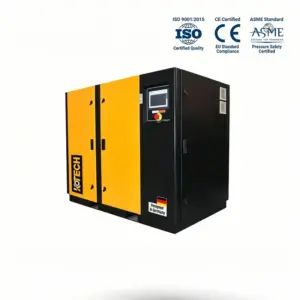
In mining, compressed air isn’t a luxury; it’s the lifeblood of countless operations. From the moment ore is extracted, air powers the tools and processes that transform raw material into valuable commodities. We’re talking about everything from driving pneumatic rock drills and conveyors to the intricate science of froth flotation and advanced sensor-based sorting.
The demand for reliable, high-quality compressed air is non-negotiable. Downtime isn’t just an inconvenience; it can mean millions in lost production. Miners face immense pressure to extract more efficiently, safely, and sustainably. Robust compressed air solutions are fundamental to meeting these challenges head-on, delivering the consistent power needed for continuous operation in some of the world’s most demanding environments.
Market Dynamics & Energy Imperatives Driving Air Compressor Innovation
This expansion, coupled with volatile energy prices and increasing environmental regulations, places immense pressure on operational efficiency. Compressed air systems are notorious energy hogs if not managed correctly.
Energy efficiency is no longer a buzzword; it’s a strategic imperative. Modern variable speed drive (VSD) compressors, for instance, can significantly reduce energy consumption by matching air output precisely to demand. The International Energy Agency (IEA 2023) highlights industrial energy efficiency as a key lever for decarbonization, a trend directly impacting mining’s compressed air strategies. Investing in these advanced technologies isn’t just about cutting costs; it’s about future-proofing your operation and meeting increasingly stringent ESG (Environmental, Social, and Governance) targets.
Precision Applications: From Flotation to Sorting
Compressed air plays a critical role in several key ore processing and sorting stages. Each application demands specific air quality and pressure, and a one-size-fits-all approach just won’t cut it.
Froth Flotation: The Heart of Mineral Separation
Froth flotation is perhaps the most iconic application. Here, finely ground ore is mixed with water and reagents, then air is injected to create bubbles. Valuable minerals attach to these bubbles and rise to the surface, forming a froth that can be skimmed off. The purity and consistency of the compressed air directly impact the efficiency and selectivity of this separation process. Contaminated air can lead to poor recovery rates and reduced concentrate quality, which, in turn, impacts profitability.
Pneumatic Material Handling & Conveyance
Beyond separation, compressed air powers pneumatic conveying systems, moving bulk materials like crushed ore, tailings, and concentrates over significant distances. These systems offer dust control advantages and can operate in areas inaccessible to mechanical conveyors. Air-powered tools, from jackhammers to impact wrenches, are also indispensable for maintenance and construction tasks across the mine site.
Sensor-Based Ore Sorting: A Game Changer
Advanced sensor-based sorting (SBS) technologies, often using near-infrared (NIR), X-ray transmission (XRT), or color sensors, identify valuable minerals from waste rock. Compressed air jets then precisely “sort” the particles, ejecting waste or separating different ore types. This pre-concentration step significantly reduces the volume of material sent to downstream processing, lowering energy, water, and reagent consumption. Without precise, high-pressure air, these sorting systems simply wouldn’t function effectively.
When Standard Solutions Fall Short: Challenges & Considerations
While compressed air offers immense benefits, it’s not a magic bullet. Environmental conditions in mining—dust, extreme temperatures, altitude—can severely impact compressor performance and lifespan. A standard industrial compressor from a factory floor won’t survive long in a remote, high-altitude copper mine.
Boundary Conditions: Not All Air Is Equal
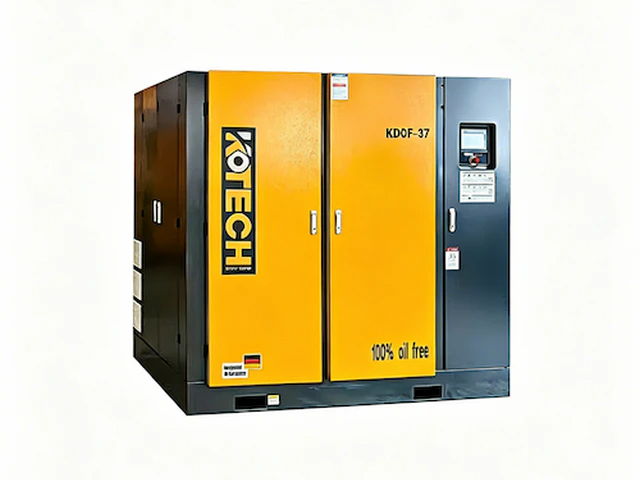
For instance, oil-lubricated compressors, while robust, are unsuitable for applications requiring absolutely oil-free air, like some sensitive sorting processes or instrumentation. In these cases, oil-free compressors, though often having a higher upfront cost, are essential to prevent contamination and ensure process integrity. Conversely, if your application is purely powering heavy-duty pneumatic tools in a non-sensitive environment, the added complexity and cost of an oil-free system might be overkill. Understanding your specific air quality requirements is paramount.
The Altitude Factor
Another often-overlooked challenge is altitude. In mines located thousands of feet above sea level, this can significantly impact the required compressor sizing and overall efficiency. Ignoring this detail can lead to undersized systems struggling to meet demand, or oversized systems wasting energy.
Optimizing Your Compressed Air System: Practical Strategies
Achieving peak performance from your compressed air system in mining requires a holistic approach, moving beyond simple installation to continuous optimization.
Right-Sizing and Redundancy
Properly sizing your compressor fleet is the first step. Over-sizing wastes energy, while under-sizing leads to pressure drops and premature wear. Implementing redundancy—having backup compressors—is crucial in mining. A single point of failure can halt an entire processing line. N+1 or even N+2 configurations are common, ensuring continuous operation even during maintenance or unexpected breakdowns.
Air Quality and Treatment
Investing in appropriate air treatment—filters, dryers, aftercoolers—is non-negotiable. Contaminants like moisture, oil, and particulates can damage pneumatic equipment, degrade product quality (especially in flotation), and increase maintenance costs. For example, a reliable refrigerated or desiccant dryer is vital to prevent condensation in air lines, which can lead to corrosion and operational issues.
Digitalization and Predictive Maintenance
These systems collect real-time data on pressure, temperature, flow rates, and energy consumption. This data allows for predictive maintenance, identifying potential issues before they cause costly downtime. It also enables continuous optimization, adjusting compressor settings based on actual demand patterns.
Heat Recovery and Energy Integration
Modern compressors generate significant waste heat. Implementing heat recovery systems to capture this energy and use it for other processes—like space heating, water heating, or even pre-heating process fluids—can dramatically improve overall energy efficiency and reduce the mine’s carbon footprint. This aligns perfectly with the mining sector’s push for greater sustainability and operational cost reduction.
The Future of Mining Air: Smart Systems and Sustainability
The trajectory for compressed air in mining is clear: smarter, more efficient, and more sustainable. We’re moving towards fully integrated air systems that communicate with other plant equipment, adapting to production changes autonomously. This level of integration, often part of a broader “Mine 4.0” initiative, promises unparalleled efficiency gains.
The emphasis on environmental stewardship will only intensify. This means greater adoption of oil-free compressors to eliminate oil contamination risks, advanced filtration to ensure minimal emissions, and continued innovation in energy recovery. The goal isn’t just to extract minerals; it’s to do so with the smallest possible environmental footprint, and optimized compressed air solutions are central to achieving that.