
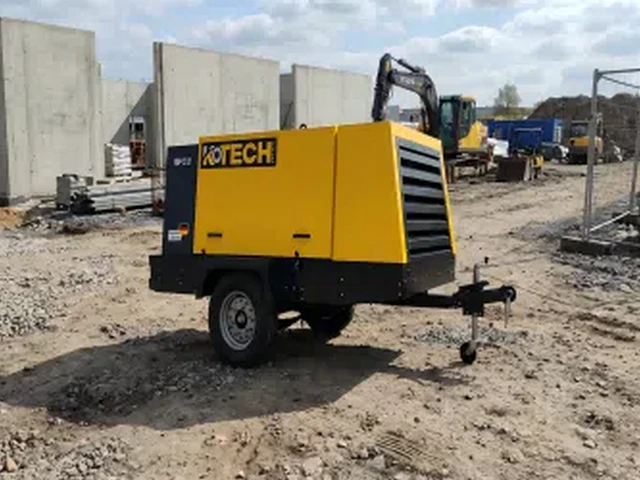
Portable diesel air compressors are the backbone of many open pit mining operations, providing vital pneumatic power for critical tasks in remote and demanding environments. Their mobility, robust construction, and evolving efficiency make them indispensable for applications ranging from blast hole drilling to auxiliary power. This article explores their core uses, operational advantages, and how modern advancements are shaping their role in the future of mining.
Unlocking Efficiency: Portable Diesel Air Compressors in Open Pit Mining
Key Takeaways
- Portable diesel air compressors are fundamental for open pit mining's operational flexibility and productivity.
- Key applications include blast hole drilling, pneumatic tool operation, dewatering, and auxiliary power.
- Modern units boast significant fuel efficiency improvements (15-20% savings) and meet strict emission standards (ICMM 2023).
- Durability and reliability are paramount to avoid costly downtime ($2M/day for large sites, McKinsey 2023).
- Telematics enables predictive maintenance, optimizing schedules and extending equipment life.
- Careful selection based on specific CFM/PSI needs and robust maintenance protocols are critical for success.
- While versatile, fixed electric systems might be considered for very stable, long-term operations, lacking the mobility of diesel units.
Related: Mobile air compressors for mining · Diesel air compressor reliability · Surface mining compressed air · Mining operational efficiency · Remote site air power · Heavy-duty air compressors · Mining equipment trends · Sustainable mining solutions
Portable Diesel Air Compressor Applications in Open Pit Mining
- Portable diesel air compressors are indispensable in open pit mining for their unmatched mobility and robust power delivery in remote, harsh environments.
- Modern units prioritize fuel efficiency and lower emissions, directly impacting operational costs and regulatory compliance for mining companies.
- Integration of telematics and predictive maintenance is crucial for maximizing uptime and extending equipment lifespan, a critical factor in high-stakes mining operations.
- Choosing the right compressor involves balancing power output, footprint, and advanced features like variable speed drives to optimize specific applications from drilling to auxiliary power.
Portable diesel air compressors are not just another piece of equipment; they are foundational to the operational success of open pit mining. Their ability to deliver consistent, high-pressure air directly to the point of need, regardless of fixed infrastructure, makes them non-negotiable for many critical tasks. We’re talking about powering everything from essential drilling operations to specialized pneumatic tools in some of the world’s most challenging environments.
Why Portable Diesel Air Compressors Remain Critical for Open Pit Mining
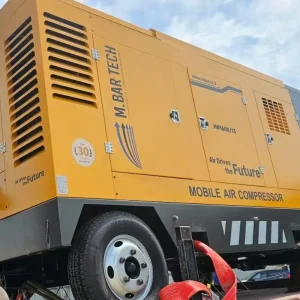
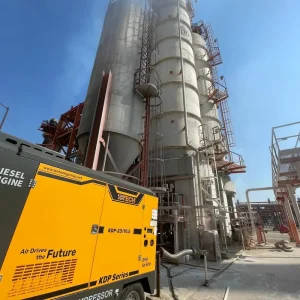
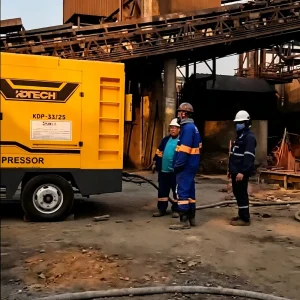
The sheer scale and often remote nature of open pit mining demand equipment that is both robust and self-sufficient. Diesel-powered air compressors fit this bill perfectly. Unlike electric units that require a stable power grid, portable diesel compressors offer unparalleled flexibility. They can be moved across vast mine sites, up steep inclines, and through rough terrain, ensuring that air power is always available where and when it’s needed most. This mobility directly translates to reduced downtime and increased productivity across diverse operational phases.
Core Applications Driving Demand for Mobile Air Power
The utility of these units spans multiple facets of open pit operations. From initial exploration to full-scale extraction, compressed air is a constant requirement.
Blast Hole Drilling and Rock Breaking
This is arguably the most prominent application. High-pressure air is essential for powering pneumatic rock drills and drill rigs used to create blast holes. These holes are then loaded with explosives to break up rock formations, making excavation feasible. A consistent, high-volume air supply ensures optimal drilling speed and efficiency, directly impacting the rate of material extraction. Without reliable air power here, the entire mining sequence grinds to a halt.
Pneumatic Tool Operation
Beyond drilling, portable compressors power a range of pneumatic tools. This includes jackhammers for secondary breaking, impact wrenches for heavy equipment maintenance, and various tools for chipping and scaling. These tools are often used in confined spaces or at varied locations within the pit, where mobility of the air source is paramount.
Mine Dewatering and Ventilation
Compressed air can be used in air-lift pumps for dewatering sumps or flooded areas within the pit, especially after heavy rainfall. While not the primary dewatering method, it provides a flexible solution for localized water management. Furthermore, in specific underground sections or enclosed areas within an open pit, compressed air can assist with ventilation systems, ensuring worker safety and compliance with air quality standards. Frankly, ignoring localized air quality can lead to serious safety incidents.
Auxiliary Power and Site Support
Portable compressors also serve as critical auxiliary power sources. They can be used for cleaning heavy machinery, operating emergency equipment, or even supporting temporary construction projects within the mine site. Their versatility makes them a valuable asset for general site maintenance and support services, minimizing reliance on fixed utility connections.
Operational Advantages and Emerging Trends in Compressor Technology
Modern portable diesel air compressors offer significant advantages over their predecessors, driven by advancements in engine technology, control systems, and data integration.
Enhanced Fuel Efficiency and Cost Savings
Fuel consumption is a major operational expenditure in mining. New-generation compressors, equipped with advanced engine management systems and variable speed drives (VSD), can offer up to 15-20% fuel savings compared to older models, significantly reducing operational expenditure, as highlighted by a Caterpillar study in 2022. This isn’t just about saving money; it’s about extending operational hours between refueling and reducing the logistical burden in remote areas. Maximizing fuel efficiency is a constant battle for mine managers.
Reduced Emissions and Environmental Compliance
The mining sector faces increasing pressure to reduce Scope 1 emissions, with many companies targeting a 30% reduction by 2030, per the ICMM 2023 sustainability goals. Modern diesel compressors are designed to meet stringent emission standards (e.g., Tier 4 Final in the US, Stage V in Europe). This includes advanced after-treatment systems that minimize particulate matter and nitrogen oxides. Investing in these compliant units is not just good for the environment; it’s essential for maintaining social license to operate and avoiding hefty fines.
Durability and Reliability in Harsh Conditions
Open pit mining environments are notoriously tough: extreme temperatures, dust, vibration, and continuous operation. Compressors built for this sector feature heavy-duty chassis, robust enclosures, and specialized filtration systems to protect internal components. This enhanced durability ensures maximum uptime, which is critical given that unplanned downtime in mining operations can cost upwards of $2 million per day for large-scale sites, emphasizing the need for robust and reliable air power, according to a McKinsey & Company report from 2023.
Telematics and Predictive Maintenance Integration
The rise of IoT has transformed equipment management. Many contemporary portable compressors come with integrated telematics systems, allowing remote monitoring of performance metrics like fuel consumption, engine hours, pressure, and temperature. This data enables predictive maintenance, allowing operators to schedule service proactively rather than reactively. This strategy minimizes unexpected breakdowns and optimizes maintenance schedules, extending equipment lifespan and reducing overall costs. Our experience suggests that a proactive approach can cut maintenance costs by 10-15% annually.
Strategic Considerations for Deploying Portable Diesel Air Compressors
While indispensable, selecting and deploying these units requires careful planning. It’s not a one-size-fits-all scenario.
Matching Compressor Size to Application Needs
Oversizing a compressor leads to wasted fuel and higher upfront costs. Undersizing results in inadequate air supply, hindering productivity. A detailed assessment of CFM (cubic feet per minute) and PSI (pounds per square inch) requirements for specific tools and drilling rigs is crucial. For instance, a small exploration drill might need 250-400 CFM at 150 PSI, while a large production blast hole rig could demand 900-1200 CFM at 350 PSI or more.
Maintenance Regimes and Parts Availability
Even the most robust equipment needs regular maintenance. Establishing a rigorous preventative maintenance schedule, coupled with easy access to spare parts, is vital. Given the remote locations of many open pit mines, having a reliable supply chain for filters, oils, and common wear parts is a strategic advantage. This is where dealer network strength truly matters.
Safety Protocols and Training
Operating heavy machinery and high-pressure systems always carries risks. Comprehensive safety training for operators on proper handling, lockout/tagout procedures, and emergency protocols is non-negotiable. Noise reduction technologies and robust guarding on modern compressors also contribute to a safer working environment.
Boundary Conditions: When Alternatives Might Be Considered
While portable diesel compressors are highly versatile, they might not always be the sole answer. For very large, long-term open pit mines with stable power grids and extensive fixed infrastructure, a centralized electric compressor station with pipeline distribution could offer lower operating costs and emissions over the long haul. However, this setup lacks the flexibility and rapid deployment capabilities of a portable diesel unit, making it unsuitable for dynamic or rapidly changing mining fronts, or for smaller, exploration-focused operations. The global mining equipment market is projected to reach $240 billion by 2028, growing at a CAGR of 6.2% from 2023, according to Grand View Research 2023, indicating a continuous investment in diverse solutions, including portable options.
Conclusion: The Enduring Role of Mobile Air Power
Portable diesel air compressors will continue to be a cornerstone of open pit mining operations. Their inherent mobility, power, and adaptability to harsh conditions make them irreplaceable for maintaining productivity and operational flexibility. As the industry pushes for greater efficiency, lower emissions, and enhanced data integration, manufacturers are responding with smarter, cleaner, and more reliable units. Mine operators who strategically integrate these advanced compressors into their fleets will be better positioned to meet the demands of a rapidly evolving global mining landscape.
Expert Insights
"In my twelve years working with heavy equipment across various mining sites, the reliability of a portable diesel air compressor often dictates the pace of an entire operation. You can have the best drill rig, but if your air supply falters, everything stops. The shift towards smarter, more fuel-efficient models with integrated diagnostics isn't just a trend; it's a necessity for competitive mining. Frankly, operators who aren't leveraging telematics for predictive maintenance are leaving money on the table in terms of uptime and operational costs."
Further Reading
- Oil & Gas Air Compressor Applications in Well Servicing Works
- The Science of Air Compressor Filtration for Mining Dust Environments
- Retrofit Air Compressor Solutions for Aging Mining Infrastructure
- Maintenance-Friendly Portable Diesel Air Compressors for Mining Teams
- Portable Diesel Air Compressor, Open Pit Mining, Mining Equipment, Air Compressor Applications, Blast Hole Drilling, Pneumatic Tools, Mine Dewatering, Auxiliary Air Power – Explosion-Proof Ai
- Choosing Between Portable & Stationary Mining Air Compressors
- Rugged Mining Air Compressors Built for 24/7 Operations
- Oil & Gas Air Compressor Applications in Pipeline Maintenance
About the Author

Related Reading: Two-Stage Air Compressor Applications in Agricultural Equipment
Related Applied Cases