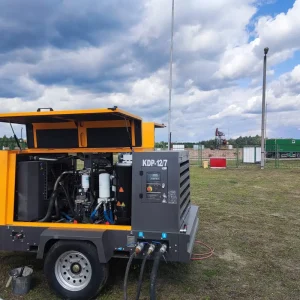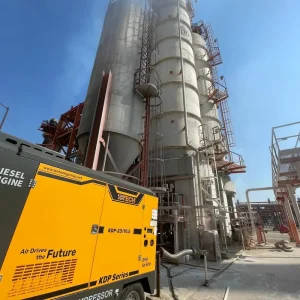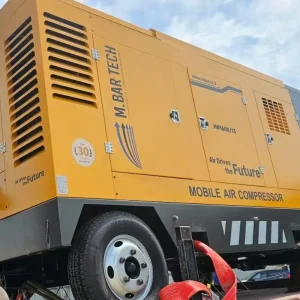

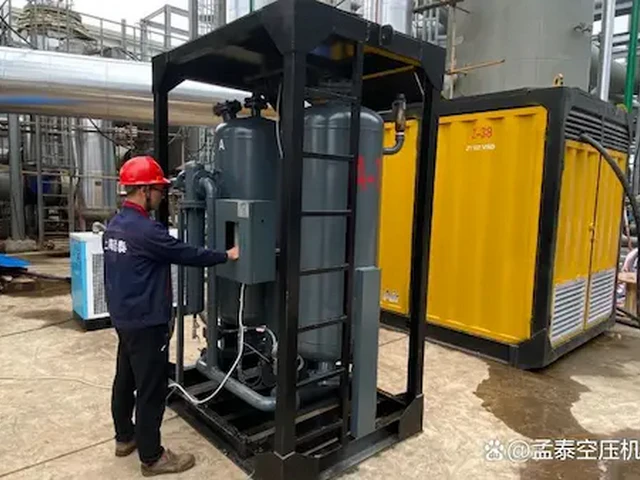
For any operation demanding non-stop performance, especially in mining, an industrial two-stage compressor isn't just an option—it's a fundamental requirement. These robust systems deliver superior efficiency and reliability under continuous load, directly impacting your bottom line through reduced energy costs and minimized downtime. Selecting the right two-stage unit involves understanding your specific pressure and flow needs, alongside long-term operational costs.
Maximizing Uptime with Industrial Two-Stage Compressors
Key Takeaways
- Two-stage compressors are ideal for continuous industrial operations.
- They save energy and increase reliability over single-stage units.
- High uptime and lower operating costs are direct results.
- Crucial for mining and heavy manufacturing.
- Maintenance and proper installation are essential for longevity.
Related: continuous duty air compressor · heavy-duty air systems · mining air compressor · high-pressure industrial compressor · rotary screw two-stage · reciprocating two-stage · compressed air reliability · energy-efficient industrial air
Key Insights:
- Industrial two-stage compressors are essential for continuous duty cycles, offering significant energy savings and superior reliability compared to single-stage units.
- Focus on Total Cost of Ownership (TCO), not just upfront price, as energy consumption accounts for up to 80% of a compressor’s lifetime cost.
- Proper sizing and air treatment are critical for maximizing efficiency and preventing premature system failure in demanding environments.
- Regular preventative maintenance is non-negotiable for sustained uptime and optimal performance in heavy-duty applications.
- While initial investment is higher, the long-term operational benefits of a two-stage system far outweigh the cost for continuous industrial use.
When your operation runs 24/7, like in many mining or heavy manufacturing setups, the air compressor isn’t just a utility; it’s the heart of your production. And for continuous duty, an industrial two-stage compressor is the only sensible choice. Let me be clear: trying to skimp with a single-stage unit for non-stop, high-demand applications is a recipe for disaster. You’ll burn more energy, suffer more breakdowns, and ultimately pay more in the long run.
Why Two-Stage is Non-Negotiable for Continuous Duty
The core advantage of a two-stage compressor lies in how it handles air compression. Instead of compressing air to the final pressure in one go, it does it in two stages, with an intercooler between them. This significantly reduces the heat generated, leading to more efficient compression and less stress on components. For environments like mining, where air demand is constant and often critical for tools, ventilation, and processing, this efficiency translates directly into operational stability and cost savings.
The Economics of Efficiency and Uptime
Energy consumption is the silent killer of profitability in compressed air systems. It’s a fact often overlooked in initial purchasing decisions. Based on data from the U.S. Department of Energy (2023), compressed air systems can account for 10-30% of industrial electricity consumption. For continuous duty applications, a two-stage compressor can deliver 10-15% greater energy efficiency over a comparable single-stage unit, especially at higher pressures (over 100 PSI). That’s not a trivial saving; it adds up to serious money over years of operation.
Consider uptime. Every minute your compressor is down, your production grinds to a halt. The Aberdeen Group (2022) reported that manufacturing plant downtime can cost upwards of $22,000 per minute for some industries. A two-stage compressor, by design, operates with less internal stress and lower operating temperatures. This inherently leads to greater longevity and reduced maintenance frequency, directly contributing to higher uptime. From what I’ve seen, the robustness of these units means fewer unexpected failures, which is paramount in remote mining sites where quick repairs aren’t always an option.
Rotary Screw vs. Reciprocating: Choosing Your Two-Stage Workhorse
Both rotary screw and reciprocating (piston) compressors come in two-stage configurations, each with its sweet spot.
- **Two-Stage Rotary Screw Compressors:** These are the preferred choice for most continuous duty industrial applications, especially those requiring high flow rates (SCFM) and consistent pressure. They operate quietly, have fewer moving parts than piston units, and offer excellent energy efficiency, particularly when equipped with variable speed drives (VSDs). A VSD two-stage rotary screw can precisely match air output to demand, further optimizing energy usage.
- **Two-Stage Reciprocating Compressors:** While not as common for large-scale continuous industrial air, two-stage piston compressors shine in very high-pressure applications (e.g., specialized blasting, pressure testing) or where air demand is intermittent but requires extreme pressure. They are durable but typically have higher maintenance requirements and can be noisier. They also tend to be less efficient for general continuous, high-volume air supply compared to their rotary screw counterparts.
My rule of thumb? If you need constant airflow at typical industrial pressures (100-175 PSI), a two-stage rotary screw is your go-to. If you’re pushing past 200 PSI or have very specific, lower volume, high-pressure needs, then a two-stage reciprocating unit might be worth a look.
The Critical Role of Air Treatment
A compressor is only as good as the air it delivers. In continuous duty applications, especially in harsh environments like mining, proper air treatment is non-negotiable. This means robust filtration, efficient aftercoolers, and appropriate air dryers (refrigerated or desiccant). Dirty, wet air will destroy your tools, contaminate your processes, and lead to costly equipment failures down the line. We’ve seen plants spend fortunes on compressors only to cut corners on a dryer, leading to thousands in downstream equipment repair.
For example, maintaining a pressure dew point of 35°F (for refrigerated dryers) or -40°F (for desiccant dryers) is crucial depending on your application and ambient conditions. This prevents condensation from forming in your air lines, which can lead to rust, tool degradation, and product contamination.
When a Two-Stage Might Not Be Your First Choice (Boundary Conditions)
While I advocate for two-stage compressors in continuous duty, there are specific scenarios where they might be overkill or less suitable. If your application demands very low pressure (e.g., under 80 PSI) or has highly intermittent, short bursts of air demand, a well-selected single-stage unit or even a smaller, dedicated point-of-use compressor might be more cost-effective. For instance, a small workshop with occasional air tool use wouldn’t justify the investment in a large two-stage system. However, for continuous operation in a plant, the benefits almost always swing in favor of the two-stage.
Implementing and Maintaining for Peak Performance
A well-chosen two-stage compressor is just the beginning. Its long-term performance hinges on correct installation and a rigorous maintenance schedule.
Installation Best Practices
- **Location:** Ensure adequate ventilation and ambient temperature. Compressors generate heat; proper airflow is vital to prevent overheating and maintain efficiency.
- **Foundation:** A solid, level foundation is crucial to minimize vibration and extend component life.
- **Piping:** Oversized piping with minimal bends and proper slope for condensate drainage will reduce pressure drop and improve system efficiency. I’ve seen too many systems choked by undersized air lines.
- **Power Supply:** Stable and correctly sized electrical supply is non-negotiable, especially for VSD units.
Preventative Maintenance: Your Best Insurance Policy
For continuous duty cycles, preventative maintenance isn’t a suggestion; it’s an operational mandate. Skipping maintenance intervals will inevitably lead to costly breakdowns. Key areas include:
- **Oil Analysis and Changes:** Regular oil analysis can detect wear metals and contaminants early, preventing catastrophic failures. Follow manufacturer recommendations for oil change intervals.
- **Filter Replacements:** Air filters, oil filters, and coalescing filters must be changed regularly. Clogged filters restrict airflow, increase energy consumption, and can lead to component damage.
- **Belt Tension and Replacement:** For belt-driven units, proper belt tension is critical. Worn or loose belts reduce efficiency and can cause premature motor or air-end bearing failure.
- **Cooler Cleaning:** Intercoolers and aftercoolers must be kept clean to maintain heat exchange efficiency. Dirty coolers lead to higher operating temperatures and reduced performance.
- **Leak Detection:** Compressed air leaks are a huge waste of energy. A study by Compressed Air & Gas Institute (CAGI) found that a typical industrial plant can lose 20-30% of its compressed air production to leaks (2021 data). Regular leak surveys using ultrasonic detectors are essential.
The global industrial air compressor market size was valued at USD 36.8 billion in 2022 and is projected to grow at a CAGR of 4.3% from 2023 to 2030 (Grand View Research, 2023). This continued growth underlines the critical role these systems play in industrialization and the ongoing need for reliable, efficient solutions like two-stage compressors. Investing in a robust two-stage system and maintaining it diligently is not an expense; it’s an investment in your operational continuity and profitability.
Conclusion
For continuous duty cycle applications, particularly in demanding sectors like mining, the industrial two-stage compressor stands out as the superior choice. Its inherent efficiency, reliability, and reduced operational stress translate into tangible benefits: lower energy costs, less downtime, and a more stable production environment. Don’t just look at the initial price tag; evaluate the total cost of ownership over the lifespan of the equipment. Partner with experienced providers who understand your specific demands and can offer comprehensive solutions, from proper sizing and installation to ongoing maintenance support.
Expert Insights
"For continuous duty, you're not just buying a compressor; you're investing in uninterrupted production."
"Cutting corners on air treatment will always cost you more in the long run."
"Energy efficiency isn't a luxury; it's a competitive necessity in today's industrial landscape."
"A robust maintenance schedule is the best insurance policy for any heavy
— duty system."
Further Reading
- Retrofit Air Compressor Solutions for Aging Mining Infrastructure
- Choosing Between Portable & Stationary Mining Air Compressors
- Two-Stage Compressor for High-Altitude Mining Applications
- Rugged Mining Air Compressors Built for 24/7 Operations
- Industrial Two-Stage Compressor – Two-Stage Air Comp
- Portable & Stationary Mining Air Compressors for All Operations
- The Impact of Altitude on Mining Air Compressor Performance
- Applications of Two-Stage Compressors in Plastic Injection Molding
About the Author

Related Reading: Custom Mining Air Compressor Packages for Unique Geology Conditions
Related Applied Cases