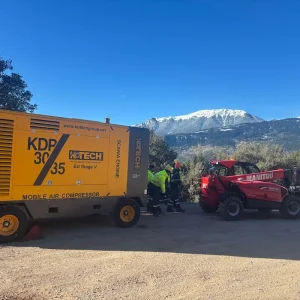

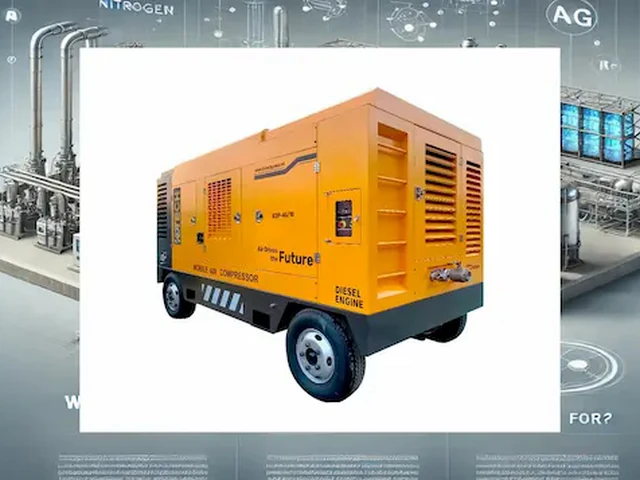
Operating air compressors in desert oilfields presents unique challenges: extreme heat, abrasive dust, and remote logistics. This article cuts through the noise, offering actionable advice on selecting and maintaining high-temperature air compressors engineered for resilience and uptime, ensuring your operations don't seize up under pressure.
Mastering Air Compression in Desert Oilfields
Key Takeaways
- Desert operations require high-temperature air compressors.
- Extreme heat and dust are primary failure points for standard units.
- Key features: oversized cooling, advanced multi-stage filtration, sealed enclosures.
- Remote monitoring is essential for predictive maintenance.
- VSD compressors reduce fuel costs significantly in remote, generator-powered sites.
- Downtime in oil & gas is extremely expensive; reliability is paramount.
- Consider TCO, not just upfront cost, when procuring.
Related: Desert-rated air compressors · ruggedized oilfield compressors · high-ambient temperature air systems · remote site air compression · oil and gas sector air supply · heavy-duty industrial compressors · uptime in harsh environments.
Key Insights:
- Standard compressors won’t survive: Desert heat and dust demand purpose-built, ruggedized air compression systems.
- Investment in specialized cooling and filtration pays off: These features directly impact uptime and component lifespan, reducing costly field failures.
- Remote monitoring is non-negotiable: Predictive maintenance capabilities are crucial for operations hundreds of miles from the nearest service hub.
- Fuel efficiency is a hidden cost driver: Variable Speed Drive (VSD) units can significantly cut generator fuel consumption in fluctuating demand scenarios.
- Downtime costs are astronomical: Prioritize reliability over initial purchase price; the long-term operational savings are immense.
Operating an oilfield in the desert is a constant battle against the elements. When it comes to air compressors, this isn’t just about turning them on and hoping for the best. You need robust, specialized equipment designed from the ground up to handle extreme heat, relentless dust, and the isolation of remote sites. Frankly, I’ve seen too many operations try to cut corners with standard industrial compressors, only to face catastrophic failures and crippling downtime.
The Unforgiving Desert: Why Standard Compressors Fail
The desert isn’t just hot; it’s an environment engineered to break down machinery. Standard air compressors, built for more temperate climates or indoor facilities, simply aren’t up to the task. The thermal stress, abrasive particles, and logistical nightmares combine to create a perfect storm for equipment failure.
Extreme Heat: A Constant Battle
In desert oilfields, ambient temperatures routinely soar past 120°F (50°C), sometimes even higher. This isn’t just uncomfortable for personnel; it’s lethal for unadapted machinery. High ambient temperatures lead to elevated operating temperatures within the compressor itself, accelerating the degradation of lubricants, seals, and electronic components. The cooling system, often the Achilles’ heel, becomes less effective as the temperature differential shrinks. This results in thermal overload, reduced efficiency, and ultimately, premature wear and breakdown.
Sand, Dust, and Abrasive Wear
Beyond the heat, desert environments are notorious for fine, abrasive dust and sand. These particles are insidious. They bypass inadequate filtration systems, infiltrating critical components like rotors, bearings, and valves. This leads to accelerated wear, reduced compression efficiency, and eventual mechanical failure. What’s more, dust can clog radiators and cooling fins, exacerbating the heat problem. According to the OPEC Annual Statistical Bulletin 2023, the Middle East holds approximately 48% of the world’s proven oil reserves, making desert environments central to global energy production and thus, a major challenge for equipment integrity.
The remote nature of these sites amplifies every problem. Getting replacement parts or skilled technicians to a remote desert location can take days, if not weeks. This translates directly into lost production.
Critical Design Elements for Desert-Ready Compressors
To withstand these brutal conditions, high-temperature air compressors for desert oilfield operations aren’t just regular units with a paint job. They feature specific design enhancements that are non-negotiable for reliable performance.
Enhanced Cooling Systems & Materials
Purpose-built desert compressors feature oversized radiators and advanced cooling systems, often with independent cooling circuits for lubricants and compressed air. These systems are designed to maintain optimal operating temperatures even when ambient conditions are extreme. High-grade, heat-resistant materials are used for seals, hoses, and electrical components. We’re talking about synthetic lubricants specifically formulated for high-temperature stability, resisting thermal breakdown far better than conventional oils.
Advanced Filtration & Enclosure Design
Multi-stage air filtration systems are standard. This typically includes cyclonic pre-filters to remove larger particles, followed by high-efficiency particulate air (HEPA) filters to capture fine dust. The compressor enclosure itself is often sealed and pressurized to prevent dust ingress, using positive pressure to push contaminants out rather than letting them in. This protective cocoon is vital for extending component life and reducing maintenance intervals.
Choosing a unit with a robust, skid-mounted design also simplifies transport and installation in rugged terrain.
Robust Control Systems & Remote Monitoring
Modern desert-spec compressors incorporate advanced control systems with built-in diagnostics and remote monitoring capabilities. This isn’t a luxury; it’s a necessity. Sensors track critical parameters like temperature, pressure, vibration, and lubricant levels. This data can be transmitted via satellite or cellular networks back to a central control room, enabling predictive maintenance. Unplanned downtime in the oil and gas sector can cost upwards of $5 million per day for large offshore platforms, with even smaller operations facing significant losses, according to a 2022 report by ARC Advisory Group. Remote monitoring helps prevent these costly disruptions by identifying potential issues before they escalate.
Beyond the Hardware: Operational Strategies for Uptime
Even the best equipment requires smart operational strategies to maximize its lifespan and ensure consistent performance in desert oilfields.
Preventive Maintenance & Spare Parts Management
A rigorous preventive maintenance schedule is paramount. This includes frequent filter changes, regular lubricant analysis, and thorough inspections of cooling systems. Given the remote locations, having a comprehensive stock of critical spare parts on-site or readily accessible is essential. Waiting for a shipment from a distant supplier can turn a minor issue into a major operational halt. Training local personnel for routine maintenance is also a huge advantage.
Fuel Efficiency & Environmental Considerations
Many desert oilfield operations rely on generators for power, making fuel efficiency a significant cost factor. Variable Speed Drive (VSD) compressors are a game-changer here. They adjust their motor speed to match air demand, consuming less energy than fixed-speed units during periods of fluctuating load. The U.S. Department of Energy (2021) suggests that VSD compressors can reduce energy consumption by up to 35% compared to fixed-speed models in fluctuating demand scenarios. This isn’t just good for the wallet; it also reduces the carbon footprint, aligning with growing environmental regulations and corporate sustainability goals.
I’ve personally witnessed the staggering fuel savings from switching to VSD units on remote drilling sites. It makes a tangible difference to the bottom line.
When Standard Solutions *Might* Suffice (And When They Won’t)
While the focus here is on high-temperature air compressors, it’s worth considering the boundary conditions. Standard, less robust compressors *might* be acceptable for very short-term, temporary projects in desert environments, particularly if they are closely monitored, have a very light duty cycle, and are deployed during cooler months. However, this is a risky gamble. The moment the ambient temperature spikes or the dust storm hits, those savings evaporate quickly, replaced by repair costs and lost productivity. For any long-term, mission-critical, or continuous operation in a desert oilfield, specialized high-temperature units are the only sensible choice. Anything less is a false economy.
Expert Insights
"In my experience, the biggest mistake companies make in desert oilfields is underestimating the environmental impact on their air compression systems. You simply cannot afford to have your operations grind to a halt because of a compressor failure that could have been prevented by investing in the right high-temperature, desert-rated equipment from the start. The upfront cost difference pales in comparison to the cost of lost production and emergency repairs in remote locations."
Further Reading
- Heavy-Duty Mining Air Compressors Built for Decades of Service
- How Two-Stage Compressors Power CNC Machines in Manufacturing
- Industrial Air Compressors Designed for Mining Applications
- How Two-Stage Compressors Power CNC Machines in Manufacturing
- High-Temperature Air Compressors, Desert Oilfield, Oil & Gas Compressors, Extreme Environment Compressors, Industrial Air Compressors – High-Performance M
- Two-Stage Air Compressor for Sandblasting and Surface Finishing
- Heavy-Duty Mining Air Compressors | Reliable & Durable
- High-Temperature Air Compressors for Desert Oilfield Operations
About the Author

Related Reading: Cold-Start Portable Diesel Air Compressors for Winter Mining