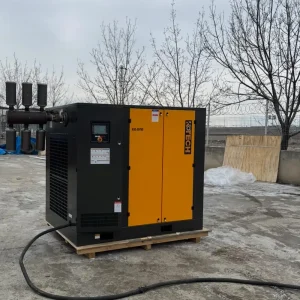

Selecting High-Performance Dust-Resistant Compressors for Open-Pit Mining
- Dust is the #1 Killer: In open-pit mining, dust ingress into air compressors is the primary cause of premature failure and reduced efficiency.
- Advanced Filtration is Non-Negotiable: Multi-stage, high-efficiency filtration systems are paramount, not an optional extra, to protect internal components.
- Uptime Drives Profit: Every hour a compressor is down translates directly to lost production and significant revenue impact.
- Total Cost of Ownership (TCO) Matters More: Initial purchase price is secondary to long-term operational costs, including maintenance, energy, and lost production from downtime.
- Smart Monitoring Extends Life: Integrated sensors and predictive maintenance systems are crucial for maximizing the lifespan and reliability of dust-resistant units.
The Unseen Enemy: Why Dust Devastates Open-Pit Compressor Performance
Running an open-pit mine isn’t for the faint of heart. It’s a brutal environment where machinery takes a constant beating from abrasive dust, extreme temperatures, and relentless operation cycles. For air compressors, this isn’t just a challenge; it’s an existential threat. Dust isn’t merely a nuisance; it’s a fine, abrasive killer that systematically grinds down moving parts, clogs filters, and chokes cooling systems.
When dust infiltrates a compressor, it rapidly degrades bearings, seals, and rotors. This leads to increased friction, higher operating temperatures, and ultimately, catastrophic failure. Beyond outright breakdowns, dust significantly reduces efficiency. Clogged air filters force the compressor to work harder, consuming more energy for the same output. This means higher utility bills and a shorter lifespan for the unit itself. It’s a false economy, every single time.
The Data Doesn’t Lie: Uptime & Efficiency in Harsh Mining
The financial implications of compressor downtime in open-pit mining are staggering. Production halts are directly tied to revenue loss, and this isn’t a minor hit. When a critical piece like an air compressor goes offline, it often ripples through the entire production chain.
Economic Impact of Compressor Downtime
Consider the energy consumption. Air compressors are notorious power hogs. Investing in truly dust-resistant units isn’t merely about avoiding breakdowns; it’s a strategic move to slash energy costs and boost overall operational efficiency.
Engineered for Extremes: Core Technologies in Dust-Resistant Compressors
So, what does genuine dust resistance look like in a mining air compressor? It’s far more than just a sturdy paint job. It involves a suite of integrated technologies designed to create an impenetrable fortress against particulate matter.
Advanced Filtration Systems
This is your first and most critical line of defense. A single-stage filter simply won’t cut it. True dust-resistant mining air compressors employ multi-stage filtration. This typically includes:
- Pre-filters: Often cyclonic or inertial separators, designed to remove larger, heavier particles before they even reach the main filters.
- High-efficiency primary filters: These are typically industrial-grade pleated filters with a large surface area, capable of capturing fine dust particles. Look for filters rated for sub-micron efficiency.
- Safety filters: An additional layer of protection, acting as a backup in case the primary filter is compromised.
Many top-tier systems also integrate automatic filter cleaning mechanisms or intelligent filter monitoring that alerts operators when replacement is needed, preventing premature clogging and maintaining optimal airflow.
Robust Enclosures and Cooling
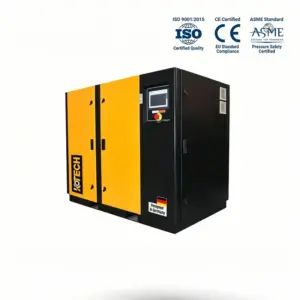
The external design matters just as much. Units specifically engineered for open-pit environments feature heavy-gauge steel enclosures, often sealed to IP65 or higher standards, preventing dust and moisture ingress. Cooling systems are also critical. Dust can quickly coat heat exchangers, reducing their efficiency and causing overheating. Dust-resistant compressors often feature:
- Oversized coolers: Designed with larger surface areas and wider fin spacing to reduce clogging.
- Separate cooling air paths: Preventing process air from mixing with cooling air.
- Self-cleaning fans: Or reverse-flow cleaning options to dislodge accumulated dust.
Smart Monitoring and Predictive Maintenance
Modern dust-resistant compressors aren’t just brute force machines; they’re intelligent systems. Integrated sensors monitor critical parameters like air filter differential pressure, oil temperature, vibration, and air quality. This data feeds into a control system that can alert operators to potential issues *before* they become failures. Predictive maintenance, driven by this data, allows for scheduled interventions during planned downtime, dramatically reducing unexpected breakdowns.
Beyond the Spec Sheet: What to Look for in Real-World Performance
Choosing the right compressor isn’t just about checking boxes on a spec sheet. It’s about understanding how a unit will perform under your specific, brutal operating conditions. A compressor might look good on paper, but if it’s not designed with the nuances of open-pit dust in mind, you’re setting yourself up for trouble.
Total Cost of Ownership (TCO) vs. Initial Price
This point cannot be overstated. The upfront cost of a premium dust-resistant mining air compressor might be higher than a standard industrial unit. However, when you factor in the cost of filters, energy consumption, maintenance, spare parts, and crucially, the lost production from downtime, the TCO almost always favors the specialized, robust solution. A cheaper compressor that fails every few months isn’t saving you money; it’s actively draining it.
The Role of Aftermarket Support
Even the best equipment needs support. When you’re operating in remote open-pit locations, having access to reliable, local aftermarket support is invaluable. This means readily available spare parts, factory-trained technicians, and responsive service. A compressor is only as good as the network that supports it. A unit might be dust-resistant, but if you can’t get a replacement filter for weeks, that resistance means nothing. This approach isn’t a silver bullet for every mining challenge, but for compressor reliability, it’s foundational.
Navigating the Future: AI, Automation, and Sustainable Mining
The mining industry is evolving, and so are air compressor technologies. We’re seeing greater integration of AI for advanced diagnostics, allowing compressors to self-optimize for energy efficiency based on real-time demand and environmental conditions. Automation is also playing a role, with remote monitoring and control becoming standard. Furthermore, the drive for sustainable mining means an increased focus on energy-efficient compressors and those designed for a longer lifecycle, reducing waste. The next generation of dust-resistant units will likely feature even more sophisticated self-cleaning mechanisms and materials science innovations for enhanced durability.
The Bottom Line: Investing in Reliability Pays Off
When it comes to dust-resistant mining air compressors for open-pit environments, compromise is a costly mistake. The harsh realities of these operations demand equipment engineered specifically to withstand relentless dust and extreme conditions. Prioritizing robust multi-stage filtration, sealed and durable enclosures, efficient cooling, and intelligent monitoring systems is not an extravagance; it’s a fundamental requirement for operational continuity and profitability. Choose wisely, and your air compressors will be assets, not liabilities, for years to come.