
Choosing the Right Air Compressor for Your Mine: Portable or Stationary?
Insights into Portable vs Stationary Mining Air Compressors
The Core Dilemma: Mobility vs. Stability in Mining Air Supply
For any mine manager, the question of how to best supply compressed air is a constant strategic puzzle. It’s not merely about buying a machine; it’s about powering everything from rock drills and pneumatic tools to ventilation systems and blasting operations. The decision between a portable air compressor and a stationary system directly impacts operational agility, energy expenditure, and capital investment.
Unpacking the Data: Market Trends and Operational Demands
The mining industry, always under pressure to optimize, is seeing significant shifts in equipment procurement. This growth underscores the need for robust, efficient machinery, including air compressors. Furthermore, energy efficiency remains a dominant concern.
The push towards sustainability also influences equipment choices. This trend directly impacts compressor selection, favoring electric stationary units or hybrid portable options where power infrastructure exists.
Stationary Systems: The Backbone of Established Operations
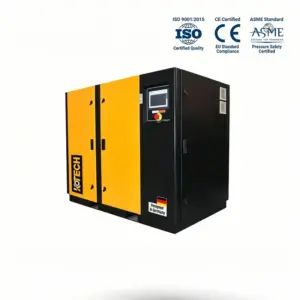
Stationary air compressors are the workhorses of mature mining sites, particularly in underground operations or large-scale surface mines with stable layouts. These heavy-duty industrial compressors are designed for continuous, high-volume air delivery, often operating 24/7. Typically electric-powered, they offer superior energy efficiency compared to their diesel counterparts, especially when integrated with variable speed drive (VSD) technology. A fixed installation allows for optimized piping networks, minimizing pressure drops and further enhancing efficiency.
The initial capital expenditure for a stationary setup, including compressor, dedicated housing, and extensive piping, can be substantial. However, their longevity, lower per-unit operating costs, and reduced maintenance requirements over decades often translate into a significantly lower total cost of ownership for long-term projects. We’re talking about robust units from manufacturers like Atlas Copco or Ingersoll Rand, built to withstand the harshest environments.
Portable Units: Agility for Dynamic Mining Environments
Conversely, portable air compressors—often diesel-powered, though electric and hybrid models are gaining traction—excel in scenarios demanding flexibility. Think exploration drilling, temporary construction sites within a mine, or smaller-scale operations that frequently relocate. Their mobility is their biggest asset, allowing rapid deployment to remote areas without the need for extensive infrastructure. This agility can dramatically reduce lead times for new drilling campaigns or temporary site setups.
While their fuel costs can be higher and their energy efficiency typically trails stationary electric units, the absence of major installation costs and the ability to move them where needed provide immense value. For short-term projects or early-stage mine development, a portable unit often makes more economic sense.
The Hidden Costs: Beyond the Sticker Price
When evaluating these systems, it’s easy to get fixated on the initial purchase price. The true cost of ownership extends far beyond.
- Energy Consumption: As noted, this is a massive operational expense. Stationary electric compressors, especially VSD models, can offer significant savings here. Diesel portables, while convenient, come with ongoing fuel costs and higher emissions.
- Infrastructure: Stationary units demand dedicated power supply, foundations, and extensive piping. Portable units might require refueling infrastructure but are otherwise largely self-contained.
- Environmental Impact: Emissions from diesel portables are a growing concern, pushing some operations towards electric alternatives or stricter environmental controls.
What often gets overlooked is the cost of downtime. A compressor failure, whether portable or stationary, can halt critical operations, leading to lost production that far outweighs the cost of the equipment itself.
When One Isn’t Enough: Hybrid Approaches and Strategic Deployment
In many modern mining operations, the optimal solution isn’t an either/or but a strategic combination. A large, established mine might deploy stationary compressors for its primary, high-volume needs (e.g., main shaft ventilation, core drilling zones) while maintaining a fleet of portable units for exploration, specific blasting areas, or as backup in case of primary system maintenance. This hybrid approach offers the best of both worlds: the efficiency and reliability of stationary systems combined with the flexibility of portable units.
Consider a multi-pit surface mine. A centralized stationary electric compressor could supply the main processing plant and office facilities, while several heavy-duty portable diesel compressors are deployed to active mining faces that change location every few months. This minimizes long-distance piping losses and maximizes operational responsiveness.
Making the Call: A Decision Matrix for Mine Managers
Here’s a quick decision matrix:
For Stationary Compressors:
- Long-term, stable operations: Mines with a projected lifespan of 10+ years and consistent air demand.
- High air volume requirements: When large-scale drilling, blasting, or ventilation is continuous.
- Access to reliable grid power: Electric units are far more efficient.
- Focus on TCO and energy efficiency: Lower operational costs over the long run.
- Underground mining: Minimizing emissions and noise is crucial.
For Portable Compressors:
- Exploration or early-stage development: Where mine layouts are fluid.
- Temporary projects or short-term contracts: Flexibility is key.
- Remote locations without grid access: Diesel power is often the only viable option.
- Intermittent or varied air demand: When air needs shift frequently between different locations.
- As backup or supplementary units: To augment primary systems during peak demand or outages.
The only time a purely portable strategy might not work is for very large, deep underground mines requiring massive, continuous air volumes, where the sheer number of portable units needed would become unmanageable and cost-prohibitive. Conversely, a purely stationary approach is impractical for dynamic exploration projects.