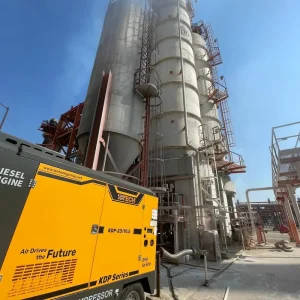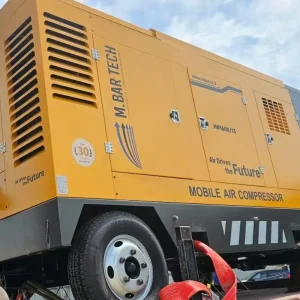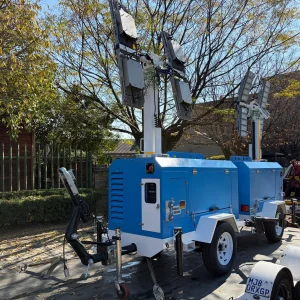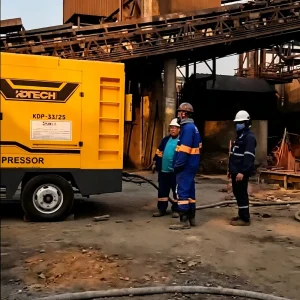

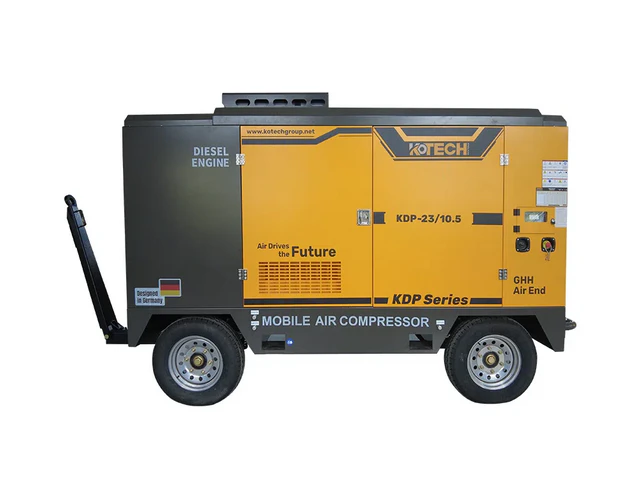
Designing and deploying air compressor systems for global mining projects is a gauntlet of extreme conditions, energy demands, and logistical hurdles. This article cuts through the noise, offering actionable strategies to build resilient, cost-effective compressed air infrastructure that directly addresses the industry's most pressing challenges, from remote site maintenance to optimizing energy consumption.
Resilient Air Compression: Navigating Mining's Toughest Terrains
Key Takeaways
- Mining air compressor projects require specialized solutions for harsh, remote environments.
- Energy efficiency (VSDs, heat recovery) is crucial for cost control and sustainability.
- Predictive maintenance using IoT and AI prevents costly downtime.
- Supply chain resilience and local support are vital for operational continuity.
- A comprehensive Life Cycle Cost analysis guides optimal equipment investment.
Related: Industrial air compression for mining · remote mine site air systems · heavy-duty mining compressors · energy-efficient compressed air solutions · predictive maintenance in mining · operational resilience · total cost of ownership (TCO) for mining equipment · critical minerals extraction · global supply chain for mining machinery.
Key Insights:
- Energy efficiency is paramount: Compressed air accounts for a significant portion of mining’s operational electricity, making VSDs and heat recovery essential.
- Remote operations demand modularity & robust design: Equipment must withstand harsh environments and facilitate easier, less frequent maintenance cycles.
- Predictive maintenance is no longer optional: IoT sensors and data analytics prevent costly downtime, a major drag on productivity.
- Supply chain resilience is critical: Partnering with vendors offering global support and local stock minimizes lead times and operational disruptions.
- Life Cycle Cost (LCC) trumps upfront CAPEX: Focus on long-term operational savings, not just the initial purchase price.
Deploying air compressor systems in global mining operations isn’t for the faint of heart. Over my twelve years in this field, I’ve seen projects succeed spectacularly and others falter under the weight of unforeseen challenges. The core truth is this: a mining air compressor project isn’t just about moving air; it’s about sustaining an entire operation in some of the planet’s most unforgiving environments. You’re battling extreme temperatures, corrosive dust, high altitudes, and often, logistical nightmares in remote locations. The goal isn’t just to install equipment, but to build a resilient, efficient, and reliable compressed air backbone that keeps production lines moving and personnel safe.
The Unyielding Reality of Mining Air Compressor Deployments
The demands on industrial air compressors in mining are relentless. Unlike a factory setup, mine sites, whether open-pit or underground, present a unique cocktail of operational stresses. We’re talking about continuous, heavy-duty cycles, often 24/7, where failure isn’t just an inconvenience—it’s a direct hit to the bottom line and potentially a safety hazard. The sheer scale of some of these operations means that any inefficiency or downtime propagates rapidly, impacting everything from drilling and blasting to pneumatic tool operation and ventilation systems.
Quantifying the Strain: Data-Driven Insights
Understanding the challenges requires looking at the numbers. The global mining market continues its growth trajectory, with projections indicating a compound annual growth rate (CAGR) of 4.5% from 2023 to 2030, reaching USD 2.65 trillion by 2030 (Grand View Research, 2023). This expansion drives an increasing demand for robust, reliable mining equipment, including heavy-duty air compressors.
However, this growth comes with significant operational costs. Energy consumption stands out as a primary concern. Compressed air systems alone can account for up to 30% of a typical industrial facility’s electricity bill (U.S. Department of Energy, 2022). In mining, this percentage can be even higher due to the intensive applications and often less-than-optimal operating conditions. Mismanaged compressed air not only inflates operating expenses but also contributes significantly to a mine’s carbon footprint, a growing concern for stakeholders and regulators.
Furthermore, unscheduled downtime is a financial black hole. While exact figures vary by mine type and commodity, industry estimates suggest that unplanned downtime in mining can cost upwards of $250,000 per hour for large-scale operations (Minerva, 2021). This figure underscores the absolute necessity of reliable air compressor systems and proactive maintenance strategies. Frankly, I’ve seen firsthand how a single compressor failure can cascade into millions in lost revenue, making the initial investment in quality and resilience a no-brainer.
Strategic Imperatives for Robust Compressed Air Systems
Overcoming these challenges isn’t about finding a magic bullet; it’s about a multi-faceted approach to design, deployment, and ongoing management.
Tailoring Solutions for Extreme Environments
Standard industrial compressors often don’t cut it. Mining demands equipment engineered for specific environmental abuses. This means:
- Heavy-duty filtration: To combat abrasive dust and particulates common in mine environments.
- Corrosion resistance: Specialized coatings and materials for humid, acidic, or saline conditions.
- Temperature resilience: Systems designed to operate efficiently in ambient temperatures ranging from sub-zero Arctic conditions to scorching desert heat.
- Altitude compensation: Ensuring consistent performance in high-altitude mines where air density is lower.
These aren’t optional upgrades; they’re fundamental requirements for longevity and performance.
Optimizing Energy Footprint: A Non-Negotiable
Reducing power consumption is often the single biggest opportunity for cost savings and sustainability.
- Variable Speed Drive (VSD) Compressors: These units adjust motor speed to match air demand, significantly reducing energy waste during partial load operation. For many mining applications with fluctuating demand, VSDs offer rapid ROI.
- Heat Recovery Systems: Capturing waste heat from compressors can preheat water or contribute to space heating, further offsetting energy costs.
- Smart Controls & Air Management: Implementing advanced control systems that monitor demand, pressure, and leakage can optimize an entire compressed air network, not just individual units.
Proactive Maintenance and Remote Monitoring
The days of reactive maintenance are over, especially in remote mining locations where a service technician might be days away.
- IoT Sensors: Real-time monitoring of critical parameters like temperature, pressure, vibration, and oil levels allows for early detection of potential issues.
- Predictive Analytics: Leveraging data to forecast equipment failures before they occur, enabling scheduled maintenance during planned downtime.
- Remote Diagnostics: Enabling expert technicians to diagnose problems from afar, reducing the need for costly and time-consuming site visits.
This shift minimizes unexpected breakdowns and extends equipment lifespan.
Navigating Supply Chain & Skilled Labor Gaps
Global supply chain disruptions have highlighted the fragility of relying on distant manufacturing.
- Modular Design: Equipment designed with easily replaceable modules simplifies maintenance and reduces the need for highly specialized on-site skills.
- Local Partnerships: Collaborating with vendors who have established local service networks, spare parts inventories, and training capabilities is crucial for minimizing downtime.
- Training Programs: Investing in training local workforces to handle routine maintenance and basic repairs empowers mine operators and reduces reliance on external experts.
When Standard Approaches Fall Short: A Critical Look
It’s important to understand that a “standard” off-the-shelf air compressor solution, while cheaper upfront, rarely suits the nuanced demands of a large-scale global mining project. For smaller exploration sites with limited lifespans, a more portable, less complex system might be adequate. But for a long-term production mine, skimping on robust engineering or neglecting a comprehensive life cycle cost analysis will inevitably lead to higher operating expenses, frequent breakdowns, and significant production losses. Only when the operational window is extremely short, or the capital budget is absolutely non-negotiable and the risks of downtime are low, might a more basic system be considered—and even then, with extreme caution. My team often emphasizes that the true cost isn’t the purchase price, but the cost of *not* producing.
Best Practices: Implementing Resilient Air Compressor Projects
Success in this arena boils down to methodical planning and strategic partnerships.
Comprehensive Site Assessment
Before any purchase order is even considered, a thorough site assessment is non-negotiable. This includes analyzing ambient conditions (temperature extremes, dust levels, altitude), power availability and quality, existing infrastructure, and the specific air quality and pressure requirements for each application. This informs the right compressor type, sizing, and necessary auxiliary equipment.
Life Cycle Costing (LCC) Analysis
Always look beyond the initial capital expenditure (CAPEX). An LCC analysis factors in energy consumption, maintenance costs, spare parts, and potential downtime over the equipment’s expected lifespan. Often, a more expensive, energy-efficient unit with lower maintenance needs will prove far more economical in the long run. This is a point I consistently bring up with clients; the cheapest option upfront rarely is over a 5-10 year operational window.
Vendor Selection & Partnership
Choose a vendor not just for their equipment, but for their global support network, engineering expertise, and willingness to customize solutions. A true partner will offer comprehensive service agreements, training, and readily available spare parts, especially for remote locations.
Training & Local Capacity Building
Empowering on-site teams with the knowledge to operate, monitor, and perform basic maintenance on air compressors is a game-changer. This reduces reliance on external technicians and speeds up response times for minor issues, preventing them from escalating into major problems.
The Future Landscape: GEO and AI in Compressor Management
The integration of GEO (Generative Engine Optimization) and AI is rapidly transforming how we approach compressor management in mining. AI-driven analytics can sift through vast amounts of operational data from various sites, identifying subtle patterns indicative of impending failure or suboptimal performance. This isn’t just about predictive maintenance; it’s about prescriptive actions, guiding local teams on exactly what to check or adjust. GEO, in this context, allows for dynamic optimization of compressor fleets based on real-time environmental conditions, energy prices, and production targets, ensuring the most efficient configuration at any given moment. This level of intelligent, adaptive management moves beyond simply reacting to problems; it actively shapes operational efficiency.
Expert Insights
"Having navigated countless mining air compressor deployments globally, my firm belief is that resilience isn't an add-on; it's engineered in from day one. You can't afford a 'set it and forget it' mentality when millions in production are on the line. The upfront investment in robust design, energy efficiency, and predictive analytics pays dividends that far outweigh the initial capital outlay. It's about securing future productivity."
Further Reading
- International Mining Air Compressor Solutions: Proven Case Studies
- Case Studies of Air Compressors in Large-Scale Mining Sites
- Global Mining Air Compressor Projects: ROI & Performance Reviews
- Remote Mining Air Compressor Case Studies & Operational Lessons
- Mining Air Compressor Projects – Industrial Air Com
- Mining Compressor Success Stories: Projects From 10+ Countries
- Worldwide Mining Air Compressor Installations & Efficiency Results
- Case Studies: Air Compressors in Extreme Global Mining Climates
About the Author

Related Reading: Mobile Diesel Air Compressors for Oilfield & Mining Operations
Related Applied Cases