
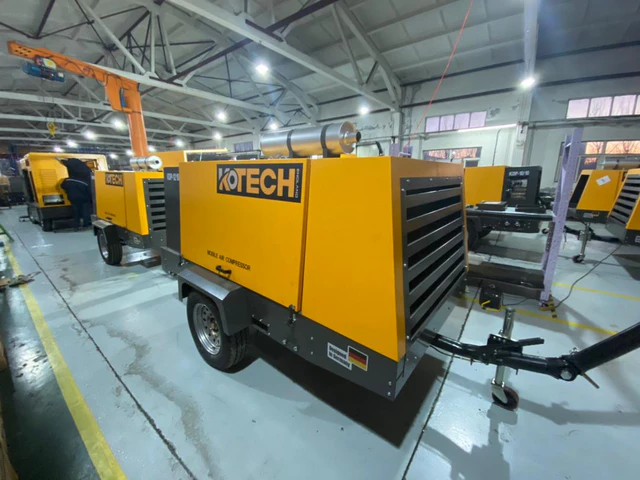
Optimizing industrial air compressors in global mining operations isn't just about raw power; it's about resilience, energy efficiency, and smart deployment in extreme environments, directly impacting profitability and operational continuity. Our collective experience across diverse mine sites consistently reveals that success hinges on tailored solutions, not off-the-shelf equipment.
Optimizing Compressed Air Systems in Global Mining
Key Takeaways
- Mining air compressors demand extreme durability due to harsh conditions.
- Energy costs (up to 30% of industrial electricity) and downtime ($250k/hour) are major concerns.
- VSD technology offers 30-50% energy savings by matching demand.
- IIoT enables predictive maintenance, preventing failures in remote locations.
- Standard compressors fail in Arctic/desert; specialized filtration, heating/cooling are vital.
- Focus on Total Cost of Ownership (TCO) over initial CapEx.
- Needs assessment, redundancy, and proactive maintenance are essential for system design.
Related: mining compressed air systems · heavy-duty air compressors · remote mine reliability · energy-efficient mining compressors · global mining equipment · industrial air solutions for mines · extreme environment compressors
Key Insights:
- Uptime is Paramount: Unscheduled compressor downtime in mining can cost upwards of $250,000 per hour, underscoring the need for robust, reliable systems.
- Energy Efficiency Drives Profit: Variable Speed Drive (VSD) compressors can reduce energy consumption by 30-50% in fluctuating demand scenarios common in mining, directly cutting operational expenditure.
- Remote Monitoring is a Game Changer: IIoT-enabled predictive maintenance extends service intervals and prevents catastrophic failures, crucial for geographically isolated mine sites.
- Extreme Environments Demand Customization: Standard industrial compressors often fail in conditions like arctic cold or desert dust; specialized filtration, enclosures, and material selection are non-negotiable.
- Total Cost of Ownership (TCO) Trumps Initial CapEx: Investing in higher-quality, more resilient air systems upfront significantly lowers long-term operational and maintenance costs.
The global mining sector operates under relentless pressure. From the remote reaches of the Atacama Desert to the frozen expanses of the Arctic Circle, industrial air compressors are the unsung workhorses powering everything from drilling and blasting to pneumatic tools and ventilation systems. Frankly, after 12 years in this space, I’ve seen firsthand how a poorly specified or maintained compressed air system can bring an entire operation to its knees. It’s not just about moving air; it’s about ensuring continuous, reliable, and cost-effective air power in the harshest environments imaginable. Lessons learned from countless global deployments emphasize a non-negotiable focus on resilience and efficiency.
The Unyielding Demand: Why Mining Compressors Are Different
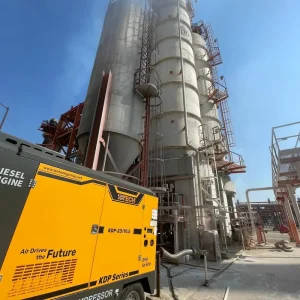
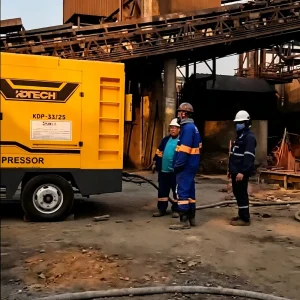
Mining operations present a unique set of challenges that push industrial equipment to its absolute limits. We’re talking about extreme temperatures, high dust loads, corrosive atmospheres, high altitudes, and often, critical operations running 24/7 in geographically isolated locations. A standard industrial air compressor, designed for a controlled factory floor, simply won’t cut it. Mine-spec air systems must contend with abrasive dust that can quickly degrade internal components, temperature swings that challenge lubrication and seals, and the sheer logistical nightmare of maintenance in remote areas. This isn’t a theoretical problem; it’s a daily battle for operational continuity.
The demand for compressed air in mining isn’t static either. Peak loads for drilling might be followed by periods of lower demand for ventilation or auxiliary tools. This fluctuating requirement means that traditional fixed-speed compressors often run inefficiently, wasting significant energy. The need for heavy-duty air compressors that can adapt to these dynamic loads while ensuring maximum uptime is a constant theme in every successful mining project I’ve encountered.
Hard Data: The Financial & Operational Stakes
The financial implications of industrial air compressor performance in mining are staggering. Energy consumption alone is a major concern. According to the U.S. Department of Energy (2023), compressed air systems can account for up to 30% of total industrial electricity consumption. For large-scale mining operations, this translates into millions of dollars annually. Optimizing this energy usage isn’t just good for the environment; it’s critical for the bottom line.
Beyond energy, downtime is the ultimate profit killer. A PwC Global Mine Report (2022) highlighted that unscheduled downtime in large-scale mining operations can cost upwards of $250,000 per hour, depending on the commodity and scale. Imagine a critical compressor failing in an underground mine, halting drilling or ventilation. The ripple effect on production, labor costs, and safety compliance is immediate and severe. This isn’t just about replacing a part; it’s about restoring an entire operational chain.
The global mining equipment market is projected to reach $180 billion by 2028 (Grand View Research, 2021), with air compressors remaining a foundational component. This growth underscores the ongoing investment in robust, high-performance machinery. Companies are actively seeking solutions that offer lower Total Cost of Ownership (TCO) over the equipment’s lifespan, prioritizing reliability and efficiency over a lower initial capital expenditure (CapEx).
Beyond Horsepower: Advanced Air Compression Technologies for Mining
Modern mining demands more than just raw power; it requires intelligent air compression technologies. Variable Speed Drive (VSD) compressors are a prime example. By precisely matching air output to demand, VSD units can achieve energy savings of 30-50% compared to fixed-speed models, especially in applications with fluctuating compressed air needs. This isn’t theoretical; our firm has seen these savings materialize consistently across numerous sites, significantly reducing operating expenses.
Another crucial advancement is the integration of Industrial Internet of Things (IIoT) for remote monitoring and predictive maintenance. Imagine real-time data on pressure, temperature, vibration, and energy consumption streamed from a compressor operating deep underground or hundreds of miles from the nearest service center. This data allows for proactive maintenance scheduling, prevents unexpected failures, and optimizes performance. Frankly, I’ve seen too many operations try to cut corners with standard units in these environments, only to face catastrophic failures that could have been avoided with smart monitoring.
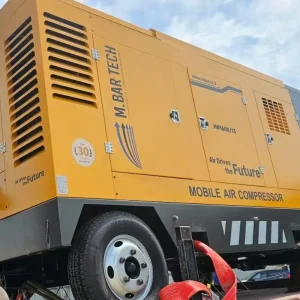
Modular compressed air systems are also gaining traction. These units offer flexibility, scalability, and ease of transport, making them ideal for temporary mining projects or phased expansions. They can be deployed quickly and relocated as mining operations evolve, minimizing setup time and maximizing operational agility. Specialized filtration systems, designed to handle extreme particulate loads, are non-negotiable for extending equipment life in dusty mine environments, protecting downstream tools and processes.
When Standard Solutions Fail: The Arctic & Desert Conundrums
One of the most valuable lessons from global mining case studies is understanding the boundary conditions where standard industrial solutions simply break down. Consider operations in the Arctic. Extreme cold can cause standard lubricants to thicken, seals to become brittle, and moisture to freeze, leading to component failure and system shutdowns. Specialized compressors with integrated heating packages, cold-weather lubricants, and robust enclosures are essential. Without these, you’re looking at consistent operational headaches.
Conversely, desert mining operations face intense heat and pervasive dust. High ambient temperatures challenge cooling systems, leading to overheating and reduced efficiency. Fine desert dust, if not adequately filtered, can rapidly abrade compressor components, leading to premature wear and costly repairs. Here, multi-stage filtration systems, heavy-duty air intake filters, and oversized coolers are vital. Relying on an off-the-shelf unit in these conditions is a recipe for disaster. These aren’t edge cases; they are the reality for a significant portion of global mining, and only purpose-built or highly customized solutions survive.
Implementing Robust Air Systems: A Practical Playbook
For mining companies looking to optimize their compressed air infrastructure, a strategic approach is essential. Based on our experience, here’s a practical playbook:
- Thorough Needs Assessment: Accurately determine your Cubic Feet per Minute (CFM) and Pounds per Square Inch (PSI) requirements, considering peak loads and fluctuating demands. Don’t guess; measure.
- Prioritize Total Cost of Ownership (TCO): Look beyond the initial purchase price (CapEx). Factor in energy consumption, maintenance costs, expected lifespan, and potential downtime costs over the entire operational period. A slightly higher upfront investment often yields significant long-term savings.
- Embrace Advanced Technologies: Invest in VSD compressors for energy efficiency and IIoT-enabled remote monitoring for predictive maintenance. These technologies deliver clear, measurable returns.
- Specify for Environment: Do not compromise on environmental adaptations. Whether it’s specialized filtration for dust, heating packages for cold, or reinforced enclosures for vibration, tailor the system to your specific mine conditions.
- Redundancy and Modularity: Design your system with N+1 redundancy where possible to ensure continuous operation even if one unit fails. Modular systems offer flexibility for expansion or relocation.
- Robust Maintenance Program: Implement a proactive maintenance schedule, ensuring access to genuine spare parts and trained technicians, especially for remote sites.
By following these principles, mining companies can move beyond reactive problem-solving to proactive, optimized compressed air management. This ensures not only operational efficiency but also enhanced safety and environmental compliance.
Expert Insights
In my view, the biggest oversight I still see in global mining is underestimating the specific environmental stresses on compressed air systems. Many operations look at the initial price tag rather than the long-term operational resilience and efficiency gains. Investing in purpose-built or highly customized solutions, especially with VSD and IIoT integration, isn't an option anymore; it's a strategic imperative for any mine aiming for sustainable profitability and uptime.
Further Reading
- Mining Air Compressor Implementations | Global Success Stories
- Industrial Air Compressor Case Studies for Mining Operations
- Real-World Mining Air Compressor Case Studies & Solutions
- Mining Air Compressor Projects | Global Industrial Applications
- Industrial Air Compressor Case Studies for Global Mines – Air Compressor Cas
- Global Mining Compressor Case Studies & Operational Insights
- Successful Air Compressor Deployments in Global Mining
- Mining Air Compressor Case Studies: Real Projects Worldwide
Related Reading: Energy-Efficient Mining Compressor Solutions for Cost Savings
Related Applied Cases