
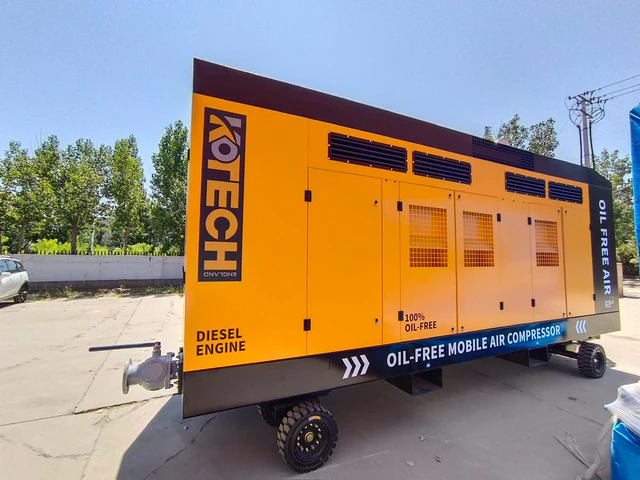
Achieving truly successful mining air compressor installations worldwide isn't just about buying equipment; it’s about strategic planning, meticulous execution, and understanding the unique demands of each mine site. This article dives into the critical factors, from customized system design to advanced maintenance protocols, that differentiate high-performing operations from those plagued by downtime and inefficiency. We’ll explore how industry leaders are leveraging data and innovation to secure reliable, cost-effective compressed air, a non-negotiable utility in modern extraction.
Mastering Mining Air Compressor Installations: A Global Blueprint
Key Takeaways
- Mining air compressors are vital for safety and productivity.
- Customized solutions are essential for specific mine environments.
- Energy efficiency (VSD, smart controls) dramatically reduces operating costs.
- Proactive maintenance prevents costly breakdowns and downtime.
- Integration with existing mine infrastructure is critical.
- Scalability ensures future adaptability for mine expansion.
- Real-time monitoring and data analytics drive operational optimization.
- Successful installations focus on Total Cost of Ownership, not just purchase price.
Related: Global mining compressed air solutions · heavy-duty mine air systems · underground mining air supply · surface mine compressor setups · energy-efficient mining air · reliable mining air power
Successful Mining Air Compressor Installations Worldwide
- Customization is Paramount: Off-the-shelf solutions rarely cut it in mining; successful installations hinge on systems tailored to specific mine conditions, altitude, and operational demands.
- Energy Efficiency Drives Profitability: With power consumption representing up to 80% of a compressor’s lifecycle cost, optimizing for energy savings is a direct path to enhanced ROI.
- Proactive Maintenance Prevents Catastrophe: Scheduled, data-driven maintenance programs are essential to avoid costly downtime in remote and hostile mining environments.
- Integration with Mine Infrastructure is Key: Seamless integration with existing power grids, ventilation systems, and safety protocols ensures operational harmony and compliance.
- Scalability for Future Growth: Forward-thinking installations anticipate future expansion, allowing for modular additions without complete system overhauls.
The Core Challenge: Why Compressor Reliability Matters
In mining, compressed air isn’t just a utility; it’s the lifeblood of operations. From powering pneumatic tools and rock drills to supporting ventilation and safety systems, a reliable air supply is non-negotiable. The core conclusion here is simple: successful installations are those that deliver uninterrupted, high-quality air at the lowest possible lifecycle cost, directly impacting safety, productivity, and profitability. Downtime due to compressor failure isn’t just an inconvenience; it can halt production, endanger personnel, and cost millions. Frankly, after over a decade in this field, I’ve seen firsthand how a poorly spec’d or maintained air system can cripple an otherwise robust mining operation.
Shifting Sands: Market Dynamics and Data-Driven Decisions
The global mining landscape is in constant flux, driven by commodity prices, regulatory pressures, and a relentless push for efficiency. This dynamic environment places immense pressure on infrastructure, especially critical components like air compressors. According to S&P Global Market Intelligence’s 2023 report, global nonferrous exploration budgets saw a significant increase, signaling new project developments that demand robust, reliable equipment from the outset. This trend underscores the need for scalable and efficient compressed air systems. Furthermore, energy costs remain a top concern. The International Energy Agency (IEA) highlighted in its 2024 outlook that industrial energy consumption, including compressed air, is under intense scrutiny for decarbonization efforts and cost reduction. This focus directly impacts equipment selection and operational strategies for mining companies worldwide. We’re not just talking about initial purchase price anymore; the long-term operational expenditure is where the real battle is won or lost.
Engineering Success: Key Pillars of a Robust Installation
Building a successful compressed air infrastructure in mining demands a multi-faceted approach, moving beyond simple horsepower ratings to embrace holistic system design and management.
Customization: Not a Luxury, But a Necessity
Every mine site presents unique challenges: extreme temperatures, high altitudes, corrosive atmospheres, or remote locations with unreliable power grids. A successful installation begins with a thorough site assessment and a customized solution. This means selecting the right compressor type (rotary screw, centrifugal, reciprocating), appropriate cooling systems, robust filtration, and often, specialized enclosures. For instance, an underground coal mine requires explosion-proof compressors and advanced air treatment to remove moisture and particulates, vastly different from a surface iron ore mine. Ignoring these specifics is a recipe for premature failure and operational headaches.
Energy Efficiency: The Unsung Hero of Operational Costs
The energy consumption of an air compressor can account for up to 80% of its total lifecycle cost. Therefore, maximizing energy efficiency is paramount for long-term success. This involves several strategies:
- Variable Speed Drive (VSD) Compressors: These units adjust motor speed to match air demand, significantly reducing energy waste during fluctuating load cycles.
- Smart Control Systems: Advanced controllers optimize compressor sequencing, minimize off-load running, and detect leaks, all contributing to lower energy bills.
- Heat Recovery Systems: Capturing waste heat from compressors for process heating or facility heating can further enhance overall energy efficiency.
A study by the Compressed Air & Gas Institute (CAGI) in 2023 indicated that even small improvements in compressed air system efficiency can lead to substantial annual savings, often in the tens of thousands of dollars for large industrial users. This isn’t just theoretical; it’s a measurable impact on the bottom line.
Proactive Maintenance: Beyond Just Fixing Breakdowns
In the remote and harsh conditions of most mining operations, reactive maintenance is simply not an option. Successful installations implement rigorous, proactive, and predictive maintenance programs. This includes:
- Regular Inspections and Servicing: Adhering strictly to manufacturer-recommended schedules for oil changes, filter replacements, and component checks.
- Oil Analysis: Monitoring oil quality and contaminants to detect potential issues before they escalate.
- Vibration Analysis: Identifying early signs of bearing wear or imbalance in rotating components.
- Remote Monitoring and IoT: Utilizing sensors and cloud-based platforms to track performance metrics in real-time, enabling remote diagnostics and predictive maintenance scheduling.
According to a Deloitte 2022 report on mining operational excellence, unplanned downtime in mining can cost upwards of $250,000 per hour for large-scale operations. Investing in proactive maintenance is not an expense; it’s an insurance policy against catastrophic financial losses.
When Things Go Sideways: Recognizing Limitations
While the principles of successful installation are robust, it’s critical to understand their boundaries. These strategies, for instance, are less impactful for very small, temporary exploration sites where the capital expenditure for a highly customized, energy-efficient system might not justify the short-term operational window. Similarly, if a mine lacks a stable power supply or the necessary skilled labor for maintenance, even the most advanced compressor system will underperform. Success is only truly achievable when there’s a foundational commitment to operational excellence, infrastructure stability, and skilled personnel. Without these, even the best equipment becomes a liability.
Practical Steps for Your Next Project
Embarking on a new mining air compressor installation or upgrading an existing one demands a structured approach.
- Conduct a Comprehensive Air Audit: Accurately assess current and future air demand, pressure requirements, and existing system bottlenecks. This data is the foundation of an effective design.
- Partner with Experienced Suppliers: Work with vendors who understand the unique demands of mining and can offer not just equipment, but also engineering support, installation services, and long-term maintenance contracts.
- Prioritize Total Cost of Ownership (TCO): Look beyond the initial purchase price. Evaluate energy consumption, maintenance costs, and expected lifespan to get a true picture of the investment.
- Train Your Team: Ensure your operational and maintenance personnel are thoroughly trained on the new system, including safety protocols and troubleshooting.
- Implement a Digital Monitoring Strategy: Leverage IoT and data analytics to continuously monitor system performance, predict failures, and optimize operations.
By following these steps, mining companies can significantly increase the probability of achieving a truly successful and sustainable compressed air installation that supports their long-term operational goals.
Expert Insights
"From my vantage point, the biggest pitfall in mining air compressor projects isn't the technology itself, but the failure to truly understand the site
— specific challenges. You can buy the best equipment, but if it's not engineered to withstand that particular dust, altitude, or power fluctuation, you're setting yourself up for failure. It's about systems thinking, not just component selection."
Further Reading
- Industrial Compressed Air Solutions for Mining Operations
- Mining Air Compressor Technology: Trends & Best Practices
- Portable Diesel Air Compressors for Mining & Construction Sites
- Oil & Gas Air Compressor Solutions for Drilling & Production
- Mining air compressor installations, industrial air compression mining, successful mine pneumatic systems – Mining Air Compres
- Mining Air Compressor Solutions for Underground & Surface Mines
- The Logic Behind large diesel air compressor 500 cfm A Structural Analysis
- The Logic Behind Cheap Diesel Air Compressors for Mining A Structural Analysis of Value
Related Reading: Heavy-Duty Portable Diesel Air Compressors for Harsh Conditions
Related Applied Cases