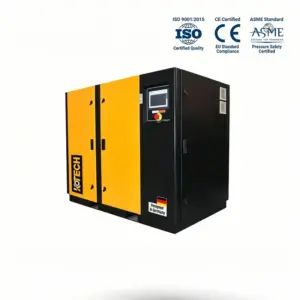
Elevating Assembly Line Performance with Two-Stage Compression
For any manufacturing operation, especially assembly lines heavily reliant on pneumatic tools, the choice of an air compressor isn’t merely about CFM; it’s about the very pulse of productivity and the bottom line. A two-stage compressor stands out as the superior choice, providing the consistent, efficient power these demanding environments require. This system directly addresses the critical pain points of energy waste, inconsistent tool performance, and frequent maintenance, which often plague under-specified single-stage setups.
Why Two-Stage Compression is a Game Changer for Assembly Lines
When you’re running an assembly line, every pneumatic wrench, grinder, or impact tool needs stable, high-pressure air to operate at peak efficiency. Fluctuating pressure leads to underperforming tools, inconsistent product quality, and operator frustration. This is where two-stage compressors shine. They compress air in two distinct steps, cooling it between stages. This intercooling significantly reduces the work required for the second stage of compression, leading to higher efficiency and cooler operating temperatures. The result is a more stable air supply, which translates directly to consistent tool performance and extended tool life.
The alternative, a single-stage compressor, tries to achieve the same pressure in one go. This process generates more heat, demands more energy, and inherently places greater stress on components. For intermittent, light-duty tasks, a single-stage unit might suffice. But for the continuous, high-demand nature of an assembly line, it’s a recipe for inefficiency and eventual breakdown.
The Hard Numbers: Energy Savings and Uptime Impact
Energy consumption is often the largest operating cost for industrial air systems.
Beyond raw power, system reliability directly translates to uptime. Unscheduled downtime due to compressor failure can cost manufacturers thousands of dollars per hour, depending on the scale of the operation. Two-stage compressors, with their inherently cooler operation and reduced stress on components, generally offer greater longevity and require less frequent major overhauls compared to their single-stage counterparts, especially under continuous load. This improved reliability is a critical factor in maintaining assembly line momentum.
Furthermore, integrating Variable Speed Drive (VSD) technology with a two-stage compressor amplifies these savings. VSD compressors adjust motor speed to match air demand, preventing the wasteful “unload” cycles of fixed-speed units.
Beyond CFM: Optimizing Your Compressed Air Ecosystem
Selecting the right compressor isn’t just about CFM (Cubic Feet per Minute) or PSI (Pounds per Square Inch). It’s about designing a holistic compressed air ecosystem. Air quality is paramount for pneumatic tools. Moisture, oil aerosols, and particulates can severely damage tools, lead to premature wear, and contaminate finished products. This is particularly true for sensitive assembly tasks.
Proper air treatment components are non-negotiable. This includes:
- Air Dryers: Refrigerated or desiccant dryers are essential to remove moisture, preventing rust in tools and piping.
- Filters: Particulate and coalescing filters protect tools from solid contaminants and oil aerosols.
- Drains: Automatic condensate drains prevent water buildup in receivers and piping.
It’s like buying a sports car and filling it with low-grade fuel. The system is only as good as its weakest link.
When a Single-Stage Unit Might Still Fit (And When It Won't)
A single-stage compressor might be adequate for very small-scale assembly operations with extremely intermittent pneumatic tool use, perhaps only a few tools used for short bursts each day. Think a small custom fabrication shop, not a high-volume automotive line.
However, a single-stage unit is definitively *not* suitable if:
- You require continuous, high-volume air flow.
- Your pneumatic tools are sensitive to pressure drops.
- Energy efficiency is a primary concern.
- You prioritize long-term equipment reliability and minimal maintenance.
- Your assembly line runs for multiple shifts.
For any scenario involving sustained pneumatic tool use across an assembly line, the long-term operational costs and performance penalties of a single-stage system will quickly outweigh any initial capital savings. That’s a lesson many learn the hard way.
Implementing Your High-Efficiency Air System
Implementing a new or upgraded compressed air system requires careful planning. Based on our experience, here are key steps: 1. **Demand Assessment:** Accurately measure your current and projected air demand. Don’t just guess; use data loggers to capture actual CFM and pressure requirements over typical production cycles. This prevents oversizing or undersizing, both of which are costly. 2. System Sizing: Work with an experienced air compressor distributor or engineer to size the two-stage compressor correctly. Consider future expansion needs. 3. Air Treatment Integration: Ensure appropriate dryers, filters, and condensate management systems are specified and installed. 4. Piping Design: Optimize piping layout, material, and diameter to minimize pressure drop. Loop systems are generally more efficient than dead-end systems. 5. Leak Detection & Repair: After installation, conduct regular leak detection audits. Fixing these is low-hanging fruit for efficiency. 6. Preventative Maintenance: Establish a robust preventative maintenance schedule for the compressor, dryers, and filters. Regular oil changes, filter replacements, and system checks are vital for longevity and performance.
Frankly, cutting corners here will inevitably lead to higher operational costs down the line. A well-designed system is an asset, a poorly designed one is a liability.