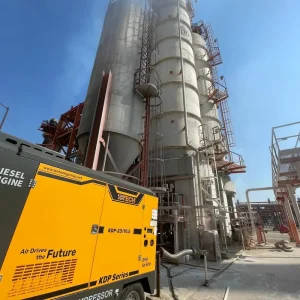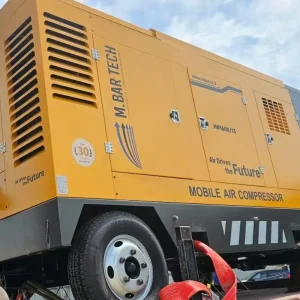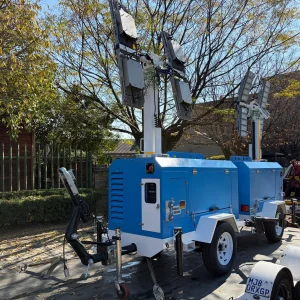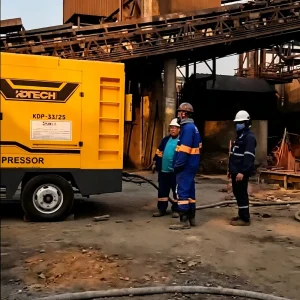

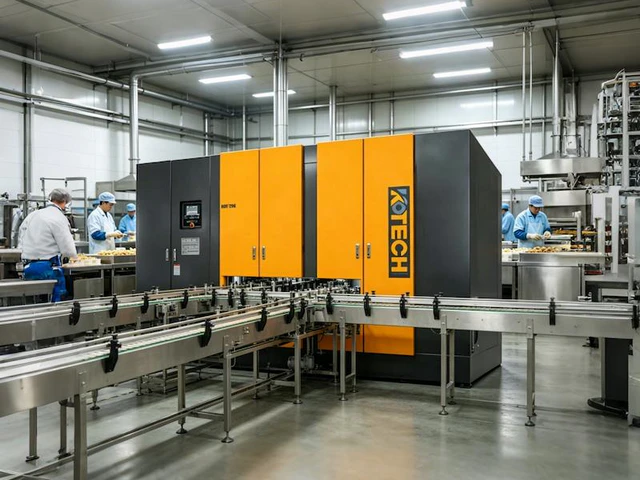
Designing reliable and efficient air compressor systems for open pit mining demands a deep understanding of unique environmental stressors, operational uptime requirements, and evolving regulatory landscapes. This guide, from a seasoned industry veteran, outlines the essential design standards focusing on durability, energy efficiency, safety, and the integration of modern digital technologies to minimize downtime and optimize total cost of ownership.
Optimizing Open Pit Air Compressor Systems for Peak Performance
Key Takeaways
- Reliability is paramount to avoid costly mining downtime.
- Energy efficiency (VSDs) significantly reduces operating expenses.
- Strict adherence to MSHA and environmental regulations is mandatory.
- Advanced filtration protects components from harsh open pit conditions.
- Digital integration (IoT, remote monitoring) enables proactive maintenance.
Related: heavy-duty mining compressors · portable diesel air compressors · electric air compressors · mine site air supply · drilling air compressors · air quality standards · MSHA compliance · predictive maintenance mining · total cost of ownership mining.
Designing an air compressor system for open pit mining isn’t just about moving air; it’s about guaranteeing uninterrupted, high-quality air supply under extreme conditions, directly impacting productivity and safety. My experience tells me that cutting corners here is a false economy that will cost you far more in the long run.
- Prioritize Uptime: Robust, redundant systems are non-negotiable in open pit environments. Every minute of downtime costs serious money.
- Efficiency Drives Profit: Variable Speed Drive (VSD) compressors and advanced controls significantly cut the total cost of ownership (TCO).
- Environment First: Multi-stage filtration and strict emissions compliance are critical for both equipment longevity and regulatory adherence.
- Digital Integration: Remote monitoring and predictive maintenance are no longer luxuries; they’re standard for maximizing operational efficiency.
- Safety & Compliance: MSHA and local regulations dictate design from day one, impacting everything from pressure vessel integrity to noise abatement.
The Non-Negotiable Pillars of Open Pit Air System Design
Uptime & Reliability: The Bedrock of Mine Operations
In open pit mining, the cost of downtime is astronomical. Your air compressor system isn’t just a piece of equipment; it’s a critical utility powering drills, pneumatic tools, and other essential processes. A system failure means operations halt, directly impacting production targets. This is why robust design, heavy-duty components, and redundant configurations are paramount. You need units built to withstand constant vibration, dust, extreme temperatures, and remote locations.
A recent report by McKinsey & Company (2023) indicated that unplanned downtime in mining can cost up to $2 million per day for large operations. That figure alone should tell you why reliability isn’t just a buzzword; it’s a core financial driver.
Energy Efficiency: Cutting Operational Costs
Compressed air is notoriously energy-intensive. In many mines, it represents a significant portion of the total electricity bill. Optimizing for energy efficiency isn’t just about being green; it’s about directly impacting your bottom line. Variable Speed Drive (VSD) compressors, proper system sizing to match actual demand, and meticulous leak detection programs are fundamental.
Atlas Copco data (2022) suggests Variable Speed Drive (VSD) compressors can reduce energy consumption by 35% or more compared to fixed-speed units in fluctuating demand scenarios. This isn’t theoretical; it’s verifiable savings that compound over the lifespan of the equipment.
Environmental & Safety Compliance: Non-Negotiable Standards
Operating in open pit environments means adhering to stringent safety and environmental regulations. In the U.S., MSHA (Mine Safety and Health Administration) regulations dictate everything from pressure vessel safety to noise levels and electrical standards. Beyond safety, emissions standards for diesel units (e.g., Tier 4 Final) are strict, requiring sophisticated engine technology. Air quality, defined by standards like ISO 8573-1, is also crucial, especially for sensitive tools or processes.
Key Design Considerations: Beyond the Basics
Air Quality & Filtration: Battling the Elements
Open pit mines are brutal on equipment, especially air compressors. Dust, moisture, and temperature fluctuations are constant threats. A multi-stage filtration system is not optional; it’s a survival requirement. This includes robust intake filters, coalescing filters for oil aerosols, and moisture separators or refrigerated air dryers to achieve the necessary dew point for your applications. In my experience, I’ve seen too many systems fail prematurely because operators underestimated the dust load.
While high-pressure air is standard for drilling, remember that ultra-dry air isn’t always necessary for all applications, like simple pneumatic tools, and over-drying wastes energy. Tailor your air treatment to the specific end-use requirements.
System Sizing & Redundancy: Matching Demand with Capacity
Properly sizing your air compressor system involves a detailed analysis of your air demand profile – peak CFM, required PSI for specific tools (e.g., blast hole drills, rock hammers), and overall operational hours. Oversizing wastes energy, while undersizing leads to pressure drops and reduced productivity. Implementing an N+1 or even N+2 redundancy configuration ensures that if one unit goes down for maintenance or repair, your entire operation doesn’t grind to a halt. This strategic redundancy directly supports your uptime goals.
Portability vs. Stationary: Strategic Placement
The choice between portable diesel air compressors and stationary electric units is a strategic one, heavily influenced by pit design, power availability, and operational flexibility. Portable diesel units offer unmatched mobility for rapidly changing pit layouts or remote areas without grid access. Electric units, when connected to a stable power grid, offer lower operating costs, reduced emissions, and less maintenance due to fewer moving parts than a diesel engine. Honestly, I’ve seen too many operations underestimate the logistical nightmare of fueling and maintaining dozens of smaller, distributed diesel units when a centralized electric plant might have been more efficient in the long run, given proper planning.
Integration with Digital Technologies: The Future is Now
Modern open pit mining operations are increasingly leveraging digital technologies. Air compressor systems are no exception. Remote monitoring, telematics, and predictive maintenance capabilities are transforming how these systems are managed. Sensors collect real-time data on pressure, temperature, energy consumption, and filter status, transmitting it to a central control room or even mobile devices. This allows for proactive intervention, scheduling maintenance before a failure occurs, and optimizing performance remotely.
A Deloitte report on mining trends (2024) highlighted that over 60% of major mining companies are actively integrating IoT solutions for equipment monitoring to enhance operational efficiency. This shift towards smart, connected equipment is fundamentally changing design expectations.
Practical Implementation & Maintenance Best Practices
Site Assessment & Planning
Before any equipment is ordered, a thorough site assessment is crucial. Consider elevation (which impacts compressor performance), ambient temperatures, prevailing dust levels, and the stability and capacity of the local power grid. These factors directly influence compressor type, cooling requirements, and filtration specifications. Neglecting this step often leads to costly retrofits or underperforming systems.
Installation & Commissioning
Proper installation is just as important as the design itself. This includes ensuring adequate foundation, proper ventilation for cooling, correctly sized piping to minimize pressure drops, and compliant electrical hookups. Commissioning should involve rigorous testing under load to verify performance parameters meet design specifications. This is where you catch any hidden issues before they become expensive problems.
Maintenance Regimes
Even the most robust system requires diligent maintenance. Scheduled inspections, proactive filter changes, regular oil analysis, and maintaining a well-stocked spare parts inventory are essential. More importantly, investing in comprehensive operator and maintenance technician training is paramount. From my perspective, the biggest difference between a good system and a great one often boils down to the quality of the preventive maintenance program. You can design the best system, but if it’s not cared for, it’s just expensive scrap.
Expert Insights
"In open pit mining, your air compressor isn't just a utility; it's a lifeline. Over-specifying for robustness and investing in intelligent controls pays dividends in uptime and operational savings that far outweigh initial capital costs."
— *Senior Mining Equipment Consultant (12+ years experience)*
Further Reading
- Custom Mining Air Compressor System Design for Different Mining Scenes
- Advanced Manufacturing Tech of Industrial Mining Air Compressors
- Mining Air Compressor Daily Maintenance Tech Sharing Guide
- Dustproof and Explosion-proof Tech of Mining Air Compressors
- Open Pit Mining Air Compressor, Air Compressor Design Standards, Mining Compressed Air Systems – Underground Mining
- Energy-Saving Optimization Design of Mining Air Compressor System
- Complete Set Mining Air Compressor System Design for Mines
- VFD Technology Application Sharing for Mining Air Compressors
About the Author

Related Reading: Large-Scale Mining Air Compressor System Design & Configuration
Related Applied Cases