Designing Quiet Mining Air Compressor Systems
- Worker safety and health are non-negotiable; excessive noise leads to long-term hearing damage and impacts focus.
- Regulatory compliance for noise levels is tightening, making proactive design essential to avoid costly fines and operational halts.
- Investing in low-noise compressor systems significantly boosts operational efficiency and reduces employee turnover in mining parks.
- Effective noise mitigation requires a holistic approach, encompassing equipment selection, acoustic engineering, and operational best practices.
- The ROI on quiet air solutions extends beyond compliance, improving community relations and enhancing overall mine site sustainability.
Designing low-noise mining air compressor systems for mining parks isn’t just a nicety; it’s a critical strategic imperative impacting worker safety, regulatory compliance, and bottom-line operational efficiency. The reality is, a well-engineered quiet air solution is no longer a luxury but a fundamental asset for any modern mining operation.
The Imperative for Quiet: Why Noise Reduction Isn’t Optional
The relentless hum and roar of industrial machinery are inherent to mining, but the impact of compressor noise is often underestimated. Beyond the obvious discomfort, sustained high-decibel exposure leads to permanent hearing loss, increased stress, and communication breakdowns on site. This isn’t theoretical; it directly affects worker health and operational safety. Ignoring this issue is akin to ignoring structural integrity – it will eventually lead to failure.
We’re talking about preventing accidents that stem from impaired communication, reducing employee turnover due to poor working conditions, and avoiding punitive regulatory actions. It’s a holistic benefit that touches every aspect of a mining park’s operation.
The Real Cost of Noise: Data-Driven Insights
The financial and human costs associated with excessive industrial noise are substantial. Consider the direct impact on your workforce: The National Institute for Occupational Safety and Health (NIOSH) estimates that 22 million U.S. workers are exposed to hazardous noise levels annually, with mining and construction being significant contributors to this statistic (NIOSH, 2022 data). This exposure doesn’t just result in discomfort; it leads to permanent hearing damage.
From a regulatory standpoint, the stakes are equally high. The Occupational Safety and Health Administration (OSHA) mandates specific noise exposure limits. Non-compliance isn’t just a slap on the wrist; OSHA fines for noise violations can reach tens of thousands per infraction, especially for repeat offenders or willful violations, underscoring the significant financial risk (OSHA, latest enforcement data 2023). These aren’t just one-off penalties; they can escalate, impacting project timelines and company reputation.
This growth clearly indicates an increasing demand and a market shift towards more acoustically engineered equipment, driven by both regulatory pressures and a stronger focus on environmental, social, and governance (ESG) factors in the mining sector. Companies are recognizing that investing in quiet technology isn’t just an expense; it’s a strategic investment in efficiency and sustainability.
Beyond Decibels: Understanding Noise Sources in Mining Air Systems
To effectively mitigate noise, you first need to understand its origins. Air compressors, particularly the larger, high-pressure units common in mining parks, generate noise from several key sources. The primary culprits are the mechanical components: rotors, pistons, and gears, which produce vibration and structural noise. Aerodynamic noise, stemming from air intake, compression, and discharge, is another major contributor. Then there’s the noise from the drive motors and cooling fans, which can be surprisingly loud. Each of these requires a specific approach for effective attenuation.
Design Principles for a Low-Noise Mining Air Compressor System
Achieving a truly quiet mining air compressor system demands a multi-faceted design strategy. It’s not about buying one “silent” component; it’s about integrating various solutions into a cohesive, high-performance system.
Strategic Equipment Selection: The Right Tools for the Job
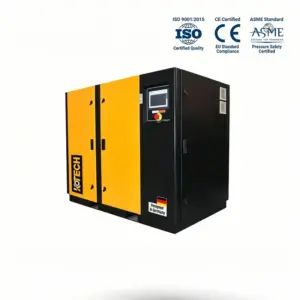
Choosing the correct compressor type is foundational. Screw compressors are generally quieter than reciprocating models for similar output, especially modern variable speed drive (VSD) units which only run at the required speed, reducing unnecessary noise and energy consumption. Prioritize units with factory-fitted acoustic enclosures. These aren’t just sheet metal boxes; they’re engineered with sound-absorbing materials and anti-vibration mounts.
Always check the manufacturer’s stated noise levels (dB(A)) under full load. Don’t just take the lowest number; understand the conditions under which it was measured. We often advise clients to look for units specifically designed for “urban” or “residential” applications, even if they’re for a mining park, as these typically feature superior inherent noise attenuation.
Acoustic Enclosures and Barriers: Mitigating Sound Propagation
When factory enclosures aren’t sufficient, or for legacy equipment, custom acoustic enclosures are essential. These should be designed with heavy-duty, sound-insulating panels, often incorporating multiple layers of different materials to block and absorb various sound frequencies. Ventilation systems within these enclosures must also be acoustically treated to prevent noise from escaping through air vents.
Beyond the immediate compressor unit, strategically placed acoustic barriers or berms can significantly reduce noise propagation across a mining park. Think about the path noise takes from source to receiver. Barriers work by creating a line-of-sight obstruction, deflecting sound upwards. The effectiveness depends on their height, length, and proximity to both the noise source and the protected area.
Vibration Isolation and Damping: Tackling the Root Cause
Noise is often a byproduct of vibration. Isolating the compressor unit from its foundation is critical. This involves using specialized anti-vibration mounts, spring isolators, or rubber pads. The goal is to prevent mechanical vibrations from transferring into the building structure or ground, which can then radiate as sound.
Damping materials, applied directly to vibrating surfaces like compressor casings or pipework, convert vibrational energy into heat, effectively reducing noise. This might involve viscoelastic materials or constrained layer damping treatments. It’s a subtle but powerful technique that addresses noise at its source.
Smart System Layout and Maintenance: Operational Best Practices
The physical layout of your compressor station within the mining park makes a huge difference. Locate compressor stations as far as practically possible from residential areas, administrative buildings, and frequently occupied worker zones. Orient exhaust vents away from sensitive areas. Enclosing the entire compressor building with sound-insulating materials, not just the individual units, is often a smart move.
Regular and meticulous maintenance is also a crucial, yet often overlooked, aspect of noise control. Worn bearings, loose panels, unbalanced components, or leaking air lines can all generate excessive noise. A well-maintained compressor runs quieter and more efficiently.
Challenges and Considerations: When Quiet Isn’t Simple
While the benefits of low-noise systems are clear, implementing them isn’t always straightforward. The upfront capital expenditure for advanced acoustically engineered compressors and custom enclosures can be higher than for standard units. This is often a sticking point, especially for smaller, temporary mining operations or those with tight budget constraints. However, it’s crucial to view this as an investment, not just an expense, considering the long-term savings from reduced fines, improved safety, and enhanced productivity.
Another challenge can be integrating new, quieter systems with existing, older infrastructure. Retrofitting can be complex and may not achieve the same level of noise reduction as a purpose-built design. In such cases, a phased approach might be necessary, focusing on the loudest sources first and gradually upgrading components. It’s not always an all-or-nothing proposition; sometimes, incremental improvements make a significant difference.
Achieving ROI: The Long-Term Value of Low-Noise Investments
The return on investment (ROI) for low-noise mining air compressor systems extends far beyond simply meeting regulatory requirements. Reduced worker compensation claims for hearing loss, fewer OSHA fines, and lower insurance premiums directly impact the bottom line. Improved worker morale and reduced fatigue lead to higher productivity and lower absenteeism, which are harder to quantify but undeniably valuable.
Furthermore, a commitment to noise reduction strengthens a mining company’s environmental, social, and governance (ESG) profile. This can improve community relations, ease permitting processes for new projects, and attract a higher quality workforce.
Future Trends in Mining Air Compression: What’s Next?
The industry is moving towards even smarter, quieter, and more energy-efficient solutions. Expect to see further advancements in variable frequency drives (VFDs) and permanent magnet motor technology, which offer precise control and inherently quieter operation. The integration of IoT sensors and predictive maintenance algorithms will allow for real-time noise monitoring and early detection of potential noise-generating issues, enabling proactive intervention. The future points to intelligent systems that not only deliver compressed air but also actively manage their environmental footprint, including noise.