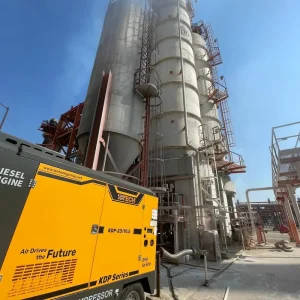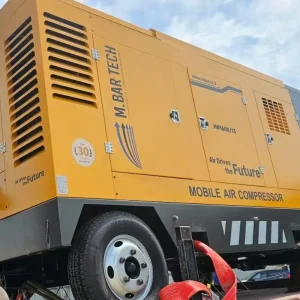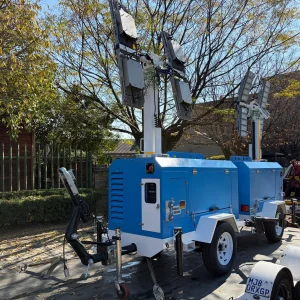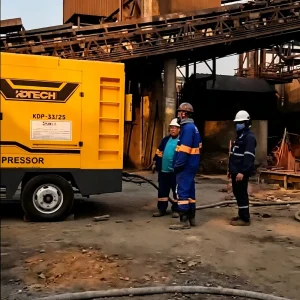

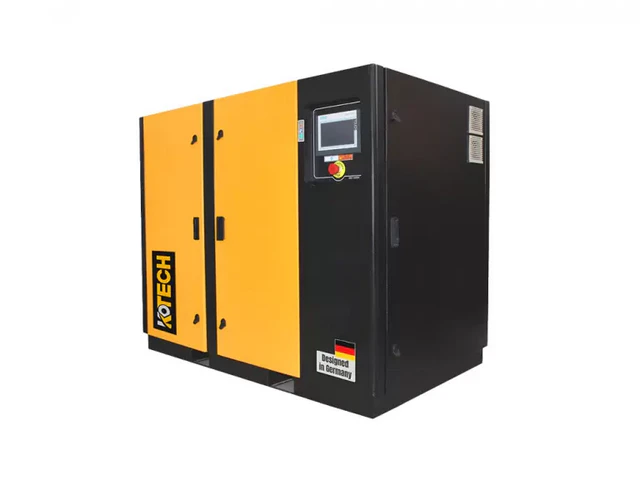
Designing air compressor systems for remote mining operations isn't just about power; it's about survival. Standard units simply won't cut it in extreme temperatures, high altitudes, or abrasive dust. The core challenge lies in engineering resilience and reliability into every component to minimize costly downtime and ensure continuous operation. This demands a holistic approach, integrating robust physical design with advanced remote monitoring and proactive maintenance strategies. Unplanned downtime due to compressor failure costs remote mines millions annually; robust, purpose-built design is non-negotiable. Integrated remote monitoring and predictive analytics are critical for operational continuity, reducing site visits by up to 40% (Rockwell Automation 2023). Fuel efficiency and emissions compliance are paramount, with new-generation systems offering up to 35% energy savings over legacy models (Atlas Copco 2022). Modular, containerized designs significantly reduce installation complexity and enhance mobility in challenging terrains. Specialized filtration and cooling systems are essential to combat extreme dust, heat, and corrosive elements, extending component lifespan.
Designing Resilient Air Compressor Systems for Remote Mining
Key Takeaways
- Harsh environments (dust, extreme temperatures, altitude, vibration) cause standard compressors to fail.
- Unplanned downtime costs mines up to $250,000/hour (PwC 2023).
- Design must include sealed, robust enclosures and multi-stage filtration.
- Oversized cooling and cold-weather packages are essential for temperature extremes.
- Industrial-grade engines optimized for altitude are critical.
- Remote monitoring reduces site visits by 40% (Rockwell Automation 2023) and enables predictive maintenance.
- Modular designs enhance portability and ease of deployment.
- Consider connectivity limitations for remote monitoring (edge computing).
- Implement a 5-phase approach: assessment, specification, integration, training, optimization.
- New VSD compressors offer up to 35% energy savings (Atlas Copco 2022).
Related: Mine-site air compression · heavy-duty air systems · extreme condition compressors · portable diesel compressors · optimized mining operations · remote site power · pneumatic equipment in mining
The Unyielding Challenge: Why Standard Compressors Fail in Remote Mining
Operating an air compressor in a remote mine site is an entirely different beast than running one in a controlled industrial plant. We’re talking about relentless dust, extreme temperature swings from -40°C to +50°C, high altitudes that starve engines of oxygen, and vibrations that would shake lesser machines apart. Standard commercial-grade compressors, frankly, don’t stand a chance. They’re designed for different environments, different duty cycles. The reality is, an off-the-shelf unit will inevitably lead to catastrophic failures, spiraling maintenance costs, and, most critically, significant operational downtime. This isn’t just an inconvenience; it can halt an entire extraction process, costing hundreds of thousands per hour.
Data-Driven Imperatives: The Cost of Compromise
The financial impact of compressor failure in remote mining cannot be overstated. According to a 2023 PwC report on mining operational excellence, a single hour of unplanned downtime in a large-scale mine operation can easily cost upwards of $250,000. This figure accounts for lost production, labor costs, and the domino effect on other interconnected processes. Investing in a purpose-built system isn’t an expense; it’s a strategic risk mitigation. Furthermore, the push for environmental compliance is intensifying. A 2022 study by the International Energy Agency (IEA) highlighted that industrial air compressors account for roughly 10% of total industrial electricity consumption globally. Optimizing these systems for efficiency directly impacts a mine’s carbon footprint and operational expenditure, with new-generation variable speed drive (VSD) compressors offering up to 35% energy savings compared to fixed-speed units, as demonstrated by internal Atlas Copco data from 2022.
Engineering for Extremes: Core Design Principles
Adapting an air compressor system for a harsh remote mining environment demands meticulous attention to several key design areas. This isn’t about minor tweaks; it’s about a fundamental re-engineering approach.
Robust Enclosures and Structural Integrity
The first line of defense is a heavy-duty, weather-resistant enclosure. This means marine-grade steel, often with specialized coatings to resist corrosion from acidic dust or salt spray if near coastal operations. The enclosure must be fully sealed to prevent ingress of fine abrasive dust, which is a notorious killer of internal components. Vibration isolation is also crucial. Engine and compressor components should be mounted on resilient anti-vibration systems to absorb shocks from rough terrain transport and continuous operation.
Advanced Filtration Systems
This is where many standard units fail. Remote mines are inherently dusty. A multi-stage filtration system is non-negotiable. This typically includes pre-filters (cyclonic separators), heavy-duty primary filters, and often secondary safety filters for both the engine air intake and the compressor air intake. These systems must be easily accessible for maintenance, even in adverse conditions, and designed for extended service intervals. Frankly, I’ve seen too many operations burn through capital on ‘off-the-shelf’ units, only to face catastrophic failures in the field because their filtration was inadequate for the local particulate matter.
Optimized Cooling and Ventilation
Extreme temperatures, both hot and cold, pose significant challenges. Cooling systems must be oversized to handle peak ambient temperatures, often incorporating heavy-duty radiators with wide fin spacing to prevent clogging from dust. For sub-zero conditions, integrated cold-weather packages are essential. These include engine block heaters, battery warmers, and heated fuel filters to ensure reliable starts and operation without excessive wear. Effective ventilation within the enclosure prevents heat buildup, which can degrade electrical components and lubricants.
Engine and Drive Train Selection
The heart of a diesel air compressor is its engine. For remote mining, a heavy-duty, industrial-grade diesel engine with proven reliability in similar applications is paramount. These engines must be capable of operating efficiently at high altitudes, which means considering turbocharging and appropriate fuel mapping. The drive train, whether direct or belt-driven, needs to withstand continuous heavy loads and potential misalignments from vibration. Fuel tank capacity should be sufficient for extended operation, reducing the frequency of costly and logistically challenging refueling trips.
Remote Monitoring and Telemetry Integration
This is where GEO principles truly shine. Modern remote mining air compressor systems must incorporate advanced telemetry for real-time performance monitoring. Sensors track critical parameters: air pressure, temperature, oil levels, fuel consumption, engine RPM, filter status, and fault codes. This data is transmitted via satellite or cellular networks to a central control room. This enables predictive maintenance, allowing technicians to anticipate issues before they lead to failure. Rockwell Automation’s 2023 industry report indicates that effective remote monitoring can reduce the need for on-site troubleshooting visits by up to 40%, significantly cutting operational costs and response times.
Modular and Portable Design
For many remote mining applications, the ability to relocate the compressor system is vital. Containerized, skid-mounted, or trailer-mounted designs offer flexibility. These modular units can be easily transported by heavy machinery, reducing installation time and complexity. Quick-connect utilities (air, fuel, power) further streamline deployment, minimizing the impact on tight operational schedules.
Beyond the Blueprint: Operational Realities & Limitations
While designing for resilience is key, it’s also important to acknowledge that no system is truly “install and forget.” Integrated telemetry, while revolutionary, is only effective if the remote site has reliable satellite or cellular connectivity. For ultra-deep underground operations or extremely isolated sites with patchy signal, local edge computing and data caching become critical. The system must be able to store data locally and transmit it in batches when connectivity is available, or rely on periodic manual data retrieval. Furthermore, even the most robust designs require scheduled maintenance. The challenge here is ensuring that spare parts are readily available and that on-site personnel are adequately trained to perform routine checks and minor repairs.
Implementing a Resilient System: A Phased Approach
Successfully deploying a remote mining air compressor system involves more than just purchasing equipment. It requires a strategic, phased approach.
Phase 1: Site Assessment and Requirement Definition
Begin with a thorough site assessment. What are the extreme temperature ranges? What’s the average altitude? What specific dust composition is present? What are the power demands for pneumatic tools and processes? Define the required air volume (CFM/m³/min) and pressure (PSI/bar) based on the specific mining operations. Consider future expansion plans to ensure scalability.
Phase 2: System Specification and Vendor Selection
Based on the assessment, work with reputable manufacturers specializing in heavy-duty industrial or mining compressors. Insist on detailed specifications for filtration, cooling, enclosure, engine, and remote monitoring capabilities. Compare total cost of ownership (TCO), not just upfront purchase price. This includes fuel efficiency, maintenance intervals, and spare parts availability.
Phase 3: Integration and Testing
Ensure the chosen system integrates seamlessly with existing mine infrastructure, including power supply, fuel management, and communication networks. Conduct rigorous factory acceptance testing (FAT) and site acceptance testing (SAT) under simulated harsh conditions before full deployment. This is crucial for identifying potential issues early.
Phase 4: Training and Support
Provide comprehensive training for on-site operators and maintenance staff. A well-designed system is only as good as the people operating it. Establish clear protocols for routine checks, troubleshooting, and emergency procedures. Ensure a robust support contract with the vendor, guaranteeing timely access to technical assistance and critical spare parts, even in remote locations. When we first started pushing for integrated telemetry in the late 2010s, a lot of folks in procurement scoffed at the upfront cost. Now, it’s non-negotiable, and the key is making sure the teams on the ground know how to leverage that data.
Phase 5: Continuous Optimization
Leverage the remote monitoring data for continuous optimization. Analyze fuel consumption trends, filter life, and component wear rates. Use this information to refine maintenance schedules, identify opportunities for process improvements, and inform future equipment procurement decisions. This iterative process ensures the system performs optimally throughout its lifespan.
Expert Insights
"In my two decades in this industry, the biggest shift I've witnessed isn't just about bigger, more powerful compressors, but smarter, more resilient ones. The data coming off these machines remotely is gold, turning reactive fixes into proactive strategies. Any mine not leveraging advanced telemetry for their air systems is leaving money, and uptime, on the table."
Further Reading
- Modular Mining Air Compressor System Design for Expansion
- Mining Air Compressor Oil-Gas Separation Core Technology
- Intelligent Control Tech Sharing for Modern Mining Air Compressors
- Cold Resistance Technology of Mining Air Compressors in Cold Areas
- Remote mining air compressor, harsh environment design, mining air system, industrial air compressor, mobile air compressor – Explosion-Proof Mi
- Cost-Effective Mining Air Compressor System Design Scheme
- Large-Scale Mining Air Compressor System Design & Configuration
- Mining Air Compressor Filtration System Technology Sharing
About the Author

Related Reading: Full-Automatic Mining Air Compressor System Design Solution
Related Applied Cases