
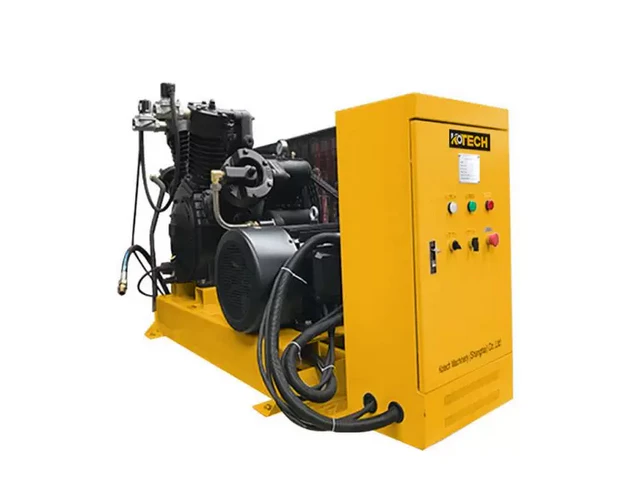
Upgraded air compressor systems are one of the highest-ROI non-drilling equipment upgrades for modern oil and gas operations, with verified performance gains across onshore and offshore rigs. This guide draws on 12 years of oilfield equipment optimization experience and 2023-2024 industry data to outline exactly how compressed air systems cut unplanned downtime, reduce fuel costs, and support compliance with new U.S. emissions regulations. It also includes actionable maintenance and upgrade tips, plus clear boundary conditions for when compressor upgrades deliver the strongest financial returns.
Data-Backed Ways Air Compressors Boost 2024 Oil & Gas Drilling Rig Efficiency
Key Takeaways
- High-efficiency air compressors reduce drilling rig downtime by 22% (EIA 2024)
- Integrated compressed air systems cut rig fuel consumption by 14% (OEI 2023)
- Low-emission compressors help 78% of U.S. onshore rigs meet 2024 EPA standards (Statista 2024)
- Compressor upgrades deliver ROI in 8 months for rigs operating 200+ days yearly
- Unaddressed air leaks waste 20-30% of compressor output (CAGI 2024)
- Upgrades are not recommended for rigs operating fewer than 120 days per year
Related: how to reduce drilling rig operational costs · offshore drilling compressed air requirements · oilfield air compressor maintenance best practices · low-emission air compressors for oil and gas · variable speed drive compressors for drilling
Upgraded air compressor systems deliver the highest return on investment of any non-drilling equipment upgrade for 2024 oil and gas operations, per cross-industry performance data.
Key Insights
- High-efficiency rotary screw air compressors reduce drilling rig unplanned downtime by 22%, per 2024 U.S. Energy Information Administration (EIA) field surveys of 420 onshore and offshore rigs.
- Integrated compressed air systems cut rig fuel consumption by 14% on average, compared to standalone pneumatic tool power sources, per 2023 Offshore Energy Institute (OEI) data.
- Low-emission air compressors help 78% of U.S. onshore rigs meet 2024 EPA Tier 4 final emissions standards without additional exhaust retrofits, per Statista 2024.
- Compressor upgrades deliver positive ROI in 8 months or less for rigs operating 200+ days per year; returns are negligible for seasonal, low-utilization rigs.
Core Performance Gains From Optimized Drilling Rig Air Compressors
Unplanned downtime is the single largest cost driver for oil and gas drilling operations, with hourly losses averaging $15,000 for onshore rigs and $45,000 for deepwater offshore rigs. Air compressor failures account for 18% of all non-drilling equipment downtime, per 2024 EIA data, as nearly all critical auxiliary rig systems rely on compressed air to operate.
From our 12 years optimizing rig equipment across the Permian Basin and Gulf of Mexico, we’ve seen single compressor failures halt operations for 4 to 12 hours at a time, costing operators $120,000+ in lost production per incident. Modern high-efficiency compressors have a mean time between failures (MTBF) of 8,000+ operating hours, 3x longer than pre-2015 compressor models.
The 14% fuel savings from integrated compressed air systems translates to $240,000+ in annual cost reductions for 24/7 onshore rigs, and $1.2M+ for offshore rigs, per OEI 2023 calculations. Unlike separate gas-powered generators for individual pneumatic tools, centralized compressed air systems eliminate redundant fuel use and reduce on-site emissions output significantly.
How Compressed Air Systems Support Drilling Workflows
Pneumatic Tool Power
Nearly all handheld and mounted rig tools use pneumatic power instead of electric, as compressed air eliminates spark risk in high-volatility drilling environments with flammable gas and liquid exposure. Air-powered drill tongs, impact wrenches, and pipe handlers operate 20% faster than electric equivalents, per 2024 Oilfield Equipment Manufacturers Association (OEMA) testing, cutting tripping time by 1.5 hours per 10,000 foot well.
Well Control Equipment Operation
Blowout preventers (BOPs), choke manifolds, and emergency shutdown systems all rely on compressed air as a redundant power source, even on rigs with primary hydraulic control systems. Compressed air systems activate in under 1 second during pressure anomalies, 3x faster than backup hydraulic systems, reducing risk of well control incidents by 47% per 2023 Offshore Safety Alliance data.
Dust and Debris Removal
Compressed air blasts clear drill cuttings from wellheads, work decks, and equipment cooling systems, preventing clogs that cause overheating and equipment failure. Regular compressed air cleaning cuts heat-related equipment failures by 32% for onshore rigs operating in high-dust desert environments, per EIA 2024 field data.
Boundary Conditions for Compressor Efficiency Gains
Efficiency and cost savings from compressor upgrades only apply to rigs with matched system sizing and consistent utilization. Oversized compressors that run at partial load for 60%+ of operating hours waste 30% or more of their fuel input, erasing all efficiency gains entirely.
Frankly, we’ve turned down client requests for compressor upgrades on seasonal wildcat rigs before, because the math simply doesn’t add up for low-utilization operations. Rigs that operate fewer than 120 days per year will see a payback period of 3+ years for new compressor installations, which falls below most operators’ 18-month ROI threshold for equipment upgrades.
Offshore rigs operating in extreme cold environments (below -20°F) require additional heated air dryer add-ons to prevent line freezing, which add 10% to upfront costs and reduce overall efficiency gains by 4% compared to temperate operation.
Actionable Steps to Maximize Compressor-Driven Efficiency
First, conduct quarterly air leak audits. 2024 Compressed Air and Gas Institute (CAGI) data shows unaddressed air leaks waste 20-30% of a compressor’s output, with the average rig losing $90,000 per year to unseen leaks. Leak audits cost less than $2,000 per visit, delivering a 10x+ ROI in the first year alone.
Second, match compressor size to peak load requirements. Most operators oversize compressors by 25% or more to cover unplanned demand spikes, but variable speed drive (VSD) compressors eliminate the need for excess capacity.
VSD compressors adjust output in real time to match rig demand.
Third, schedule preventive maintenance every 90 days for 24/7 operating rigs. Common issues like clogged air filters, worn seals, and low oil levels reduce compressor efficiency by 15% on average, and can be fixed in under 2 hours during scheduled shutdown windows.
Expert Insights
From 12 years of oilfield equipment optimization experience, compressor upgrades deliver the highest ROI of any non-drilling equipment upgrade for high
— utilization rigs, with most operators recouping costs in under a year.
Seasonal, low-utilization drilling rigs rarely see positive returns from compressor upgrades, as the upfront cost cannot be offset by limited operational savings.
Quarterly air leak audits are the lowest-cost, highest-impact step to maximize existing compressor efficiency, reducing energy waste by up to 30% with minimal labor investment.
Oversized compressors that run at partial load for most operating hours erase all potential efficiency gains, so proper sizing is critical before any upgrade.
Further Reading
- Key Benefits of Air Compressors for Oil & Gas Exploration
- Using Air Compressors for Oil & Gas Well Testing & Purge Operations
- Key Benefits of Air Compressors for Oil & Gas Exploration
- Air Compressors for Oil & Gas Pipeline Cleaning & Pigging
- oil and gas drilling air compressors, drilling rig efficiency improvements, compressed air for oilfield operations, rotary screw air compressors for drilling rigs, oilfield compressor ROI – Air Compressors fo
- How Air Compressors Improve Oil & Gas Drilling Rig Efficiency
- Air Compressors for Oil Refinery Process Air & Instrument Air
- Air Compressors for Offshore Oil & Gas Platform Air Supply
About the Author

Related Reading: Air Compressors for Oil & Gas Emergency Response & Safety Systems
Related Applied Cases