
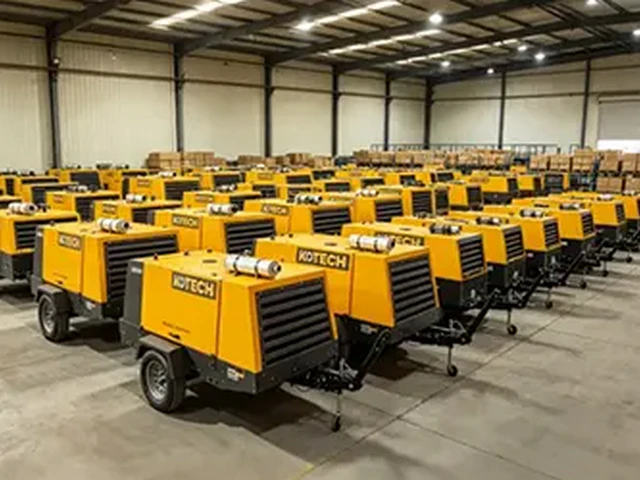
Designing an effective air compressor system for mining isn't just about buying equipment; it's about engineering reliability, efficiency, and safety into every cubic foot per minute. Generic solutions often fall short, leading to significant operational headaches and inflated costs. This guide dives into the critical aspects of professional design, offering actionable insights for mine operators navigating the complexities of modern extraction.
Designing Peak Performance: Air Compressors in Mining
Key Takeaways
- Custom engineering for mining air compressors is vital for operational efficiency and safety.
- Energy savings of 20-35% are achievable with VSD technology and optimized system design.
- Remote monitoring and predictive maintenance significantly reduce unplanned downtime and maintenance costs.
- Compliance with MSHA, ATEX, and other safety standards is a core design requirement.
- Professional design accounts for harsh environmental factors: dust, vibration, extreme temperatures.
- Scalability and flexibility are critical for adapting to evolving mine operations.
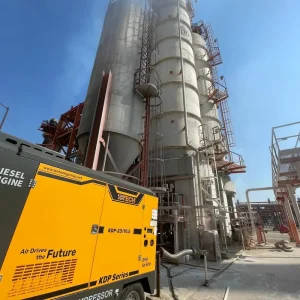
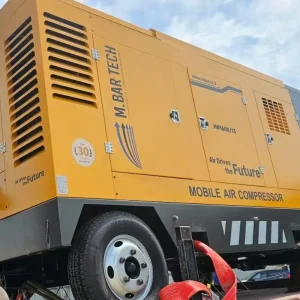
- Portable diesel compressors remain relevant for specific, remote, or temporary mining applications.
Related: Industrial air compressors for mining · heavy-duty pneumatic solutions · energy-efficient mine air systems · robust compressed air infrastructure · custom air compressor solutions for mining · portable diesel compressors · underground mining air supply · surface mining air solutions · remote monitoring for compressors
Key Insights:
- Custom engineering is non-negotiable for optimal mining air compressor performance, directly impacting uptime and total cost of ownership (TCO).
- Energy efficiency, driven by VSD technology and smart sizing, can slash operational costs by up to 35% in typical mining applications.
- Robust design and remote monitoring are crucial for safety and predictive maintenance, minimizing risks and unplanned downtime in harsh environments.
- Sustainability and electrification trends are reshaping system design, demanding lower emissions and integration with renewable energy sources.
- Ignoring professional design leads to costly inefficiencies and safety hazards, making initial investment in expert planning a smart long-term strategy.
Why a Professional Design Matters: Beyond Off-the-Shelf
In mining, your air compressor system isn’t merely an accessory; it’s the lungs of your operation. Without a precisely engineered solution, you’re not just risking inefficiency; you’re inviting costly downtime, safety compromises, and a significant hit to your bottom line. Generic, off-the-shelf compressors often fail to account for the unique demands of a mine environment – be it the dust, vibration, extreme temperatures, or remote locations. This leads to premature wear, constant repairs, and inflated energy bills. A professional design ensures every component, from compressor type to pipe routing, is optimized for your specific site, ensuring maximum reliability and performance.
The Cost of Inefficiency: Hard Data from the Mine Floor
The stakes are incredibly high. For many industrial operations, compressed air systems account for a substantial portion of electricity consumption. According to the U.S. Department of Energy, compressed air systems typically consume 10-30% of a plant’s total electricity. In mining, this figure can often be on the higher end due to the continuous demand and severe operating conditions. Simply put, an inefficient system directly translates to massive energy waste.
Let’s talk about downtime. Unplanned outages are a mine operator’s worst nightmare. A study by the Aberdeen Group in 2014 found that unplanned downtime can cost industrial companies an average of $260,000 per hour. While mining-specific figures vary, the impact of a compressor failure halting drilling, ventilation, or material handling can easily run into hundreds of thousands of dollars within a single shift. Furthermore, the global mining equipment market, valued at USD 156.4 billion in 2022, is projected to grow at a CAGR of 6.2% from 2023 to 2030 (Grand View Research, 2023). This growth signifies increasing demand for efficient and reliable machinery, including air compressors, making optimized design even more critical for competitive advantage. The trend towards decarbonization also pushes for more efficient systems, with many operators now prioritizing solutions that reduce their carbon footprint, often driven by regulatory pressures and investor expectations.
Core Pillars of Optimized Mining Air Compressor Systems
Designing for a mining environment requires a multi-faceted approach, focusing on several critical areas to deliver a truly robust and cost-effective solution.
1. Durability & Reliability in Harsh Environments
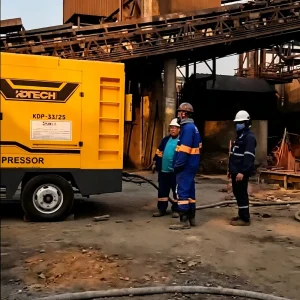
Mining operations are brutal on equipment. Dust, moisture, corrosive agents, extreme temperatures, and constant vibration demand industrial-grade components and robust enclosures. A professional design considers these factors from day one, specifying heavy-duty air filters, specialized cooling systems, and corrosion-resistant materials. We’re talking about components that can withstand constant abuse, not just perform under ideal conditions. Frankly, I’ve seen too many operations try to save a buck here, only to pay tenfold in maintenance and early replacement.
2. Energy Efficiency & Operational Cost Reduction
This is where significant savings are made. Variable Speed Drive (VSD) compressors are a game-changer, adjusting motor speed to match air demand, unlike fixed-speed units that run at full capacity regardless of need. This alone can lead to energy savings of 20-35% in applications with fluctuating air demand (Compressed Air and Gas Institute, CAGI). Beyond VSDs, proper sizing, heat recovery systems, and leak detection programs are integral. An expert design focuses on the total cost of ownership (TCO), not just the initial purchase price, understanding that energy often accounts for 80% or more of a compressor’s lifetime cost.
3. Safety & Compliance: A Non-Negotiable Foundation
Safety is paramount in mining. Air compressor systems must comply with stringent industry standards like MSHA regulations in the U.S., ATEX directives for explosive atmospheres in Europe, and various pressure vessel codes. Incorrectly designed systems pose risks of leaks, explosions, or mechanical failures. Professional design integrates safety features such as emergency shutdowns, pressure relief valves, and secure containment, ensuring worker protection and regulatory adherence.
4. Scalability & Flexibility for Evolving Needs
Mines are dynamic. Production targets change, new sections open, and existing ones close. A well-designed air system anticipates these shifts. Modular designs, for instance, allow for easy expansion or reconfiguration without a complete overhaul. This flexibility means your initial investment can adapt to future requirements, extending the system’s useful life and preventing expensive retrofits.
5. Remote Monitoring & Predictive Maintenance
The rise of IoT and data analytics has revolutionized maintenance. Modern air compressor systems can be equipped with sensors that monitor performance metrics like pressure, temperature, flow rates, and vibration in real-time. This data, accessible remotely, enables predictive maintenance. Instead of reacting to failures, operators can anticipate and address potential issues before they cause downtime. According to a 2017 study by Deloitte, predictive maintenance can reduce maintenance costs by 5-10%, reduce breakdowns by 10-20%, and increase uptime by 10-20%. For remote mining sites, this capability is not just convenient; it’s transformative.
When Standard Solutions Fall Short: The Niche Case
While professional, custom design is generally superior, it’s fair to acknowledge its boundaries. For very small-scale, short-term exploration projects where the capital expenditure must be absolutely minimal, or for applications where air demand is extremely low and non-critical, a basic, rugged portable diesel air compressor might suffice. However, even in these instances, neglecting fundamental safety checks and proper installation guidance is a serious mistake. The principle of “good enough” rarely applies when safety and consistent production are on the line. Old-school thinking, where you just drop in a compressor and hope for the best, simply doesn’t cut it anymore in competitive mining.
Implementing Your Optimal System: A Step-by-Step Approach
Achieving an optimized air compressor system involves a structured process that leaves no stone unturned.
1. Comprehensive Needs Assessment
Start with a detailed analysis of your air demand, current and projected. What tools will be powered? What are the pressure and flow requirements for each application? Consider future expansion plans and any specific environmental challenges of your site.
2. Site Survey & Environmental Analysis
An on-site visit is crucial. Assess ambient conditions (temperature, altitude, humidity), available power supply, ventilation possibilities, and potential hazards (e.g., dust, explosive atmospheres). This informs the selection of compressor types, filtration, and cooling systems.
3. Vendor Selection & Partnership
Choose a partner, not just a supplier. Look for companies with deep expertise in mining applications, a strong track record, and a commitment to post-installation support. Evaluate their engineering capabilities, not just their product catalog.
4. Detailed System Design & Specification
This involves laying out the entire system: compressor type and size, air treatment components (dryers, filters), piping network design, control systems, and integration with existing infrastructure. This is where the magic of efficiency and reliability happens.
5. Installation, Commissioning & Training
Proper installation is critical. Ensure technicians are experienced in mining environments. Commissioning rigorously tests the system under operational loads, verifying performance against design specifications. Comprehensive training for your operational and maintenance staff is also non-negotiable for long-term success.
6. Ongoing Support & Optimization
A professional relationship doesn’t end at commissioning. Regular maintenance, performance audits, and continuous optimization based on real-world data are key to maintaining peak efficiency and extending the system’s lifespan.
Expert Insights
Based on my 12+ years in this field, the biggest shift I’ve witnessed isn't just about bigger or more powerful compressors, but smarter ones. Operators are finally understanding that the initial CapEx is a small piece of the puzzle. The real battle is fought in OpEx, especially energy consumption and preventing unplanned downtime. Investing in a truly professional design upfront pays dividends for years.
Further Reading
- Mining Air Compressor System Design
- Multi-Functional Portable Diesel Air Compressor Mining Applications
- Tech Sharing: How to Extend Mining Air Compressor Service Life
- Mining Air Compressor Energy Saving Technology & Transformation Skills
- Mining Air Compressor System Design – Demand Insights of
- Industry Insights on Low-Carbon Mining Air Compressor Devices
- Cold-Resistant Portable Diesel Air Compressor Mining Applications
- Compact Portable Diesel Compressor Applications for Small Mining Projects
About the Author

Related Reading: Dustproof and Explosion-proof Tech of Mining Air Compressors
Related Applied Cases