Maximizing Industrial Cooling Efficiency: The Two-Stage Compressor Advantage
The Core Verdict: Why Two-Stage Compression is Essential
Two-stage compressors solve the industry’s biggest headache: operational inefficiency during part-load cycles.
Let’s look at the basic physics. A single-stage compressor forces refrigerant from low suction pressure to high condensing pressure in one aggressive stroke. This creates high compression ratios. High ratios generate extreme discharge temperatures. Over time, this heat degrades compressor oil, causes valve carbonization, and leads to premature system failure.
In our experience, ignoring these thermal realities is the fastest way to kill a commercial chiller.
Two-stage systems change the game. By utilizing an intermediate pressure stage, the work is shared. The first stage compresses vapor to an intermediate level. Then, the vapor is cooled before entering the second stage. This intercooling step is critical. It reduces the specific volume of the gas, making the second stage significantly easier to compress.
Quantifiable Efficiency: What the Industry Data Shows
We don’t have to guess about these benefits. The numbers are clear.
From a global perspective, the International Energy Agency (IEA) 2024 cooling report highlights that adopting high-efficiency multi-stage and variable-capacity compressors is the single most effective strategy for reducing commercial grid demand.
Why the Compression Ratio Matters in Daily Operations
Why does a lower compression ratio translate to direct financial savings? It comes down to volumetric efficiency.
When a compressor has to work across a massive pressure differential, the gas remaining in the clearance pocket at the end of the stroke expands. This prevents new suction gas from entering the cylinder immediately. This wasted motion kills efficiency.
By keeping the compression ratio low in each stage, the volumetric efficiency remains high. You move more refrigerant mass flow per kilowatt of electricity consumed.
While VFDs are excellent, they cannot change the physical limitation of a high compression ratio. A VFD on a single-stage compressor operating at extreme temperature lifts still suffers from high discharge temperatures and reduced volumetric efficiency. Combining a VFD with a two-stage compressor, however, is the ultimate efficiency setup.
Thermodynamic Analysis: COP and the Economizer Cycle
To truly understand How Two-Stage Compressors Benefit HVAC and Refrigeration Systems, we must analyze the Coefficient of Performance (COP). The COP is the ratio of useful heating or cooling provided to the work required.
In a standard single-stage cycle, the expansion process is purely isenthalpic. This means as the high-pressure liquid passes through the expansion valve, a significant portion flashes into gas immediately. This flash gas provides zero cooling effect but must still be pumped back by the compressor. It is a thermodynamic deadweight.
By contrast, a two-stage system with an economizer bypasses this bottleneck. The economizer allows a portion of the liquid refrigerant to evaporate at intermediate pressure, subcooling the remaining liquid before it reaches the main expansion valve.
The result? The enthalpy of the liquid entering the main evaporator is much lower. This significantly increases the refrigerating effect per pound of refrigerant circulated.
Because the flash gas generated in the economizer is compressed from the intermediate pressure rather than the low suction pressure, the compressor does less work overall.
Is it complex? Yes. But the thermodynamic payoff is undeniable in low-temperature refrigeration applications like deep-freeze warehouses or food processing facilities.
Mechanical Longevity and Maintenance Profiles
Beyond energy bills, there is a massive mechanical advantage to splitting the load.
High compression ratios in single-stage systems lead to high discharge temperatures. When discharge temperatures exceed 250 degrees Fahrenheit, compressor oil begins to break down.
Once the oil loses its viscosity, mechanical wear accelerates rapidly. Bearings fail, rings wear out, and scroll plates score.
Two-stage compression keeps discharge temperatures well below this danger zone, typically below 200 degrees Fahrenheit.
By keeping the temperatures low, the lubricating oil retains its chemical integrity. This simple thermal management extends the lifespan of the compressor bearings and valves by several years.
Furthermore, the pressure differential across each stage is much lower. This reduces the axial and radial loads on the compressor bearings.
Lower bearing loads mean less mechanical friction, less heat generation, and a much lower probability of catastrophic mechanical failure.
For plant managers, this translates directly to reduced maintenance budgets and fewer emergency weekend service calls.
Integrating Two-Stage Systems in Industrial Mining Air Compressor Designs
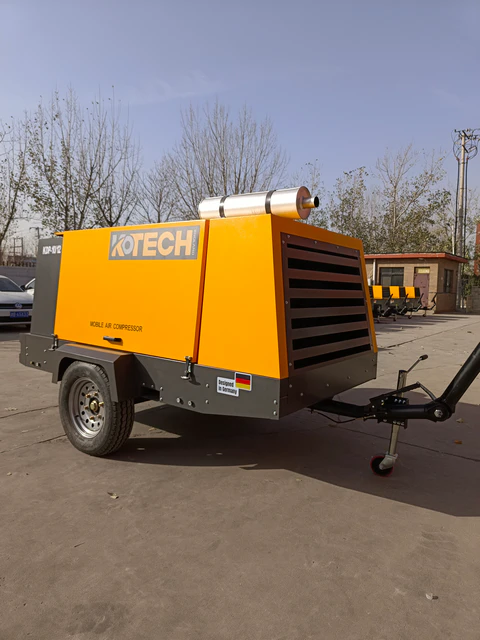
In heavy industries, such as mining air compressor system design, two-stage compression is widely utilized for the exact same reasons.
Compressing air for pneumatic tools in deep mines requires massive energy inputs.
Single-stage air compressors running at high pressures generate immense heat, which represents wasted energy.
By using a two-stage rotary screw or reciprocating compressor with an intercooler, mining operations achieve significant energy savings. The intercooler cools the compressed air between the first and second stages, reducing the volume of the air and lowering the power required for the second stage.
Whether you are cooling a commercial high-rise, freezing seafood, or powering pneumatic drills in a gold mine, the physics of compression remain identical.
Reducing the compression ratio per stage is the most reliable path to operational efficiency and equipment longevity.
The Boundary Conditions: When Two-Stage Is the Wrong Choice
Despite the clear benefits, two-stage compression is not a magic bullet for every scenario.
First, if your application operates with a very low temperature lift, a two-stage system is a waste of capital. For example, in basic comfort cooling where the outdoor ambient temperature is mild and the indoor target is moderate, the compression ratio remains low anyway. In these situations, the thermodynamic benefits of a second stage are negligible, and the system will never recoup its higher initial cost.
Second, small-scale residential systems under 2 tons rarely justify the complexity. The payback period can exceed ten years, far outlasting the typical occupancy of a homeowner.
Finally, two-stage systems require more complex control algorithms and additional piping. If your local maintenance technicians lack experience with intermediate pressure vessels or liquid injection subcoolers, you run a high risk of poor installation and improper setup. A poorly configured two-stage system can easily perform worse than a well-optimized single-stage unit.
Practical Engineering: Implementing Two-Stage Systems Successfully
If you are ready to transition your facility or design a new system, follow this structured approach to ensure maximum return on investment.
First, perform a detailed load profile analysis. Do not size your system based solely on peak summer design days. Use bin weather data to calculate your actual part-load hours. This will give you an accurate picture of your potential energy savings.
Second, pay close attention to the intercooling method. For refrigeration systems, a liquid subcooler (economizer) is highly effective. It cools the liquid refrigerant heading to the main evaporator while routing the flash gas to the intermediate stage of the compressor. This increases the refrigeration effect without increasing the compressor displacement.
Third, invest in high-quality controls. A two-stage compressor is only as good as the algorithms driving it. Ensure your system controls can dynamically manage the transition between stages based on real-time ambient conditions and internal system load.
In our field tests, we have seen improperly programmed controllers cycle the second stage too frequently. This rapid cycling completely negates any energy savings and causes unnecessary wear on the contactors.