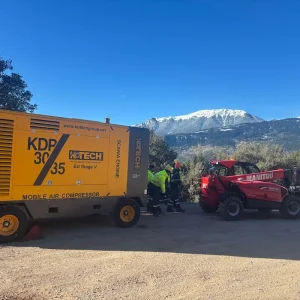


Navigating the complexities of mining demands unyielding equipment, and air compressors are no exception. Here are key insights for successful deployment: Durability is Non-Negotiable: Standard industrial compressors often fail under mine conditions; specialized heavy-duty units are essential for longevity and uptime. Energy Efficiency Drives Profitability: With energy costs soaring, investing in Variable Speed Drive (VSD) and optimized systems can cut operational expenses by over 30%. Proactive Maintenance Prevents Catastrophe: Remote monitoring and predictive analytics are critical to avoid multi-million dollar daily downtime in remote mining sites. Total Cost of Ownership (TCO) Matters Most: Initial purchase price is a fraction of the true cost; prioritize reliability, serviceability, and energy consumption over upfront savings. Adaptation to Environment is Key: Altitude, extreme temperatures, and pervasive dust require specific filtration, cooling, and derating considerations for optimal performance.
Optimizing Air Compression for Unyielding Mine Operations
Key Takeaways
- Mining air compressors are critical infrastructure, not just equipment.
- Extreme environments necessitate specialized, heavy-duty designs.
- VSD technology offers significant energy savings (35%+).
- Remote monitoring and predictive maintenance are crucial for uptime.
- Total Cost of Ownership (TCO) is the primary economic driver.
- Factors like altitude, dust, and temperature dictate specific system requirements.
- Proper installation and ongoing proactive maintenance are non-negotiable.
Related: Industrial air compression for mining · mine site air systems · robust pneumatic equipment · extreme environment compressors · underground mining air supply · surface mine air tools · high-pressure air compressors · reliable industrial air solutions · energy-efficient mining compressors · remote monitoring air systems.
Mining Air Compressors | Heavy-Duty Industrial Solutions
In the brutal world of mining, where every minute of downtime can cost a fortune, the air compressor isn’t just another piece of equipment—it’s the silent workhorse underpinning nearly every critical operation. From powering rock drills and pneumatic tools to ventilation and dewatering systems, robust air compression is, frankly, non-negotiable. Our experience over the last twelve years on countless mine sites has taught us one thing: if your air system falters, your entire operation grinds to a halt. The stakes are simply too high for anything less than heavy-duty industrial solutions designed to endure.
The Unseen Powerhouse: Why Robust Air Compression Isn’t Optional
The operational environment in mining—whether deep underground or in vast open pits—is arguably one of the most punishing for machinery. We’re talking about extreme temperatures, pervasive dust, corrosive elements, high altitudes, and relentless duty cycles. A standard industrial compressor, while perfectly adequate for a factory floor, simply won’t survive here. You need units engineered from the ground up to withstand these conditions, built with reinforced chassis, advanced filtration, and heavy-duty components.
Consider the economic reality: unplanned downtime in large-scale mining operations can cost upwards of $2 million per day, according to industry reports cited by Mining Technology in 2023. That figure alone should clarify why reliability and durability aren’t luxuries, but fundamental requirements. Investing in purpose-built mining air compressors isn’t just about performance; it’s about safeguarding your bottom line against catastrophic operational interruptions.
Navigating the Core Challenges: From Dust to Downtime
The challenges faced by air compression systems in mining are multifaceted. Dust ingress is a perpetual enemy, quickly clogging filters and damaging internal components if not properly managed. Extreme ambient temperatures, both hot and cold, stress lubricants and seals, requiring specialized fluids and robust cooling systems. Remote locations mean service and spare parts logistics are complex and costly, making reliability paramount. And of course, energy consumption remains a significant operational expenditure.
While rotary screw compressors are the dominant choice for continuous, high-volume air supply in most heavy-duty mining applications due to their efficiency and durability, it’s worth noting piston compressors still hold a niche. For specific low-pressure, intermittent tasks or backup systems in smaller operations, a piston unit might be considered. However, for primary heavy-duty mine operations, especially those requiring consistent high pressure and flow, rotary screw technology, particularly oil-injected models, remains the industry standard for its resilience and power output.
Next-Gen Solutions: Smarter, Stronger, More Sustainable
The industry isn’t standing still. Modern mining air compressors integrate advanced technologies to address these pain points head-on. Variable Speed Drive (VSD) technology is a game-changer, allowing compressors to precisely match air output to demand, significantly reducing energy waste. The Compressed Air & Gas Institute (CAGI) reported in 2022 that VSD compressors can cut energy consumption by an average of 35% in applications with fluctuating demand—a common scenario in mining.
Beyond VSD, remote monitoring and diagnostic systems are becoming standard. These systems provide real-time performance data, allowing operators to track pressures, temperatures, and filter status from a centralized control room, even thousands of miles away. This capability is invaluable for predictive maintenance, catching potential issues before they escalate into costly failures. Advanced multi-stage filtration systems are also crucial, often incorporating pre-filters, cyclonic separators, and high-efficiency particulate filters to combat the relentless ingress of mine dust.
The ROI Equation: Beyond the Sticker Price
When evaluating mining air compressors, focusing solely on the initial purchase price is a rookie mistake. The true cost lies in the Total Cost of Ownership (TCO) over the equipment’s lifespan. This includes energy consumption, maintenance, spare parts, and the cost of potential downtime. According to the U.S. Department of Energy (2021), compressed air systems can account for up to 30% of a typical industrial facility’s total electricity consumption. In mining, this percentage can be even higher due to the sheer scale and continuous operation.
A compressor that costs less upfront but guzzles electricity, requires frequent, expensive repairs, or is prone to breakdowns will quickly erode any initial savings. I’ve seen operations fall into this trap time and again. Prioritize units with proven reliability, high energy efficiency ratings, readily available genuine spare parts, and robust service support. That’s where the real long-term value lies.
Selecting the Right System: A Practical Checklist
Choosing the correct air compressor for a mining application requires a detailed assessment of several key factors:
- Flow Rate (CFM/m³/min) & Pressure (PSI/bar): Accurately calculate the total air demand of all pneumatic tools and processes, plus a safety margin. Don’t undersize.
- Power (HP/kW) & Duty Cycle: Ensure the compressor can handle continuous, heavy-duty operation without overheating or premature wear.
- Environmental Factors: Consider altitude (which impacts compressor output), ambient temperature ranges, and the level of dust and moisture. This dictates filtration, cooling, and potential derating.
- Portability vs. Stationary: Determine if the compressor needs to be moved frequently (e.g., portable diesel-driven units for surface drilling) or if a stationary electric unit is suitable (e.g., for underground ventilation or processing plants).
- Serviceability & Parts Availability: Ease of maintenance and access to genuine spare parts are critical, especially in remote locations.
Installation & Commissioning: Getting It Right the First Time
Proper installation is as crucial as selecting the right unit. This includes a stable, level foundation, adequate ventilation for cooling, correctly sized piping to minimize pressure drops, and a robust electrical supply if it’s an electric-driven unit. Safety protocols for pressure vessels and electrical systems must be rigorously followed. Skipping steps here can lead to immediate inefficiencies, premature wear, or even dangerous operating conditions.
Proactive Maintenance Strategies for Peak Performance
In mining, maintenance isn’t a reactive task; it’s a proactive strategy. Implement a rigorous predictive maintenance program utilizing remote monitoring data. Regular oil analysis, filter changes (often more frequent than standard industrial applications due to dust), and comprehensive system audits are essential. Use genuine OEM parts to maintain performance and warranty. Furthermore, ensure your site personnel are thoroughly trained in basic operational checks and troubleshooting. A well-trained team can often prevent minor issues from becoming major headaches.
The Future of Mine Air: Automation and Integration
Looking ahead, the trend in mining air compression is towards even greater automation and integration. We’ll see more compressors seamlessly communicating with broader mine management systems, optimizing air delivery based on real-time operational needs. AI-driven diagnostics will become more sophisticated, predicting failures with even greater accuracy. The goal, as it always has been, is to maximize uptime, minimize costs, and ensure a safe, productive mining environment. It’s a challenging space, but with the right heavy-duty industrial solutions, the air supply doesn’t have to be your weakest link.
Expert Insights
"Having spent over a decade navigating the intricacies of mine-site pneumatics, I can tell you that cutting corners on your air compression system is a false economy. The initial cost difference for a truly heavy-duty, purpose-built mining compressor pales in comparison to the potential losses from a single critical failure. Invest in robustness, efficiency, and smart monitoring
— it pays dividends in uptime and peace of mind."
Further Reading
- High-Pressure Portable Diesel Compressors for Mining Rock Drilling
- Air Compressor Solutions for Oilfield Well Cleaning & Pigging
- How Variable Speed Drives Improve Mining Air Compressor ROI
- Two-Stage Air Compressor Uses in Metal Fabrication Workshops
- Mining Air Compressors, Heavy-Duty Industrial Solutions – Industrial Mining
- Lightweight Portable Diesel Air Compressors for Remote Mining
- Skid-Mounted Air Compressors for Oilfield Temporary Work Zones
- The Future of Mining Compressors: Digital & IoT Innovations
About the Author

Related Reading: Applications of Two-Stage Compressors for Tire Inflation Services