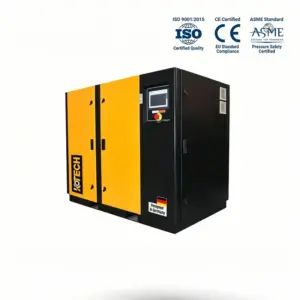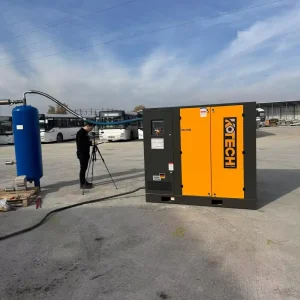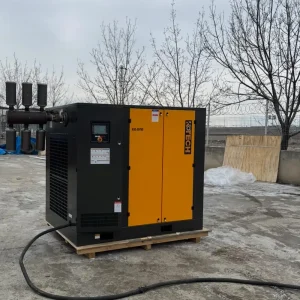
Mining operations are brutal on equipment, and compressed air systems are no exception. For decades, these workhorses have been critical for everything from rock drilling and ventilation to mine dewatering, yet their energy consumption often flies under the radar until the utility bill arrives. The truth is, inefficient air compressors are silently draining your profits, and frankly, that’s a problem we can no longer afford to ignore.
Here are the key insights:
- Uptime is Gold: Predictive maintenance and robust designs drastically reduce unplanned downtime, which is priceless in mining.
- Not One-Size-Fits-All: The right technology depends on your specific mine’s demand profile and environmental conditions.
- ROI is Achievable: Modern compressor tech offers clear, measurable returns on investment through energy savings and reduced maintenance.
The Unseen Drain: Why Mining Compressor Efficiency Matters Now More Than Ever
In the harsh world of mining, every dollar counts. While the focus often shifts to heavy machinery or extraction techniques, the humble air compressor, often tucked away, represents a colossal operational expense. We’re talking about systems that run 24/7, powering critical functions deep underground or at remote surface sites. The sheer scale of energy consumption in mining makes efficiency a non-negotiable.
The problem is systemic. Many mines still operate with older, fixed-speed compressors designed for constant output, even when demand fluctuates wildly. This leads to massive energy waste during unload cycles or periods of lower demand. The financial impact is staggering, and it’s compounded by the increasing pressure for sustainable mining practices and stricter environmental regulations.
The Hard Numbers: Energy Costs and Environmental Imperatives
Let’s talk brass tacks. The data clearly shows where the money goes.
Think about that: half of the energy you’re paying for could be literally escaping into thin air. That’s not just a financial leak; it’s an environmental burden, contributing to carbon emissions that modern mining operations are increasingly mandated to reduce. The pressure from stakeholders, from investors to local communities, for greener operations is intensifying. Investing in energy-efficient **mining air compressor** technology isn’t just good business; it’s good corporate citizenship.
Beyond the Basics: Advanced Technologies Driving Real Savings
The good news? The industry isn’t standing still. A new generation of advanced air compressor technologies is specifically engineered to tackle these challenges head-on. These aren’t just incremental improvements; they represent a fundamental shift in how we approach **mine site compressed air systems**.
Variable Speed Drive (VSD) Compressors: The Smart Power Play
Traditional fixed-speed compressors run at full capacity regardless of demand, wasting energy when less air is needed. VSD compressors, however, precisely match motor speed to air demand, delivering only the air required. This eliminates the inefficient unload/idle cycles common in fixed-speed units.
The initial investment might be higher, but the payback period is typically short, making the total cost of ownership (TCO) significantly lower over the equipment’s lifespan.
Oil-Free & Magnetic Bearing Compressors: Purity Meets Performance
For critical applications where air quality is paramount—think sensitive instrumentation, certain processing plants, or even some underground ventilation systems—oil-free compressors are the gold standard. They eliminate the risk of oil contamination in the air stream, safeguarding downstream equipment and processes. Beyond purity, modern oil-free designs, especially those incorporating magnetic bearing technology, offer exceptional efficiency.
Magnetic bearing compressors, a relatively newer player, achieve efficiency by eliminating friction. There’s no mechanical contact, which means less wear, lower maintenance, and incredibly quiet operation. While these are often premium solutions, their benefits in terms of reliability, reduced maintenance, and energy consumption can justify the higher upfront cost for specific, high-value mining applications. They contribute to a cleaner operational environment, aligning with increasingly stringent environmental standards.
IoT and Predictive Maintenance: From Reactive to Proactive
The digital revolution has finally reached compressed air systems. Integrating Internet of Things (IoT) sensors and advanced analytics transforms maintenance from a reactive headache into a proactive, strategic advantage. IoT-enabled compressors continuously monitor key parameters like pressure, temperature, vibration, and energy consumption. This data is then analyzed in real-time.
What does this mean for mining? It means moving away from scheduled maintenance that might be too early or too late, and instead, adopting predictive maintenance. Anomalies are detected before they become catastrophic failures. This drastically reduces unplanned downtime, a critical factor in mining where every hour of halted production can cost hundreds of thousands of dollars. We’re talking about optimizing component lifespan, scheduling maintenance during planned downtimes, and avoiding costly emergency repairs.
Advanced Control Systems & Heat Recovery: Maximizing Every Watt
Modern compressor control systems are sophisticated networks that manage multiple compressors, optimizing their operation based on real-time demand. They can sequence units, balance load, and even integrate with broader plant management systems to ensure the entire **industrial compressed air system** runs at peak efficiency. This minimizes wasted energy from units running unnecessarily or at suboptimal loads.
Instead of venting this heat, advanced systems can recover it. This recovered heat can be used for space heating, water heating, or even pre-heating processes in the mine. For instance, in colder climates, using recovered heat to warm workshops or offices can significantly offset heating costs. It’s a double win: lower electricity consumption for air generation and lower energy consumption for heating.
Not a Universal Fix: When Advanced Tech Might Miss the Mark
While these advanced technologies offer immense benefits, it’s crucial to understand their limitations. A VSD compressor, for instance, thrives on fluctuating demand. If your mine’s **compressed air system** has a consistently high, steady demand profile with minimal variation, a well-sized fixed-speed compressor might actually be more cost-effective. The VSD’s efficiency gains come from its ability to adapt, and without that variability, the added complexity and initial cost may not yield the expected ROI.
Similarly, magnetic bearing or oil-free compressors, while offering superior air quality and reduced maintenance, come with a higher capital expenditure. For non-critical applications where trace oil is acceptable and the operational environment isn’t overly sensitive, a robust, traditional lubricated screw compressor might still be the pragmatic choice. The key is to conduct a thorough energy audit and demand analysis specific to your operation before making significant investments. Don’t just chase the latest tech; ensure it aligns with your actual operational needs and budget.
Implementing Change: A Step-by-Step Approach to Upgrade
So, how do you move from understanding these technologies to implementing them?
- Conduct a Professional Air Audit: This is step one. Get a qualified expert to analyze your current system. They’ll identify leaks, pressure drops, demand profiles, and existing inefficiencies. This audit provides the baseline data you need.
- Analyze Demand Profiles: Understand when and how much compressed air your operation truly needs. This insight will guide your technology selection, especially for VSD units.
- Calculate Total Cost of Ownership (TCO): Look beyond the sticker price. Factor in energy costs, maintenance, potential downtime, and expected lifespan. This holistic view reveals the true value of advanced systems.
- Pilot Programs: For larger, complex operations, consider piloting a new technology in a specific area of the mine. This allows you to gather real-world data and fine-tune implementation before a full rollout.
- Invest in Training: Modern compressors, especially those with advanced controls and IoT integration, require skilled operators and maintenance staff. Proper training is essential to maximize their benefits and ensure longevity.
The journey to optimized **mining air compressor efficiency** is continuous. It requires a commitment to understanding your system, embracing innovation, and making data-driven decisions.
The Future of Mine Air: Where Innovation Leads
The trajectory for **industrial compressed air systems** in mining is clear: smarter, cleaner, and more efficient. As mines push deeper, operate in more remote locations, and face increasing pressure to reduce their environmental footprint, the reliance on advanced, reliable, and energy-efficient compressors will only grow. We’ll likely see further integration with renewable energy sources, more sophisticated AI-driven predictive analytics, and even quieter, more compact designs tailored for confined underground spaces. The industry is moving towards a future where air compression is not just a utility but a truly optimized, intelligent component of the entire mining ecosystem.