
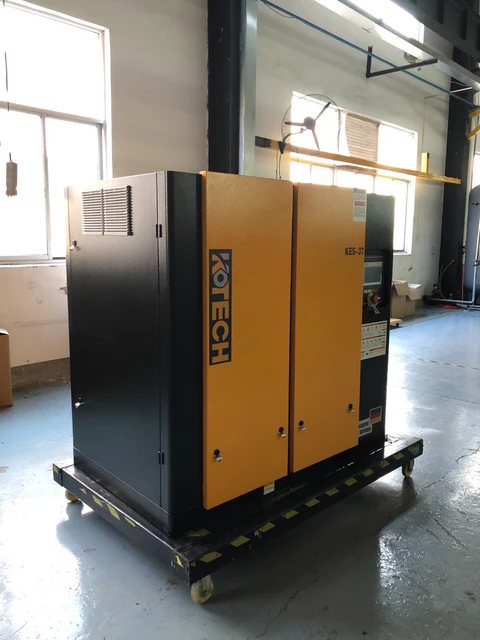
Selecting the optimal air compressor—portable or stationary—is more than a technical decision; it's a strategic move that directly impacts mining operational efficiency, safety, and bottom-line profitability. This guide cuts through the noise, offering clear, actionable insights for mining professionals to make informed choices, grounded in real-world challenges and verifiable industry trends.
Choosing the Right Air Compressor for Mining: A Strategic Imperative
Key Takeaways
- Air compressors are vital for mining operations (drilling, ventilation, dewatering).
- Choice between portable and stationary impacts CapEx, OpEx, and uptime.
- Stationary units: Best for continuous, high-volume, fixed-location air supply (e.g., deep pits, processing plants).
- Portable units: Ideal for mobile, temporary, or remote tasks (e.g., exploration, auxiliary support).
- Key decision factors: Operational scale, mobility requirements, energy costs, environmental regulations, mine lifecycle.
- Energy efficiency (VSD technology) and robust maintenance are crucial for ROI.
- Industry trends: Increased automation, electrification, and smart system integration.
- Always conduct an air audit to right-size equipment.
Related: Industrial air compression for mining · heavy-duty mining equipment · site-specific air systems · mobile air power · fixed-plant air supply · drilling air compressors · ventilation air systems · dewatering air solutions · energy efficiency in mining · operational uptime
Key Insights:
- Strategic Alignment: The choice between portable and stationary air compressors must align directly with a mine’s operational scale, mobility requirements, and long-term expansion plans, not just immediate needs.
- Efficiency Gains: Modern air compressor technology, especially variable speed drive (VSD) units, offers significant energy savings, crucial as energy costs continue to climb across the mining sector.
- Uptime is King: Robust maintenance schedules and readily available parts for both portable and stationary units are non-negotiable for maximizing operational uptime and preventing costly production halts.
- Environmental Compliance: Emissions regulations and noise reduction are increasingly impacting equipment selection, favoring more efficient, quieter, and often electric-powered compressor solutions.
The Unseen Powerhouse: Why Air Compressors Rule Mining Operations
In mining, reliable compressed air isn’t just a utility; it’s the lifeblood of countless critical operations. From powering pneumatic tools for drilling and excavation to maintaining ventilation systems, dewatering, and even supporting advanced automation, air compressors are non-negotiable. The fundamental challenge lies in choosing the right solution: a robust stationary system for fixed, high-demand applications or a flexible portable unit for dynamic, remote, or smaller-scale tasks. Honestly, I’ve seen too many operations get this wrong by focusing solely on upfront cost, only to face escalating operational expenses and downtime later. The decision impacts everything from energy consumption to safety protocols, making it a pivotal strategic choice for any mine manager or operations director.
Mining’s Evolving Demands: Data-Driven Insights
The mining landscape is shifting, driven by commodity price volatility, increasing regulatory scrutiny, and a relentless push for efficiency. These forces directly influence equipment procurement. For instance, global mining capital expenditure (CapEx) is projected to grow by 6.5% annually through 2028, according to a S&P Global Market Intelligence 2023 report, indicating sustained investment in infrastructure and machinery. This growth isn’t just about more equipment; it’s about smarter, more energy-efficient solutions.
Energy efficiency, specifically, has become a top-tier concern. Compressed air systems can account for up to 20% of a mine’s total electricity consumption. With electricity prices for industrial users rising by an average of 5% year-over-year in many regions, per IEA 2024 data, optimizing air compression is no longer optional. Furthermore, the drive towards decarbonization means operators are increasingly looking at electric-powered portable compressors or highly efficient stationary units to reduce their carbon footprint. The demand for automation in mining, expected to reach a market value of $4.1 billion by 2027, according to Mordor Intelligence 2022 research, also necessitates reliable and precise compressed air for robotic drilling and hauling systems.
Portable vs. Stationary: Weighing Your Operational Imperatives
Stationary Air Compressors: The Backbone of Fixed Operations
Stationary air compressors, typically screw or centrifugal types, are designed for continuous, heavy-duty operation at a fixed location. They excel in providing a consistent, high-volume, and high-pressure air supply, making them ideal for large-scale mining operations with established infrastructure. Think deep-pit mines, processing plants, or major underground ventilation systems.
- Advantages: Superior energy efficiency (especially with VSD technology), lower noise levels (when properly housed), longer lifespan, reduced maintenance frequency, and the ability to integrate into complex air distribution networks. They often offer better air quality with advanced filtration systems.
- Best Use Cases: Primary drilling rigs, large-scale processing equipment, mine-wide ventilation, dewatering pumps, and main workshop air supply. Their continuous duty cycle makes them indispensable where uninterrupted air flow is paramount.
Portable Air Compressors: Flexibility in Motion
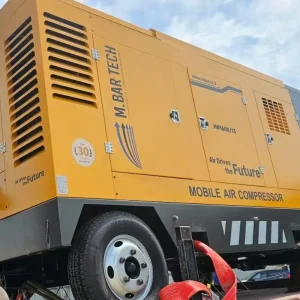
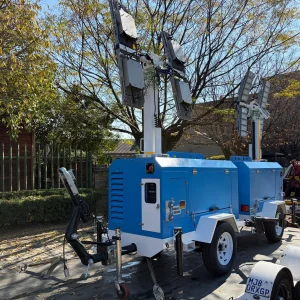
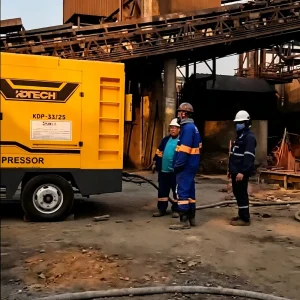
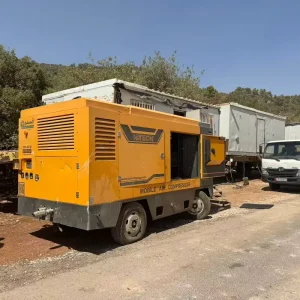
Portable air compressors are built for mobility and adaptability. Typically diesel-powered (though electric options are growing), these units are mounted on wheels or skids, allowing them to be moved rapidly between different work sites. This flexibility is invaluable for exploration, smaller-scale extraction, or supporting operations in remote or developing areas of a mine.
- Advantages: High mobility, quick deployment, self-contained power, and suitability for temporary or intermittent tasks. They are perfect for remote locations lacking electrical infrastructure or for emergency backup.
- Best Use Cases: Exploration drilling, blasting support, remote construction, temporary site offices, emergency air supply, and powering handheld pneumatic tools in diverse locations across a sprawling mine site.
When Stationary Isn’t the Answer (Or Vice Versa): Nuances and Edge Cases
While the general distinctions are clear, the real world throws curveballs. A stationary compressor, for all its efficiency, becomes a liability if your mine plan involves frequent relocation of operations or if the site is geographically fragmented. Conversely, relying solely on portable units for a large, fixed processing plant would be an energy drain and logistical nightmare.
Consider a mine in its early exploration phase. Investing in a massive stationary system would be premature and financially reckless. Portable, heavy-duty air compressors are the clear choice here, supporting core samples and initial drilling. However, as that same mine transitions to full-scale production, the primary processing facility will absolutely need a robust, energy-efficient stationary system. The portable units then transition to supporting auxiliary tasks, remote drilling, or serving as critical backups. It’s not an either/or; it’s about strategic deployment across the mine’s lifecycle.
Another boundary condition: extreme environments. Some deep underground mines face high temperatures and humidity. A standard portable diesel compressor might struggle with ventilation and heat dissipation in such confined spaces, potentially making a specialized, water-cooled stationary electric unit (or even a distributed network of smaller electric units) the only viable option. From my vantage point, the biggest pitfall is failing to account for these specific environmental and logistical constraints during the planning phase.
Optimizing Your Compressor Fleet: Actionable Strategies for Efficiency and ROI
Conduct a Comprehensive Air Audit
Before any major investment, audit your current compressed air system. This involves measuring actual air demand, pressure drops, leak detection, and energy consumption. An audit reveals inefficiencies and helps right-size your new equipment. Many leading compressor manufacturers offer this service.
Embrace Variable Speed Drive (VSD) Technology
For stationary applications, VSD compressors adjust motor speed to match air demand, drastically reducing energy waste during periods of fluctuating use. This can lead to energy savings of 20-35% compared to fixed-speed compressors. While initial CapEx might be higher, the operational savings are substantial.
Prioritize Robust Maintenance and Monitoring
Regular preventative maintenance is critical for both types of compressors. For portable units, this means frequent filter changes and engine checks. For stationary systems, it involves monitoring air quality, pressure, and temperature. Predictive maintenance, utilizing IoT sensors and data analytics, can anticipate failures, ensuring maximum uptime and preventing costly emergency repairs.
Consider Electric Portable Compressors
As mining moves towards electrification, electric portable compressors are gaining traction. They offer zero local emissions, lower noise levels, and reduced fuel costs if grid power is available. While requiring access to electrical infrastructure, they are an excellent choice for sustainability-focused operations or those moving towards an all-electric fleet.
Strategize Deployment and Sizing
Don’t over-spec or under-spec. Deploy smaller, well-matched portable units to specific tasks rather than one oversized unit for everything. For stationary needs, ensure the system capacity can handle peak demand without running inefficiently at partial loads. Proper sizing prevents both wasted energy and insufficient air supply.
Future-Proofing Your Investment: Emerging Trends and Smart Choices
The future of mining air compression points towards increased integration, automation, and sustainability. Expect to see more smart compressors that can communicate with broader mine management systems, optimizing air delivery based on real-time operational needs. Remote monitoring and diagnostics will become standard, allowing for proactive maintenance and reduced on-site personnel requirements. The push for cleaner energy will accelerate the adoption of electric and hydrogen-powered compressors, especially in sensitive environments or where decarbonization targets are strict. Investing in modular, scalable solutions that can adapt to changing mine layouts and production volumes will offer the best long-term value.
Expert Insights
"The biggest mistake I've seen in mining operations isn't buying the wrong compressor, but failing to understand the true cost of ownership over its lifecycle. Energy consumption and maintenance, not just the sticker price, dictate long
— term profitability."
Further Reading
- Energy-Efficient Mining Compressor Solutions for Cost Savings
- Industrial Air Compressor Case Studies for Global Mines
- Mining Air Compressor Implementations | Global Success Stories
- Industrial Air Compressor Case Studies for Mining Operations
- Mining air compressors, portable air compressors, stationary air compressors, mining solutions, compressed air systems – Real-World Mining
- Mining Air Compressor Projects | Global Industrial Applications
- Air Compressor Case Studies for Mining & Construction Sites
- Successful Air Compressor Deployments in Global Mining
Related Reading: Mining Compressor Solutions: Low Noise & Low Maintenance
Related Applied Cases