Unlocking Mine Productivity: The Triple Advantage of Modern Air Compressors
When you’re running a mine, whether it’s a sprawling open-pit or a tight underground network, every piece of equipment needs to pull its weight. And frankly, the air compressor often gets overlooked until it fails or starts eating through the budget. They are not just about delivering compressed air; they are about enabling agile operations and protecting your bottom line.
-
Agile Deployment is Key:
Portable air systems allow rapid setup and relocation, drastically cutting downtime in dynamic mine environments.
-
Total Cost of Ownership (TCO) Dominates:
Focus on robust design, extended service intervals, and smart monitoring to minimize maintenance and maximize asset life, not just initial purchase price.
-
Smart Tech for Smarter Mines:
Integrated telemetry and predictive maintenance capabilities prevent costly failures and optimize performance.
Why Modern Mining Air Compressors Are Non-Negotiable
From powering drills and pneumatic tools to ventilating shafts and supporting processing plants, air is the lifeblood. The market has shifted dramatically. Operators aren’t just looking for brute force anymore; they need intelligent, adaptable solutions. Today’s leading compressed air systems for excavation and processing are engineered from the ground up to address the core challenges of the mining sector: remote locations, fluctuating demands, and relentless pressure on operational costs.
The days of oversized, inefficient, stationary units dominating every site are fading. We’re now seeing a strong lean towards specialized, heavy-duty air systems that can be moved quickly, consume less fuel or electricity, and require minimal intervention. This isn’t just about convenience; it’s about strategic advantage in a highly competitive global market.
The Economic Reality: Data Driving Compressor Choices
Let’s talk numbers, because in mining, every dollar counts. The energy consumption of industrial air compressors is a significant operational expenditure. For mining operations, this percentage can be even higher due to the sheer scale and intensity of usage.
Companies are actively seeking ways to reduce their environmental footprint and improve energy efficiency, often driven by both regulation and corporate sustainability goals. Frankly, if your air compressor isn’t contributing to these goals, it’s costing you more than you think.
Another critical data point: unscheduled downtime. This underscores the absolute necessity of reliable, easily serviceable equipment. A portable unit that can be swapped out quickly or repaired on-site minimizes these crippling losses.
Engineering for the Edge: Portability Meets Performance
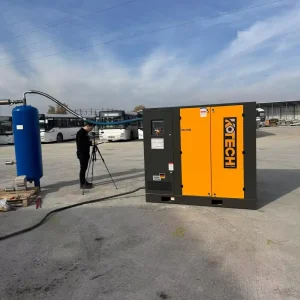
Portability in mining air compressors isn’t just about putting wheels on a unit. It’s about designing rugged, compact systems that can withstand the harshest environments while maintaining peak performance. Think about the scenarios: a new blast site needs air, a remote exploration rig requires power, or an underground tunnel extends further. Dragging a massive, fixed compressor isn’t an option.
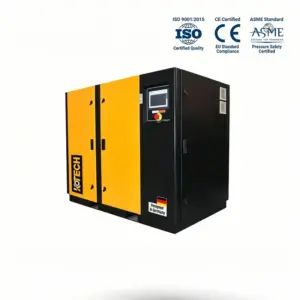
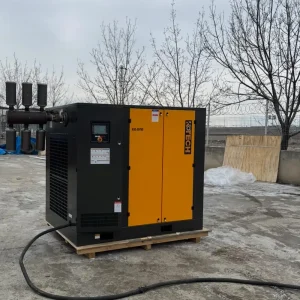
Modern portable air compressors for mining are built with heavy-duty chassis, often skid-mounted or trailer-mounted, making them easy to transport across rough terrain. They feature robust enclosures designed to keep out dust, moisture, and debris – common enemies in any mine. We’re talking about units that maintain consistent CFM (Cubic Feet per Minute) and PSI (Pounds per Square Inch) outputs even when operating at high altitudes or extreme temperatures. This level of engineering ensures that wherever your operation needs air, it gets it without compromise.
Maximizing Uptime & Minimizing Footprint: The Efficiency Imperative
Efficiency isn’t just a buzzword; it’s a direct lever on your operating expenses. Variable Speed Drive (VSD) technology is perhaps the single biggest advancement in compressor efficiency for mining applications. Unlike fixed-speed compressors that run at full power regardless of demand, VSD units adjust their motor speed to match the exact air requirement.
Beyond VSD, manufacturers are integrating advanced air ends and intelligent control systems. These systems optimize air delivery, monitor performance in real-time, and flag potential issues before they escalate into costly failures. The goal is a smaller carbon footprint, yes, but also a smaller operational footprint in terms of fuel consumption and maintenance hours. This translates directly into more predictable costs and higher profitability.
Beyond the Sticker Price: Unpacking True Cost-Effectiveness
Many procurement teams focus solely on the upfront purchase price. True cost-effectiveness in air compressors is measured by the Total Cost of Ownership (TCO). This includes not just the initial capital expenditure, but also fuel/electricity consumption, maintenance costs, parts availability, service intervals, and potential downtime losses over the lifetime of the equipment.
A slightly higher initial investment in a durable, VSD-equipped, mine-spec air system often pays for itself many times over through reduced fuel bills, fewer breakdowns, and extended service life. Look for models with extended maintenance intervals and readily available spare parts. Remote monitoring capabilities also play a huge role in optimizing TCO by enabling predictive maintenance, reducing the need for manual checks, and minimizing unexpected repairs. This proactive approach saves serious money in the long run.
When Not to Go Portable: Understanding Boundary Conditions
While portable compressors offer immense advantages, it’s crucial to acknowledge situations where a fixed installation might still be more suitable. For instance, a very large, permanent processing plant with a consistent, high-volume air demand that rarely changes location might find a centralized, stationary system more cost-effective in terms of initial capital and long-term energy distribution.
Similarly, if your operation has an abundance of readily available, extremely cheap grid power and minimal space constraints, the economic argument for portability might slightly diminish. However, even in these scenarios, the flexibility and redundancy offered by a few strategically placed portable units can provide valuable backup or supplemental capacity. The key is to assess your specific operational needs, site layout, and long-term expansion plans before making a final decision. It’s not a one-size-fits-all world.
Implementing Smart Air Solutions: Practical Steps
So, how do you integrate these advanced air systems effectively? First, conduct a thorough air audit. Understand your actual CFM and PSI requirements at various points in your operation. Over-specifying can lead to wasted energy, while under-specifying leads to performance issues.
Second, prioritize VSD technology. The energy savings alone are often enough to justify the investment. Third, look for robust, mine-spec construction. This means heavy-duty filters, corrosion-resistant components, and easy access for routine maintenance. Fourth, embrace telematics and remote monitoring. Knowing the health of your compressor from a central control room can prevent costly failures and optimize scheduling for preventive maintenance. Finally, work with a reputable supplier who understands the unique demands of mining and offers strong after-sales support. Their expertise can be invaluable in selecting the right equipment and ensuring its longevity.