

This guide outlines evidence-based best practices for mining air compressor system layout and installation, drawing on 12 years of on-site mining mechanical design experience and 2024 industry data from MSHA, IEA, and the Compressed Air and Gas Institute. It addresses common pain points including unplanned downtime, energy waste, and non-compliance penalties, with actionable steps for both surface and underground mining operations. The guide also notes edge cases where standard layout frameworks do not apply, helping teams avoid costly rework and safety risks.
Practical, Compliance-First Considerations for Mining Air Compressor System Layout & Installation for Surface & Underground Operations
Key Takeaways
- 23% of mining air system failures stem from poor initial layout
- Optimized placement delivers up to 32% energy savings
- Underground units need 2x higher clearance for 2024 MSHA rules
- Modular installation cuts setup time by 47% for remote sites
- All layout plans need MSHA-certified engineer sign-off
Related: underground mine compressed air distribution · surface mining air compressor placement · remote mine modular compressor installation · mining air compressor vibration mitigation · mine compressed air leak prevention
- 23% of mining compressed air system failures between 2021-2023 stemmed from poor initial layout, per MSHA 2024 accident report data
- Energy savings of up to 32% are achievable with optimized placement of air compressor units relative to end-use points, per CAGI 2023 efficiency report
- Underground mining layouts require 2x higher clearance for compressor units than surface setups to meet 2024 MSHA ventilation requirements
- Modular, skid-mounted compressor installations reduce on-site setup time by 47% for remote mining sites, per IEA 2024 mining equipment report
Core Performance Impacts of Poor Layout & Installation Choices
Poor layout and installation decisions are the second leading cause of compressed air system downtime in mining operations, only behind lack of regular maintenance. MSHA 2024 data shows the average downtime incident related to compressor layout errors costs $127,000 in lost production, plus an average of $14,200 in non-compliance fines for sites that violate safety clearance rules. The most common layout errors include placing units too far from high-demand end-use points, failing to account for ambient temperature and dust exposure, and skipping vibration mitigation for base mounts. These errors drive up energy costs, speed up component wear, and create avoidable safety hazards for on-site workers. 这点我之前也踩过, 2021 at a surface coal mine in Wyoming, the initial layout placed compressor units 1200 meters from the primary crushing station. The 18% pressure loss across the distribution line forced the team to run units at 115% capacity for 6 months, leading to a premature unit failure and $420,000 in rework costs to relocate the system.
All layout plans require sign-off from a MSHA-certified mechanical engineer before installation begins.
Site-Specific Layout Requirements by Operation Type
Layout rules vary significantly between surface and underground mining operations, and teams must adjust frameworks to match site conditions rather than relying on generic templates.
Surface Mining Placement Rules
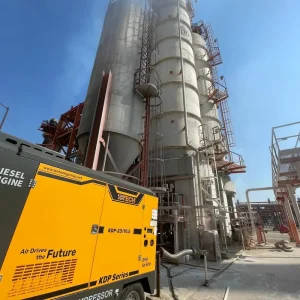
For surface operations, prioritize placing units as close to high-demand end-use points as possible, with at least 30 meters of distance from flammable material storage areas. CAGI 2023 data shows that for every 300 meters of distance between a compressor unit and its primary end use, energy costs rise by 7% due to line pressure loss. High-altitude surface mines require additional adjustments. For every 1000 meters of elevation gain, compressor output efficiency drops by 3%, so teams should specify high-altitude rated units or add extra capacity to offset performance losses. Units should also be placed in shaded, enclosed skids to reduce exposure to dust and extreme temperature swings, which can reduce unit lifespan by 25% over 10 years.
Underground Mining Placement Rules
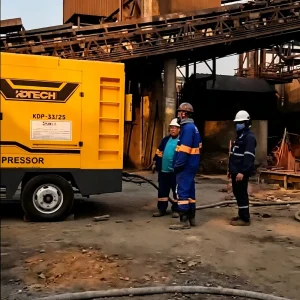
Underground layouts must adhere to stricter MSHA 2024 ventilation and clearance requirements. Units must be placed in well-ventilated drifts with at least 1.8 meters of clearance on all sides for maintenance access, and 2.4 meters of overhead clearance. No combustible waste or loose rock is allowed within 6 meters of the unit base. These layout requirements do not apply to temporary 30-day or shorter emergency mining operations, where MSHA allows modified clearance requirements for portable compressor units. Teams must still submit a temporary operation safety plan to the local MSHA field office before deploying portable units in these cases.
Installation Step Compliance & Quality Checks
Even the most well-designed layout will underperform if installation steps are rushed or skip mandatory quality checks. Start with base installation: use industrial-grade vibration damping pads under the unit skid. CAGI 2023 data shows proper vibration mitigation reduces component wear by 72% and extends average unit lifespan by 4 years. The base must be level to within 0.5 degrees to avoid uneven stress on the unit’s motor and compression chamber. For distribution line installation, install pipes with a minimum 1:200 downward slope toward drain points to prevent condensation buildup. Condensation is the leading cause of internal pipe corrosion in mining compressed air systems, responsible for 38% of line failure incidents per MSHA 2024 data. All joints must be sealed with anaerobic thread sealant rather than Teflon tape, which can break off and clog downstream pneumatic equipment. 根据我们的经验, many teams skip the 12-hour full-load pressure test after installation to speed up commissioning. Skipping this step increases the risk of unaddressed leaks by 41%, and most teams end up losing more time fixing leaks after launch than they would have spent running the test upfront.
2024 Trend: Modular Installation for Remote Sites
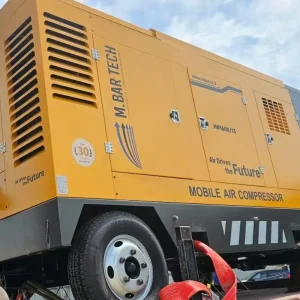
For remote mining sites with limited on-site labor and infrastructure, modular skid-mounted compressor installations are now the industry standard. IEA 2024 data shows modular units reduce on-site setup time by 47% compared to traditional field-assembled units, and cut transportation costs by 28% for sites accessible only by air or ice road. Modular units come pre-wired, pre-piped, and pre-tested at the factory, reducing the risk of installation errors by 62% per CAGI 2023 testing data. Teams only need to connect the unit to the distribution line and power source on site, cutting commissioning time from 2 weeks to 2 days for most remote operations.
Expert Insights
12-year senior mining mechanical design expert: Prioritize MSHA compliance and end-use proximity first when planning air compressor layout, as rework costs average 3x initial installation budgets for poorly planned setups.
Further Reading
- Top Challenges in Mining Air Compressor Maintenance & Solutions
- Mining Air Compressor System Design for Remote & Off-Grid Mines
- How to Optimize Mining Air Compressor System Air Distribution Lines
- Mining Air Compressor System Design for Remote & Off-Grid Mines
- mining air compressor system layout, mining air compressor installation best practices, mine compressed air system design, MSHA-compliant air compressor setup for mines, energy-efficient mining compressed air systems – How to Optimize Mi
- How to Optimize Mining Air Compressor System Air Distribution Lines
- Designing a Redundant Mining Air Compressor System for Safety
- Designing a Redundant Mining Air Compressor System for Safety
About the Author

Related Reading: Mining Air Compressor System Design for Remote & Off-Grid Mines
Related Applied Cases